


 Voorvertoning
 Verstuur
 Delen
Delen
 Details bekijken
 Gids
Gids

 Download
 Vergelijkbare items
 Röntgenonderzoek
 Diavoorstelling
 Statistieken
Opera Singer


 Lees meer
De kunstwerken die op deze pagina worden weergegeven, zijn beschermd door de auteursrechtwetgeving, wat betekent dat het ons wettelijk niet is toegestaan om identieke reproducties te maken of te verkopen. Deze bescherming wordt gehandhaafd onder internationale overeenkomsten zoals de Conventie van Bern en door nationale wetgeving, waaronder de bepalingen van de Amerikaanse auteurswet - Titel 17. Alle rechten voorbehouden. Reproduceren of distribueren van afbeeldingen is niet toegestaan zonder uitdrukkelijke schriftelijke toestemming van WahooArt.com en de rechthebbenden.
Als een respectvol en legaal alternatief bieden wij op maat gemaakte, handgeschilderde kunstwerken aan die geïnspireerd zijn op het origineel. Onze bekwame en professionele kunstenaars bestuderen zorgvuldig de stijl, sfeer en artistieke essentie van het origineel om een nieuw, uniek werk te creëren dat dezelfde emotie oproept – terwijl het een op zichzelf staande, originele creatie blijft.
Deze methode voldoet volledig aan de auteursrechtwetgeving, omdat het niet gaat om het kopiëren of dupliceren van het beschermde kunstwerk. In plaats daarvan is er sprake van een creatieve herinterpretatie — een nieuw schilderij dat door het origineel wordt geïnspireerd, maar er niet identiek aan is.
Handgemaakte olieverfreproductie
Met de hand geschilderd in olieverf op canvas in uw gewenste maat en lijst, op bestelling gemaakt door onze kunstenaars. ( Schakel over naar print Schakel over naar digitale afbeeldingen)




P118B €10

P118H €10

P118W €10

P438Z €10

P508JH €12

P508YH €12

P805H €10

P805Z €10

P919BZ €10

P919G €10

P919XJ €10

P959ZH €10

P968JZ €12

W106C €8

W218G €10

W218JH €8

W218Y €10

W307PJ €10

W316G €10

W316PJ €8

W316Y €10

W398PJ €8

W4111J €10

W500HY €15

W500JH €15

W692G €12

W849H €8

W940BG €15

W953PJ €8




Kies uit onze vooraf ingestelde maten die overeenkomen met de originele verhoudingen van het kunstwerk.

Voer de breedte en hoogte in die u nodig heeft, passend bij uw lijst of uw muur. Omdat dit handgeschilderd is, kan de kunstenaar bij een afmeting met een andere beeldverhouding iets meer rondom het schilderij schilderen of juist iets meer weglaten — u kiest zelf. Wij sturen u een digitaal mockup ter goedkeuring voordat het schilderwerk begint. De afbeelding die op deze pagina wordt getoond, is niet het uiteindelijke resultaat — alleen de mockup geeft dit weer.
Na de bestelling zal het team van AllPaintingsStore.com per e-mail contact opnemen met de klant voor instructies en een mockup-voorbeeld sturen.
Wereldwijde levering () binnen 3 tot 4 weken in plaats van de standaard 5 weken. (28 oktober). Zonder concessies aan de kwaliteit.

Gratis wereldwijde expressverzending

Hoogwaardig linnen canvas

Volledige verzendverzekering

Garantie op terugbetaling van invoerrechten

Garantie op exacte kleurweergave

Retourbeleid van 100 dagen (alleen bij defecten)

100% Geld-terug-garantie

Korting bij meerdere afnames
 De optie voor glas is alleen beschikbaar bij een formaat kleiner dan 110 cm.

Opera Singer
Druktechniek
Afmetingen reproductie
-


Eindtotaal
€ 227
A Surrealist Reverie: Stepping into Miró’s Dreamscape
To gaze upon Joan Miró’s Opera Singer is to surrender the logic of the waking world and descend into a fragmented, dreamlike realm where the boundaries of reality dissolve. This captivating work serves as a profound window into the subconscious, presenting a scene that feels simultaneously alien and intimately familiar. At its heart lies a central figure—a character reminiscent of an opera singer—yet Miró deliberately aband entirely traditional representation. Instead, he offers us a mask-like face, exaggerated and haunting, clutching a mysterious scroll. This single element introduces a sense of theatricality and hidden narrative, as if we have stumbled upon a private moment of performance or the uncovering of a long-lost secret. The composition eschews conventional perspective, opting instead for flattened planes and a dynamic arrangement of shapes that creates an unmistakable sense of intrigue and psychological depth.
The emotional resonance of the piece lies in its ability to evoke both wonder and a subtle, lingering unease. Through the use of bold, contrasting colors and sharply defined, angular lines, Miró constructs a visual language that speaks directly to the primal emotions. The background, a dark and textured brown, acts as a somber stage, providing a stark, dramatic contrast to the brightly colored figures that dance across the canvas. This interplay of light and shadow, though appearing flat and even without a clear source of illumination, contributes to the work's ethereal, nocturnal quality. For the collector or the interior designer, this painting offers more than mere decoration; it provides a focal point of intellectual stimulation, inviting viewers to linger on its surface and lose themselves in its enigmatic layers.
The Alchemy of Technique and Symbolism
Miró’s mastery is most evident in his sophisticated mixed-media approach, where the fluidity of oil paint meets the tactile richness of collage. In Opera Singer, the artist integrates paper fragments and cutouts directly into the canvas, creating a complex, multi-dimensional surface that rewards close examination. This technique introduces an element of chance and spontaneity, mirroring the unpredictable nature of dreams themselves. The brushwork is a beautiful contradiction—expressive and energetic, yet controlled enough to maintain the structural integrity of his geometric deconstructions. This synthesis of Cubist fragmentation and Surrealist imagery allows the artwork to exist in a state of constant motion, where organic, plant-like forms seem to grow and decay simultaneously against rigid, abstract planes.
Beyond its technical brilliance, the painting is a dense tapestry of symbolism. The mask serves as a potent metaphor for anonymity, the performative nature of identity, or the many faces we wear in society. The scroll, held so deliberately by the central figure, symbolizes the weight of knowledge, communication, and the narratives that define our existence. Even the more abstract elements, such as the spindly, organic shapes, suggest the interconnectedness of life and the cyclical nature of growth. For those seeking to bring a piece of art history into their personal spaces, a high-quality reproduction of this masterpiece offers an opportunity to possess a fragment of the Catalan visionary's soul—a work that continues to challenge our perceptions and celebrate the boundless reaches of human imagination.
Veelgestelde vragen
Welk gevoel roepen de kleuren van "Opera Singer" door Joan Miró op?
Het Dark palet van "Opera Singer" door Joan Miró vloeit prachtig samen met de Mysterious emotionele toon. Kleur is een van de manieren waarop een kunstwerk gevoel overbrengt.
Welke stemming en emotie straalt "Opera Singer" door Joan Miró uit?
De vastgelegde stemming van "Opera Singer" door Joan Miró is Mystical, en de emotionele toon ervan is Mysterious.
Is Joan Miró, maker van "Opera Singer", bekend onder andere namen?
Joan Miró staat ook bekend als Jo de Miró.
Vergelijkbare kunstwerken


Biografie kunstenaar
A Catalan Visionary: The Life and Art of Joan Miró
Joan Miró i Ferrà, born in Barcelona in 1893, stands as one of the most significant figures in 20th-century art. His journey was not merely a progression through styles but an exploration of inner worlds, translating dreams, memories, and Catalan identity onto canvas with a uniquely poetic visual language. From humble beginnings marked by illness and initial parental reservations about his artistic pursuits, Miró persevered, driven by an innate need to express the intangible—the emotions, sensations, and subconscious currents that lie beneath the surface of reality. His early life was steeped in the traditions of Barcelona, a city brimming with architectural marvels thanks to Antoni Gaudí, whose organic forms would subtly influence Miró’s later abstractions. The goldsmithing profession of his father instilled an appreciation for meticulous craftsmanship, while the rugged Catalan landscape became a recurring motif and source of inspiration throughout his career.Early Influences and the Path to Surrealism
Miró's formal artistic training began at La Llotja in Barcelona, where he honed his skills in traditional techniques. However, it was exposure to the avant-garde movements sweeping through Paris that truly ignited his creative evolution. The vibrant colors of Fauvism and the fragmented forms of Cubism resonated deeply, prompting him to move to Paris in 1920. This period proved pivotal as he encountered artists like Pablo Picasso and began experimenting with increasingly abstract compositions. Yet, Miró didn’t simply adopt these styles; he synthesized them, forging a path toward his own distinctive aesthetic. He sought to distill forms to their essence, stripping away representational details in favor of symbolic shapes and evocative colors. This exploration led him to the Surrealist group in 1924, aligning him with artists such as Max Ernst and Salvador Dalí. While embracing the Surrealist interest in the subconscious, Miró maintained a unique sensibility—his work was less about shocking imagery or Freudian symbolism than it was about creating a world of playful forms and poetic suggestion.The Language of Symbols: Key Works and Artistic Innovations
Throughout the 1920s and 30s, Miró developed his signature visual vocabulary—a universe populated by biomorphic shapes, floating forms, and vibrant colors. The Farm (1922), often considered a cornerstone of his oeuvre, exemplifies this transition. It’s not merely a depiction of rural life but an evocation of Catalan identity and a symbolic representation of the natural world. His collaborative spirit led to innovative techniques like *grattage*, pioneered with Max Ernst in 1926 for designs intended for Sergei Diaghilev's ballet, where textures were revealed by scraping paint across canvas. The Dutch Interiors (1928) series demonstrated his ability to reinterpret the Old Masters through a distinctly modern lens, transforming domestic scenes into dreamlike abstractions. Painting (1933), with its bold colors and simplified forms, encapsulates Miró’s exploration of the subconscious and his rejection of conventional artistic boundaries. Beyond painting, Miró fearlessly experimented with sculpture, ceramics, and printmaking, expanding his creative horizons and demonstrating a remarkable versatility.Legacy and Enduring Influence
Joan Miró's impact on 20th-century art is undeniable. He wasn’t simply a painter; he was a visionary who challenged the very definition of artistic expression. His work paved the way for abstract expressionism and continues to inspire artists across disciplines. He established two foundations—the Fundació Joan Miró in Barcelona (1975) and the Fundació Pilar i Joan Miró in Palma de Mallorca (1981)—ensuring that his legacy would endure, providing spaces for artistic exploration and education. Throughout his long career, he remained committed to pushing boundaries, questioning conventions, and exploring the depths of human imagination. Miró’s art is a testament to the power of abstraction, symbolism, and poetic expression—a vibrant celebration of life, dreams, and the enduring spirit of Catalan culture. His work continues to resonate with audiences worldwide, inviting us to enter a world where anything is possible and the boundaries between reality and fantasy blur into a captivating dance of color and form.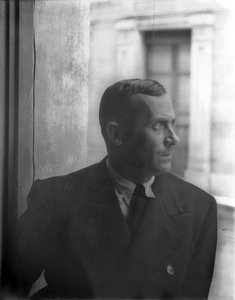
Joan Miró
1893 - 1983 , Spanje
Belangrijkste feiten
- Artistic Movement Or Style: Surrealisme, Abstract Art
- Artists Who Influenced This Artist:
- Pablo Picasso
- Sergei Diaghilev
- Date Of Birth: 20 april 1893
- Full Name: Joan Miró i Ferrà
- Nationality: Spanish
- Notable Artworks:
- The Farm
- Dutch Interiors
- Painting
- Place Of Birth: Barcelona, Spain
Gerelateerde artikelen

Cubism Explained: A Professional Guide to Geometric Abstraction for Modern Interior Design
Master the impact of Cubism in modern design. Our expert guide explores geometric abstraction, Picasso's legacy, and professional solutions for sourcing high-quality Cubist reproductions for hotels, corporate spaces, and luxury interiors.


