


 Voorvertoning
 Verstuur
 Delen
Delen
 Details bekijken

 Download
 Vergelijkbare items
 Röntgenonderzoek
 Diavoorstelling
Self Portrait
 Modern
 12.0 x 12.0 cm
 Nordnorsk Kunstmuseum
 Lees meer
Giclée / Kunstafdrukken
Giclée- of canvasafdruk van museumkwaliteit met een snelle productie en flexibele afwerkingsmogelijkheden. ( Bestel handgeschilderde reproductie Koop afbeelding)




P118B $10

P118H $10

P118W $10

P438Z $10

P508JH $12

P508YH $12

P805H $10

P805Z $10

P919BZ $10

P919G $10

P919XJ $10

P959ZH $10

P968JZ $12

W106C $8

W218G $10

W218JH $8

W218Y $10

W307PJ $10

W316G $10

W316PJ $8

W316Y $10

W398PJ $8

W4111J $10

W500HY $15

W500JH $15

W692G $12

W849H $8

W940BG $15

W953PJ $8




Kies uit onze vooraf ingestelde maten die overeenkomen met de originele verhoudingen van het kunstwerk.

U kunt uw eigen afmetingen opgeven om in een specifieke lijst of ruimte te passen. Als de door u gekozen maat niet overeenkomt met de proporties van het originele kunstwerk, zullen wij de afbeelding bijsnijden of uitbreiden met een gespiegelde of effen rand. Een digitaal mockup wordt ter goedkeuring naar u verzonden voordat de productie begint.
Houd er rekening mee dat de preview op het scherm de werkelijke bijsneding of uitbreiding niet weergeeft. Alleen de mockup toont de uiteindelijke compositie nauwkeurig.
Hoewel aangepaste maten beschikbaar zijn, raden wij aan een afmeting uit de vooraf bepaalde lijst te kiezen om de originele proporties te behouden.
Wereldwijde levering () binnen 2 weken in plaats van de standaard 4/5 weken. (25 augustus)

Gratis wereldwijde expressverzending

Hoogwaardig linnen canvas

Volledige verzendverzekering

Garantie op terugbetaling van invoerrechten

Garantie op exacte kleurweergave

Retourbeleid van 60 dagen (alleen bij defecten)

100% Geld-terug-garantie

Korting bij meerdere afnames
 De optie voor glas is alleen beschikbaar bij een formaat kleiner dan 110 cm.

Self Portrait
Giclée / Kunstafdrukken
Afmetingen reproductie
-


Eindtotaal
$ 65
Vergelijkbare kunstwerken


![Study For A Portrait [looking Right], — Francis Bacon, Expressionist Painting](/media/artworks/images-thumb/87/b7/87b70ef44d2bec32f057076c0dd56be2.jpg)


Biografie van de kunstenaar
Albert Bierstadt: The Grand Visionary of the American West
Born in Prussia in 1830, Albert Bierstadt’s journey to becoming one of America's most celebrated landscape painters was a testament to his ambition and artistic dedication. Initially destined for a life of commerce, Bierstadt’s passion for art led him to Düsseldorf, Germany, where he immersed himself in the traditions of the “Düsseldorf School.” This influential movement, characterized by meticulous detail, dramatic lighting, and a romantic interpretation of nature, profoundly shaped his early style. Returning to America in 1857, Bierstadt initially focused on New England landscapes, honing his skills before embarking on what would become his defining pursuit: capturing the vastness and majesty of the American West.
Bierstadt’s arrival in the American West coincided with a period of intense exploration and expansion. He wasn't merely documenting scenery; he was translating the spirit of westward migration into monumental paintings. Joining expeditions to chart wagon routes, he meticulously observed the terrain, flora, and fauna, gathering an unparalleled wealth of visual information. This firsthand experience, combined with his artistic training, allowed him to create scenes that were both scientifically accurate and emotionally resonant. Unlike many of his contemporaries who relied on secondhand accounts or sketches, Bierstadt painted directly from observation, imbuing his works with a palpable sense of authenticity.
His style evolved significantly during this period. Initially influenced by the Düsseldorf School’s emphasis on detail, Bierstadt gradually developed a distinctive approach that blended Romanticism with Luminism—a technique emphasizing subtle gradations of light and color to create atmospheric effects. His paintings are characterized by enormous scale, dramatic lighting, and an almost theatrical quality. He employed techniques like aerial perspective to convey distance and depth, creating the illusion of limitless space. The towering peaks, dense forests, and expansive skies in his works evoke a sense of awe and wonder, reflecting the spirit of adventure that defined the American West.
The Hudson River School and Bierstadt’s Place Within It
Albert Bierstadt is inextricably linked to the Hudson River School, an informal collective of landscape painters who emerged along the Hudson River in the mid-19th century. While not formally organized, these artists shared a common aesthetic sensibility—a deep appreciation for nature, a commitment to realism, and a romantic vision of the American wilderness. Bierstadt’s work exemplifies many of the key characteristics of the Hudson River School: detailed depictions of natural scenery, an emphasis on light and color, and a sense of grandeur and scale.
However, Bierstadt distinguished himself from some of his contemporaries through his focus on the West. While other members of the Hudson River School primarily depicted scenes in the Northeast, Bierstadt’s paintings celebrated the dramatic landscapes of the Rocky Mountains and Sierra Nevada. His work helped to popularize these regions among Eastern audiences, transforming them into iconic symbols of American wilderness. He was particularly associated with the “Rocky Mountain School,” a group of artists who specialized in painting the mountains of Colorado and Utah, though Bierstadt’s style remained distinct from that of his Rocky Mountain counterparts.
Major Works and Artistic Achievements
Bierstadt's prolific output produced numerous iconic paintings that continue to captivate audiences today. Among his most celebrated works are *The Opening of the Brooklyn Bridge* (1876), a monumental depiction of New York City’s grandest landmark, *Among the Sierra Nevada Mountains* (1867), and *Looking Up Yosemite Valley* (1869). These paintings showcase his mastery of composition, color, and light, as well as his ability to convey both the beauty and the power of the natural world.
His work was widely exhibited and praised by critics and collectors alike. He received honorary membership in the National Academy of Design and was commissioned by the United States Congress to create murals for the Capitol Building. Bierstadt’s paintings were not only admired for their artistic merit but also for their role in shaping public perceptions of the American West, contributing significantly to the romanticized image of the frontier that dominated popular imagination during the late 19th century.
Legacy and Historical Significance
Despite a waning interest in his style by the early 20th century, Albert Bierstadt’s legacy endures. His monumental landscapes continue to be admired for their technical skill, dramatic composition, and evocative power. He is remembered as one of the most important American landscape painters of the 19th century, a key figure in the Hudson River School, and a pivotal interpreter of the American West.
Bierstadt’s paintings played a crucial role in shaping America's understanding of its vast frontier. By capturing the grandeur and beauty of the West, he helped to inspire generations of Americans to explore, settle, and ultimately shape this iconic region. His work remains a testament to the enduring allure of the American wilderness and the power of art to transport viewers to distant lands.

john andreas savio
1902 - 1938 , Norway
Belangrijkste feiten
- Artistic Movement Or Style: Hudson River School, Rocky Mountain School
- Date Of Birth: January 7, 1830
- Date Of Death: February 18, 1902
- Full Name: Albert Bierstadt
- Nationality: American
- Notable Artworks:
- The Sierra Nevada Campaign
- Among the Sierra Nevada”, “Dakota’s Last Stand” ], "Artists who influenced this artist": [ "Andreas Aschenbach", "Karl Friedman Lessing" ], "Artists or movements influenced by this artist": [ "Hudson River School", "Romanticism"
- Place Of Birth: Solingen, Prussia
Gerelateerde artikelen
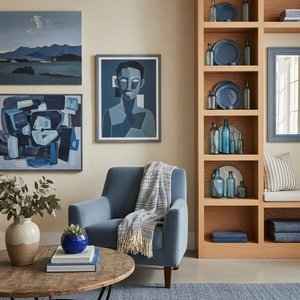
Top 10 Meesterwerken gedomineerd door 'Slate Blue': Kunst voor uw interieur
Ontdek 10 beroemde schilderijen gedomineerd door de prachtige tint 'Slate Blue'. Van Monet tot Van Gogh, leer over kunstgeschiedenis & techniek. Museumkwaliteit reproducties voor uw interieur op AllPaintingsStore.com! Ontdek de collectie online.

Top 10 Meesterwerken in 'Paddestoel' Tinten: Kunst voor een Verfijnd Interieur
Ontdek 10 beroemde schilderijen in warme 'paddestoel' tinten! Van Gogh, Monet & meer. Laat je inspireren door kunstgeschiedenis en creëer een elegante sfeer met museumkwaliteit reproducties op AllPaintingsStore.com.

Top 10 Meesterwerken in Driftwood Tinten: Kunst voor een Verfijnd Interieur
Ontdek 10 beroemde schilderijen in prachtige driftwood tinten! Van Monet tot Van Gogh, leer over de kunstenaars en technieken achter deze tijdloze meesterwerken. Vind museumkwaliteit reproducties & interieurinspiratie op AllPaintingsStore.com.

The Allure of Azure: Exploring the Symbolic & Aesthetic Depths of Blue in Art History
Explore the rich history of blue in art! Discover its symbolism, from ancient pigments to modern masterpieces by Kandinsky & Seurat. Uncover the psychological impact and cultural meanings behind this captivating hue.

Top 10 Meesterwerken in Zandkleuren: Kunst voor een Warm Interieur | AllPaintingsStore.com
Ontdek 10 beroemde schilderijen die baden in zandkleuren! Van Monet tot Rembrandt, leer de verhalen achter deze meesterwerken. Vind museumkwaliteit kunst reproducties & interieurinspiratie op AllPaintingsStore.com.


