


 Voorvertoning
 Verstuur
 Delen
Delen
 Details bekijken

 Download
 Vergelijkbare items
 Röntgenonderzoek
 Diavoorstelling
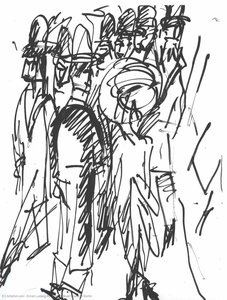
Ravana
 1999
1999 18.0 x 13.0 cm
 Cholamandal Artists' Village
 Lees meer
Giclée / Kunstafdrukken
Giclée- of canvasafdruk van museumkwaliteit met een snelle productie en flexibele afwerkingsmogelijkheden. ( Bestel handgeschilderde reproductie Koop afbeelding)




































Kies uit onze vooraf ingestelde maten die overeenkomen met de originele verhoudingen van het kunstwerk.

U kunt uw eigen afmetingen opgeven om in een specifieke lijst of ruimte te passen. Als de door u gekozen maat niet overeenkomt met de proporties van het originele kunstwerk, zullen wij de afbeelding bijsnijden of uitbreiden met een gespiegelde of effen rand. Een digitaal mockup wordt ter goedkeuring naar u verzonden voordat de productie begint.
Houd er rekening mee dat de preview op het scherm de werkelijke bijsneding of uitbreiding niet weergeeft. Alleen de mockup toont de uiteindelijke compositie nauwkeurig.
Hoewel aangepaste maten beschikbaar zijn, raden wij aan een afmeting uit de vooraf bepaalde lijst te kiezen om de originele proporties te behouden.
Wereldwijde levering () binnen 2 weken in plaats van de standaard 4/5 weken. (19 augustus)

Gratis wereldwijde expressverzending

Hoogwaardig linnen canvas

Volledige verzendverzekering

Garantie op terugbetaling van invoerrechten

Garantie op exacte kleurweergave

Retourbeleid van 60 dagen (alleen bij defecten)

100% Geld-terug-garantie

Korting bij meerdere afnames
 De optie voor glas is alleen beschikbaar bij een formaat kleiner dan 110 cm.

Ravana
Giclée / Kunstafdrukken
Afmetingen reproductie
-


Eindtotaal
$ 65
Vergelijkbare kunstwerken




Biografie van de kunstenaar
Early Life and Artistic Beginnings
K.M. Adimoolam was born in Tiruchirappalli, Tamil Nadu, India, in 1938, into a Telugu family rooted in agriculture. From his formative years, he demonstrated an innate fascination with visual arts—a passion ignited by observing intricately carved wooden *Utsava* *Vahanas* at temples and immersing himself in the vibrant hues of Thanjavur paintings. These experiences instilled within him a profound appreciation for Tamil artforms and profoundly shaped his artistic sensibilities. He honed his drawing skills from an early age, sketching on slate with remarkable precision—a habit that would foreshadow his future endeavors as a prolific artist. His debut publication appeared in *Murasoli* magazine at the tender age of nineteen, accompanying a poem by M. Karunanidhi, marking the commencement of his artistic journey.Education and Influences
Adimoolam’s pursuit of formal artistic training began in 1960 when he enrolled at the Government College of Arts & Craft, Chennai. Under the guidance of K.C.S. Paniker—a visionary educator who championed Western art influences—he embraced a curriculum centered on figurative drawing inspired by Cubism and Impressionism. This exposure broadened his artistic horizons and instilled in him a critical understanding of diverse stylistic approaches. Notably, Dhanapal, a sculptor whose work resonated deeply with Adimoolam’s sensibilities, served as an influential mentor during this period, fostering a collaborative spirit that enriched his creative process.The Gandhian Portrait Series
A pivotal moment in Adimoolam's artistic career arrived in 1965 when he embarked on a transformative project: the creation of approximately one hundred drawings depicting Mahatma Gandhi’s life span—spanning from his birth to his assassination. Utilizing photographs as references, he meticulously captured key milestones in Gandhi’s journey, conveying not merely likeness but also profound emotion and spiritual contemplation. This ambitious undertaking cemented Adimoolam's reputation as a master portraitist and solidified his commitment to honoring the legacy of India’s revered leader.Association with Modern Tamil Writers Group and Artistic Style
Adimoolam’s artistic vision extended beyond individual portraits; he actively engaged with the Modern Tamil Writers group, collaborating on illustrations for books and layouts for magazines—a testament to his versatility as an artist. He embraced abstraction as his primary stylistic medium, prioritizing color palettes that evoked ethereal aura and transcendental levels of consciousness. Adimoolam eloquently articulated his artistic philosophy: “Child or middle-aged man, my heart and mind are filled with nature, at every moment. It is a wonderful experience; this love and awe that provoke my ever creative and anxious mind to penetrate the reality that lies beyond our vista.” His canvases served as conduits for exploring the intricate relationship between humanity and the natural world—depicting landscapes and seascapes not as realistic representations but as planes of color imbued with symbolic significance.Recognition and Legacy
Throughout his illustrious career, Adimoolam garnered widespread acclaim from esteemed artistic institutions across India. He received prestigious awards from Lalit Kala Akademi (Chennai), Chitrakala Parishat (Bangalore), Bombay Art Society, Hyderabad Art Society, Academy of Fine Arts (Kolkata), and the National Award from Lalit Kala Akademi (New Delhi)—honoring his dedication to artistic excellence. Furthermore, he served as a jury member for national exhibitions and contributed to fostering dialogue within the art community. He was appointed Commissioner for the Indian section in the Third Ankara Biennial in Turkey in 1990—a testament to his international recognition. His book, *Between The Lines*, chronicles his drawings produced between 1962 and 1996, preserving a comprehensive record of his artistic evolution. Adimoolam’s enduring influence can be discerned within the Madras Art Movement, which emerged in the early 1960s under Paniker's leadership—a movement that championed experimentation and innovation as pathways to artistic expression.
k. m. adimoolam
1938 - 2008 , India
Belangrijkste feiten
- Artistic Movement Or Style: Abstract Art
- Artists Or Movements Influenced By This Artist: ['Madras Art Movement']
- Artists Who Influenced This Artist: ['Dhanapal']
- Date Of Birth: July 26, 1938
- Date Of Death: January 15, 2008
- Full Name: K.M. Adimoolam
- Nationality: Indian
- Notable Artworks:
- Ravana
- Gandhi Portraits
- Place Of Birth: Trichy, India


