Geld-terug-garantie · 100 dagen Gratis wereldwijde verzending
449.564kunstwerken 30.613kunstenaars 4.660musea 32talen
Catalogusvermelding

Paradise (13)

1961. Acrylic On Canvas, 33.0 x 45.0 cm.

Afb. 1. Marc Chagall, Paradise (13), 1961. Weergegeven als de reproductie die u specificeert: , .

§ 1Catalogusgegevens

Afmetingen
33.0 x 45.0 cm

§ 2Abstract

Beschrijving verzamelobject

Marc Chagall's 'Paradise (13)' is a surreal dreamscape filled with vibrant figures and animals—a captivating glimpse into the artist’s imaginative world. Explore this iconic masterpiece!

Biografie kunstenaar

Ontdek Marc Chagall (1887-1985), een Russische kunstenaar die bekend staat om zijn droomachtige schilderijen, thema's uit het Joodse folklore en prachtige kleurrijke glaswerkkunst. Een artistieke erfenis die blijft inspireren!

§ 3Toelichting

A Dreamscape of Faith: Unpacking Marc Chagall’s “Paradise (13)”

Marc Chagall's "Paradise (13)," painted in 1961, isn’t merely a depiction of an idyllic garden; it’s a vibrant, deeply personal tapestry woven from the threads of memory, faith, and the artist’s unique vision. This surrealistic masterpiece transcends simple representation, inviting us into a world where figures dance with animals, time seems to dissolve, and the familiar becomes imbued with profound symbolism. Born Moishe Shagal in Vitebsk, Belarus, Chagall carried within him the echoes of his Hasidic upbringing – a rich tradition of folklore, storytelling, and an unwavering belief in the power of dreams—and this is powerfully evident in every brushstroke.

The painting immediately captivates with its riotous color palette. Chagall eschews naturalistic hues, instead employing bold, luminous shades of blue, yellow, red, and green to create an atmosphere that’s both joyous and slightly unsettling. These aren't colors meant to simply describe; they are emotional conduits, conveying a sense of ecstatic wonder and spiritual yearning. The composition itself is deliberately dreamlike – figures float, animals mingle with humans, and the landscape bends according to Chagall’s imagination rather than strict perspective. This deliberate distortion reflects his intention: not to depict reality, but to capture the essence of a remembered paradise, filtered through the lens of memory and faith.

Central Figures and Symbolic Resonance

At the heart of “Paradise (13)” sits a woman seated in a chair, radiating an aura of serenity and maternal grace. This figure is often interpreted as representing Eve, though Chagall himself resisted definitive interpretations, preferring to let viewers find their own meaning within the work. Beside her stand two men, likely Adam and God, engaged in a gesture of blessing or perhaps even gentle rebuke. The presence of these figures anchors the painting within the biblical narrative of creation and expulsion from Eden, yet they are rendered with Chagall’s characteristic dreamlike quality – their forms elongated, their features softened, suggesting a realm beyond earthly constraints.

Scattered throughout the scene are a host of symbolic elements. A dog, often associated with loyalty and fidelity, sits close to the woman, while a horse—a symbol of strength and nobility—dominates the upper right corner. Birds flit across the canvas, representing freedom and spiritual aspiration. A prominent figure is a musician playing a violin, evoking themes of joy, celebration, and the divine presence in earthly life. Even seemingly simple objects – a table laden with fruit, a scattering of flowers – carry layers of meaning, hinting at abundance, fertility, and the promise of eternal life.

Contextualizing “Paradise (13)” within Chagall’s Oeuvre

Painted in 1961, "Paradise (13)" represents a pivotal moment in Chagall's artistic journey. Following his emigration to France and the United States during World War II, he returned to a renewed sense of purpose and a deepening engagement with religious themes. This period saw him increasingly explore the rich tapestry of Jewish folklore and biblical narratives, often blending them with personal memories and emotional experiences. “Paradise (13)” is part of a larger series of works inspired by the Book of Genesis, reflecting his lifelong fascination with creation, redemption, and the human condition.

Interestingly, this painting shares thematic resonances with Chagall’s earlier work, particularly "Adam and Eve Expelled from Paradise" (1962). Both pieces depict a similar scene of expulsion, but “Paradise (13)” offers a more hopeful vision—a glimpse of an idealized Edenic realm where figures are bathed in light and surrounded by symbols of abundance. The Musée Marc Chagall in Nice houses a significant collection of his biblical works, providing invaluable context for understanding the evolution of his artistic vision.

A Reproduction to Cherish: Bringing “Paradise (13)” into Your Space

AllPaintingsStore offers meticulously hand-painted reproductions of Marc Chagall’s "Paradise (13)" that capture the essence of this iconic artwork. Our skilled artisans replicate Chagall's vibrant colors, dreamlike composition, and evocative symbolism with exceptional detail and fidelity. Whether you choose a large-scale canvas for a statement wall or a smaller print to adorn your study, our reproductions provide an authentic and beautiful way to bring this masterpiece into your home or office. More than just a decorative piece, “Paradise (13)” is a portal to Chagall’s world—a world of faith, memory, and boundless imagination.

Veelgestelde vragen

Waar kan ik een voorproefje van "Paradise (13)" bekijken?

Op de Voorvertoning-pagina van "Paradise (13)" kunt u het kunstwerk bekijken voordat u bestelt.

Wat is het aanbevolen formaat en de oriëntatie voor de afdruk van "Paradise (13)"?

Voor een afdruk van "Paradise (13)" door Marc Chagall wordt een formaat van Medium aanbevolen in Landscape oriëntatie.

In welke fase van de carrière van Marc Chagall valt "Paradise (13)", gezien de datum?

"Paradise (13)", vervaardigd in 1961, behoort tot de Late Period van de carrière van Marc Chagall.
§ 4De kunstenaar

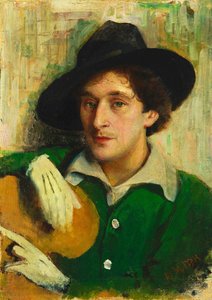
Marc Chagall

Marc Chagall

1887 - 1985, Belarus

Snelle feiten over Marc Chagall

  • Artistic Movement Or Style: Modernisme, Cubisme
  • Artists Or Movements Influenced By This Artist:
    • Surrealisme
    • Kunstenaars
  • Artists Who Influenced This Artist:
    • Bakst
    • Delaunay
    • Borovikovsky
  • Date Of Birth: 6 juli 1887
  • Date Of Death: 28 maart 1985
  • Full Name: Marc Chagall
  • Nationality: Russisch, later Frans
  • Notable Artworks:
    • I en het dorp
    • Over Vitebsk
    • Het witte kruis
  • Place Of Birth: Liozna, Belarus

Biografie kunstenaar

A Life Painted in Dreams: The World of Marc Chagall

Marc Chagall, born Moishe Shagal in 1887 in the small Belarussian town of Liozna near Vitebsk, wasn’t merely a painter; he was a poet of color, a weaver of dreams, and a chronicler of memory. His life, spanning nearly a century, mirrored the tumultuous currents of the twentieth century, yet his art remained steadfastly rooted in a deeply personal vision—one infused with the folklore of his Hasidic Jewish upbringing and an unwavering belief in the power of imagination. Vitebsk itself was more than just a birthplace; it became the emotional core of his artistic universe, a recurring motif populated by flying figures, whimsical animals, and the vibrant hues of remembered landscapes. The town’s unique blend of cultures—Russian Orthodox churches alongside bustling Jewish marketplaces—forged an aesthetic sensibility that would defy easy categorization throughout his long career. Though he sought formal training first with a local sign painter and later in St. Petersburg under Léon Bakst, and then in Paris at the Académie de la Grande Chaumière, Chagall never fully embraced any single artistic movement. He absorbed elements of Cubism, Symbolism, and Fauvism, but always filtered them through his own intensely personal lens, creating a style that was uniquely, unmistakably Chagall.

Early Influences and Artistic Beginnings

Chagall’s formative years were marked by the traditions of Vitebsk’s Jewish community—a vibrant tapestry woven with religious rituals, folk tales, and ancestral memories. These influences would permeate his artistic vision throughout his life, informing his use of symbolism and his fascination with biblical narratives. His initial training was modest, focusing on practical skills as a sign painter – a craft that instilled in him an appreciation for visual communication and meticulous attention to detail. However, he quickly recognized the limitations of realism and sought inspiration in the expressive techniques championed by Impressionists like Léon Bakst, whose theatrical productions captivated him with their bold colors and dynamic compositions. This exposure to avant-garde aesthetics broadened his artistic horizons and propelled him toward experimentation with new forms of expression. His early canvases—such as I and the Village (1911)—already demonstrated his ability to distill complex emotions into simplified visual language, prioritizing feeling over precise representation. The village isn’t rendered realistically but as a fragmented collection of recollections, imbued with symbolic meaning – a technique that would become central to his distinctive style.

The Symbolism of Flight and Memory

Chagall's artistic breakthrough arrived in the wake of World War I, during which he served briefly in the Russian army. This experience instilled in him a profound awareness of human suffering and loss—themes that would recur throughout his oeuvre. His paintings from this period are characterized by an ethereal quality, achieved through masterful use of color and perspective. Figures float effortlessly against backgrounds of luminous hues, defying gravity and logic – a deliberate departure from traditional artistic conventions. This fascination with flight symbolizes liberation from earthly constraints and represents Chagall’s yearning for transcendence—a recurring motif that appears in numerous works throughout his career. Equally important is his preoccupation with memory—the way in which past experiences shape our perceptions of the present. Landscapes are often depicted as dreamlike visions, blending elements of reality with fantastical imagery – reflecting Chagall's belief that art can capture the elusive essence of human experience.

Exploring Formal Movements and Personal Vision

Despite rejecting rigid artistic doctrines, Chagall remained attuned to developments in European modernism. He experimented with Cubist techniques—particularly in his early portraits—to dissect forms and explore multiple viewpoints simultaneously. However, he quickly abandoned this approach in favor of a more expressive style that prioritized emotional impact over intellectual rigor. His embrace of Fauvist color palettes – bold splashes of pigment divorced from naturalistic representation – further solidified his artistic identity. Yet, Chagall’s true genius lay in his ability to synthesize these influences into a wholly original vision—one rooted in his Jewish heritage and informed by the spiritual traditions of Vitebsk. He sought to convey not just what he saw but what he felt—a quest for beauty and truth that permeated every aspect of his artistic practice.

Later Years and Legacy

The Russian Revolution profoundly impacted Chagall’s life, returning him to Vitebsk where he established an art school dedicated to fostering creativity and cultural exchange. This period was marked by both artistic productivity and political disillusionment—a tension that would continue to shape his creative output. Following the outbreak of World War II, Chagall fled occupied France for New York City, where he found refuge amidst a thriving artistic community. During his time in America, he produced some of his most ambitious canvases – monumental works that explored themes of exile and displacement. He received numerous prestigious commissions, including the ceiling of the Paris Opera (1964), which showcased his unparalleled mastery of color and form—a testament to his enduring influence on subsequent generations of artists. Chagall’s stained glass windows for Jerusalem's Hadassah Hebrew University Medical Center synagogue stand as a poignant reminder of his commitment to Jewish faith and culture. His art continues to inspire awe and wonder, inviting viewers to contemplate the mysteries of existence and celebrating the transformative power of imagination. Marc Chagall died in 1985 at the age of 97, leaving behind an unparalleled legacy—a body of work that transcends stylistic boundaries and speaks directly to the human spirit.

§ 5Vergelijkbare werken

§ 6Vragen

Snelle feiten

  • Subject or theme: Eden, Biblical scene
  • Artist: Marc Chagall
  • Notable elements: Figures, animals, objects
  • Title: Paradise (13)
  • Influences:
    • Hasidic folklore
    • Memory
  • Location: Private Collection

Kunstquiz

Er is slechts één goed antwoord op elke vraag.

Vraag 1:
What is the primary artistic style of Marc Chagall’s ‘Paradise (13)’?
Vraag 2:
Which figure is prominently depicted sitting on a chair in the center of ‘Paradise (13)’?
Vraag 3:
What animal is located in the upper-right corner of the painting?
Vraag 4:
In what year was ‘Paradise (13)’ created by Marc Chagall?
Vraag 5:
Based on the artwork’s imagery, what is a possible interpretation of ‘Paradise (13)’?

§ 7Citeer dit artikel

AllPaintingsStore.com, “Marc Chagall, Paradise (13) (1961)”, https://allpaintingsstore.com/nl/art/marc-chagall-paradise-13-8XYHAE-en/ArtistReproduction/ (geraadpleegd op 6 oktober 2026).

§ 8De reproductie

Handgemaakte olieverfreproductie

Met de hand geschilderd in olieverf op canvas in uw gewenste maat en lijst, op bestelling gemaakt door onze kunstenaars. ( Schakel over naar print Schakel over naar digitale afbeeldingen)

Dit staat in de marge van het bestelformulier vermeld; de huidige stand van zaken op dat formulier luidt als volgt.

Paradise (13)

Druktechniek

Afmetingen reproductie

-

Geselecteerde topkunstenaars

Meer detail, verfijning en extra productietijd

-

Lijst voor reproductie

-

-

Voor kunstwerken of reproducties die aan één zijde groter zijn dan 105 cm (ongeveer 41 inch), wordt de lijst als een losse set verzonden. Deze methode garandeert een veilige levering en voorkomt schade tijdens het transport.

Professionele montage vereist - dit is geen doe-het-zelfproduct.
De set moet worden gemonteerd en het canvas moet worden gespannen door een ervaren professionele lijstenmaker, met gebruik van houtlijm (niet inbegrepen), een doekspanter en klemmen om de sponningen recht te houden terwijl de lijm droogt. Onjuiste montage of een ongelijkmatige spanning op het canvas kan het kunstwerk permanent beschadigen en wordt niet gedekt door onze garantie.

  • Alle massief houten onderdelen zijn inbegrepen, nauwkeurig op maat gesneden voor montage.

  • Te monteren met de meegeleverde schroeven, plus houtlijm voor de hoekverbindingen, die niet wordt meegeleverd en door uw lijstenmaker moet worden aangeschaft.

  • Professioneel gereedschap is vereist en niet inbegrepen: een spanner voor canvas en klemmen om de latten recht te houden terwijl de lijm droogt.

Belangrijk:
De hoekverbindingen vereisen houtlijm, de latten moeten met lijmklemmen worden vastgehouden tot de lijm volledig is opgedroogd, en het spannen van het canvas op het samengestelde frame vereist een doekspanter. Geen van deze artikelen is inbegrepen in de set. Wij adviseren u om een ervaren professionele lijstenmaker te raadplegen voordat u deze maat bestelt.

Naamplaatje

-

-

Beschermende vernislaag

Glanzende vernis (versterkt de kleuren en biedt bescherming tegen licht en vocht)

-

Mijn kunstwerk aanpassen

Voorbeelden van aanpassingen: vervang het gezicht door een eigen foto; voeg een huisdier toe (bijv. vervang de kat door een hond); verwerk een verborgen boodschap in de achtergrond; wijzig het landschap of andere elementen op de achtergrond.

-

Spoedlevering

Wereldwijde levering () binnen 3 tot 4 weken in plaats van de standaard 5 weken. (4 november). Geen concessies aan de kwaliteit.

-

Spoedlevering

Wereldwijde levering naar binnen 5 weken. (11 november).

Inbegrepen

Eindtotaal

€ 230

Inbegrepen bij elke bestelling

  • Gratis wereldwijde expressverzending
  • Hoogwaardig linnen canvas
  • Volledige verzendverzekering
  • Garantie op terugbetaling van invoerrechten
  • Garantie op exacte kleurweergave
  • Retourbeleid van 100 dagen (alleen bij defecten)
  • 100% Geld-terug-garantie
  • Korting bij meerdere afnames
Bestelformulier