


 Voorvertoning
 Verstuur
 Delen
Delen
 Details bekijken
 Gids
Gids

 Download
 Vergelijkbare items
 Röntgenonderzoek
 Diavoorstelling
 Statistieken
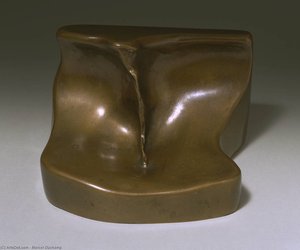
Sculpture-morte


 Lees meer
De kunstwerken die op deze pagina worden weergegeven, zijn beschermd door de auteursrechtwetgeving, wat betekent dat het ons wettelijk niet is toegestaan om identieke reproducties te maken of te verkopen. Deze bescherming wordt gehandhaafd onder internationale overeenkomsten zoals de Conventie van Bern en door nationale wetgeving, waaronder de bepalingen van de Amerikaanse auteurswet - Titel 17. Alle rechten voorbehouden. Reproduceren of distribueren van afbeeldingen is niet toegestaan zonder uitdrukkelijke schriftelijke toestemming van WahooArt.com en de rechthebbenden.
Deze methode voldoet volledig aan de auteursrechtwetgeving, omdat het niet gaat om het kopiëren of dupliceren van het beschermde kunstwerk. In plaats daarvan is er sprake van een creatieve herinterpretatie — een nieuw schilderij dat door het origineel wordt geïnspireerd, maar er niet identiek aan is.
Giclée / Kunstafdrukken
Giclée- of canvasafdruk van museumkwaliteit met een snelle productie en flexibele afwerkingsmogelijkheden. ( Bestel handgeschilderde reproductie Schakel over naar digitale afbeeldingen)




P118B €10

P118H €10

P118W €10

P438Z €10

P508JH €12

P508YH €12

P805H €10

P805Z €10

P919BZ €10

P919G €10

P919XJ €10

P959ZH €10

P968JZ €12

W106C €8

W218G €10

W218JH €8

W218Y €10

W307PJ €10

W316G €10

W316PJ €8

W316Y €10

W398PJ €8

W4111J €10

W500HY €15

W500JH €15

W692G €12

W849H €8

W940BG €15

W953PJ €8




Kies uit onze vooraf ingestelde maten die overeenkomen met de originele verhoudingen van het kunstwerk.

Voer de gewenste breedte en hoogte in, passend bij uw lijst of muur. Een afdruk kan alleen worden ingekort en nooit groter worden gemaakt dan het origineel; een formaat met andere verhoudingen zal daarom een deel van de afbeelding verliezen. Wij sturen u een digitaal mockup ter goedkeuring voordat we tot drukwerk overgaan. De afbeelding op deze pagina toont niet de werkelijke uitsnede — dit is alleen te zien op het mockup.
Wereldwijde levering () binnen 2 weken in plaats van de standaard 4/5 weken. (26 oktober)

Gratis wereldwijde expressverzending

Hoogwaardig linnen canvas

Volledige verzendverzekering

Garantie op terugbetaling van invoerrechten

Garantie op exacte kleurweergave

Retourbeleid van 100 dagen (alleen bij defecten)

100% Geld-terug-garantie

Korting bij meerdere afnames
 De optie voor glas is alleen beschikbaar bij een formaat kleiner dan 110 cm.

Sculpture-morte
Giclée / Kunstafdrukken
Afmetingen reproductie
-


Eindtotaal
€ 57
A Still Life Reimagined: Marcel Duchamp’s ‘Sculpture-morte’
Sculpture-morte, created by the pioneering French-American artist Marcel Duchamp, is a deceptively playful yet profoundly challenging work that blurs the boundaries between painting, sculpture, and everyday life. Executed sometime before 1968 (the year of Duchamp’s death), this artwork presents not a traditional still life of arranged objects, but rather *a painting of* a constructed assemblage – a “sculpture” made entirely from fruits and vegetables.Subject & Composition
The central focus is immediately arresting: a halved broccoli floret meticulously arranged to resemble a human head. This unexpected anthropomorphism sets the tone for the entire piece. Surrounding this ‘head’ are other produce items – apples, oranges, carrots, and two prominently placed bananas – all rendered with a realistic yet subtly stylized quality. The composition isn't haphazard; it feels deliberately constructed, almost ceremonial in its arrangement. Duchamp doesn’t simply depict food; he transforms it into something else entirely, prompting viewers to question their perceptions of form and representation.Style & Technique
While demonstrating a clear skill in representational painting, Sculpture-morte isn't about showcasing traditional artistic technique. Duchamp’s style here is precise and detailed, yet deliberately understated. He avoids dramatic lighting or expressive brushwork, opting for a more objective rendering of the subject matter. This deliberate lack of stylistic flourish is key to its conceptual impact. The painting itself serves as documentation of an ephemeral sculpture – a fleeting moment captured in paint.Historical Context & Dada Influence
Duchamp was a pivotal figure in the development of 20th-century art, associated with movements like Cubism, Dada, and Conceptual Art. Sculpture-morte embodies the spirit of Dada – an anti-art movement born out of disillusionment with societal norms following World War I. Dadaists rejected traditional aesthetic values and embraced absurdity, irony, and chance. Duchamp’s use of everyday objects (fruits and vegetables) elevated to artistic status is a direct challenge to conventional notions of art and beauty. It foreshadows his infamous “readymades,” like Fountain (1917), where he presented an ordinary urinal as sculpture, further questioning the very definition of art.Symbolism & Interpretation
The symbolism within Sculpture-morte is open to interpretation. The broccoli ‘head’ could be seen as a commentary on mortality – a *memento mori* rendered in organic materials. The fruits and vegetables, symbols of abundance and life, are simultaneously presented as decaying forms, hinting at the transient nature of existence. The act of constructing a sculpture from perishable items also speaks to the ephemeral quality of art itself. Duchamp’s work often invites viewers to actively participate in creating meaning, rather than passively receiving it.Emotional Impact & Legacy
Despite its seemingly whimsical subject matter, Sculpture-morte evokes a sense of quiet contemplation and intellectual curiosity. It's not an artwork designed to elicit immediate emotional response; instead, it encourages viewers to *think* about art, representation, and the world around them. Duchamp’s influence on subsequent generations of artists is immeasurable. He paved the way for Conceptual Art, installation art, and performance art, fundamentally altering our understanding of what constitutes artistic expression. This piece remains a powerful example of his innovative spirit and enduring legacy.Collecting & Reproduction
As an original work by Marcel Duchamp, Sculpture-morte resides in the Staatliches Museum Schwerin, Germany. High-quality reproductions allow art enthusiasts and interior designers to bring this thought-provoking piece into their homes or offices. Its subtle color palette and intriguing subject matter make it a versatile addition to various décor styles – from modern minimalist spaces to eclectic collections. A reproduction of Sculpture-morte is not merely a decorative element; it’s an invitation to engage with one of the most influential artists of the 20th century.- Style: Dada, Conceptual Art, Still Life
- Materials: Oil on canvas (original)
- Themes: Mortality, Ephemerality, Representation, Anti-Art
Veelgestelde vragen
Welk kleurenpalet wordt gebruikt in "Sculpture-morte" door Marcel Duchamp?
Het kleurenpalet van "Sculpture-morte" door Marcel Duchamp wordt beschreven als Neutrals. Het is een beknopte beschrijving van de kleuren in het werk.
Hoe groot is het contrast in "Sculpture-morte" door Marcel Duchamp?
"Sculpture-morte" door Marcel Duchamp vertoont een Balanced contrast tussen de lichte en donkere partijen.
Met welk medium is "Sculpture-morte" door Marcel Duchamp uitgevoerd?
"Sculpture-morte" is uitgevoerd in Acrylic On Canvas.
Vergelijkbare kunstwerken




Biografie kunstenaar
Een Revolutionaire Geest: Het Leven en de Kunst van Marcel Duchamp
Marcel Duchamp, geboren als Henri-Robert-Marcel Duchamp in 1887 in Blainville-Crevon, Normandië, was meer dan een kunstenaar; hij was een filosofische provocateur die de koers van de moderne kunst fundamenteel heeft veranderd. Zijn vroege leven, hoewel schijnbaar conventioneel – gevormd binnen een familie die artistieke expressie waardeerde en waarin beide broers succesvolle carrières als kunstenaar nastreefden – hintte al naar het iconoclasme dat nog zou komen. Duchamp volgde aanvankelijk een formele opleiding, waarbij hij traditionele technieken meester werd en experimenteerde met postimpressionistische stijlen. Deze academische basis diende echter niet als een doel op zich, maar als een springplank om de essentie van kunst, haar doel en haar definitie ter discussie te stellen. Hij was niet tevreden met het louter afbeelden van de wereld; hij zocht naar manieren om onze perceptie ervan uit te dagen en te bevragen wat werkelijke artistieke waarde vormt. Deze rusteloze intellectuele nieuwsgierigheid zou het kenmerkende aspect worden van zijn vruchtbare carrière.Van Cubisme naar Dada: Een Afwijzing van Conventie
Duchamps artistieke reis werd gekenmerkt door een constante evolutie, een doelbewuste ontmanteling van gevestigde normen. Zijn vroege betrokkenheid bij het Cubisme, duidelijk zichtbaar in werken zoals Portrait of Chess Players (1911), toonde een interesse in gefragmenteerde vormen en meervoudige perspectieven – een breuk met de traditionele representatie. Toch bewoog hij zich snel voorbij louter esthetische overwegingen, omdat hij besefte dat het simpelweg herordenen van visuele elementen niet volstond om de diepere vragen te beantwoorden die in hem opborrelden. De gruwelen van de Eerste Wereldoorlog voedden dit onbehagen, wat ertoe leidde dat Duchamp het Dadaïsme omarmde, een beweging die voortkwam uit desillusie en een verwerping van logica, rede en traditionele artistieke waarden. Het was binnen het Dadaïstische kader dat Duchamp werkelijk begon de conventionele opvattingen over kunst af te breken. Hij was niet geïnteresseerd in het creëren van mooie objecten; hij wilde gedachten prikkelen, aannames uitdagen en de willekeur van esthetisch oordeel blootleggen. Deze periode zag de geboorte van zijn meest radicale innovatie: de ‘readymade’.De Readymades en de Subversie van de Kunst
De introductie van readymades – alledaagse, industrieel vervaardigde objecten die geselecteerd en gepresenteerd werden als kunst – vormde Duchamps meest significante bijdrage aan de 20e eeuw. Dit waren niet simpelweg gevonden voorwerpen; het waren bewuste daden van artistieke subversie. Door een alledaags item, zoals een urinoir (Fountain, 1917), te voorzien van de handtekening “R. Mutt” en dit in te dienen voor een kunstexpositie, daagde Duchamp de definitie van artistiek vakmanschap en auteurschap uit. Was het de hand van de kunstenaar die het werk creëerde, of was het het idee van de kunstenaar? Deze vraag werd centraal in zijn oeuvre en legde de basis voor de conceptuele kunst. Andere opmerkelijke readymades, zoals L.H.O.O.Q. (1919) – een ansichtkaartreproductie van de Mona Lisa, bewerkt met een snor en een sikje – waren speelse maar scherpe kritieken op de kunstgeschiedenis en gevestigde culturele iconen. Deze werken waren niet bedoeld om bewonderd te worden om hun esthetische kwaliteiten; ze waren bedoeld om debat uit te lokken en toeschouwers te dwingen hun vooroordelen over wat kunst is, te heroverwegen. Duchamp geloofde dat kunst in de geest moet verblijven, en niet enkel in het oog.Nalatenschap en Blijvende Invloed
De impact van Marcel Duchamp op opeenvolgende generaties kunstenaars is onmeetbaar. Hij veranderde ons begrip van kunst fundamenteel en plaveide de weg voor bewegingen zoals de conceptuele kunst, het minimalisme, de popart en talloze anderen. Zijn nadruk op het idee van de kunstenaar – het concept achter het werk – boven de esthetische eigenschappen, blijft kunstenaars tot op de dag van vandaag inspireren.- Cubisme: Vroege verkenning van gefragmenteerde vormen en ruimtelijke representatie.
- Dadaïsme: Verwerping van logica, rede en traditionele artistieke waarden als reactie op de Eerste Wereldoorlog.
- Conceptuele Kunst: De nadruk op het idee achter het kunstwerk in plaats van de esthetische kwaliteiten.
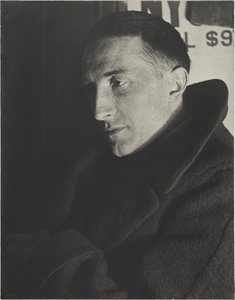
Marcel Duchamp
1887 - 1968 , Frankrijk
Belangrijkste feiten
- Artistic Movement Or Style:
- Cubisme
- Dadaïsme
- Conceptuele kunst
- Artists Or Movements Influenced By This Artist:
- Cubisme
- Surrealisme
- Conceptuele kunst
- Date Of Birth: 28 juli 1887
- Date Of Death: 2 oktober 1968
- Full Name: Marcel Duchamp
- Nationality: Frans-Amerikaans
- Notable Artworks:
- Fontein
- L.H.O.O.Q.
- Het grote glas
- Boîte-en-valise
- Place Of Birth: Blainville, Frankrijk
Gerelateerde artikelen

Bronze Sculpture Guide: Durability, Value, and Selection for Large-Scale Hospitality Projects
A professional procurement guide for hotel designers on selecting large-scale bronze sculptures. Learn about durability, lost-wax casting, and strategic integration of high-value metal art into commercial hospitality projects.

Bronze Sculpture Guide for Large-Scale Projects: Durability, Value, and Selection for Hospitality Designers
A professional guide for hotel designers and procurement managers on selecting large-scale bronze sculptures. Learn about durability, lost-wax casting, material value, and strategic integration for high-traffic hospitality and corporate environments.


