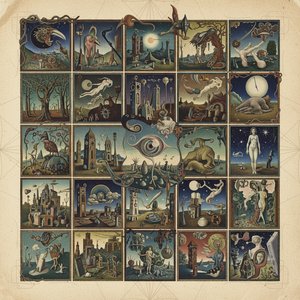
Acrylic On Canvas.

§ 1Catalogusgegevens


Dit kunstwerk is auteursrechtelijk beschermd
De kunstwerken die op deze pagina worden weergegeven, zijn beschermd door de auteursrechtwetgeving, wat betekent dat het ons wettelijk niet is toegestaan om identieke reproducties te maken of te verkopen. Deze bescherming wordt gehandhaafd onder internationale overeenkomsten zoals de Conventie van Bern en door nationale wetgeving, waaronder de bepalingen van de Amerikaanse auteurswet - Titel 17. Alle rechten voorbehouden. Reproduceren of distribueren van afbeeldingen is niet toegestaan zonder uitdrukkelijke schriftelijke toestemming van WahooArt.com en de rechthebbenden.
Als een respectvol en legaal alternatief bieden wij op maat gemaakte, handgeschilderde kunstwerken aan die geïnspireerd zijn op het origineel. Onze bekwame en professionele kunstenaars bestuderen zorgvuldig de stijl, sfeer en artistieke essentie van het origineel om een nieuw, uniek werk te creëren dat dezelfde emotie oproept – terwijl het een op zichzelf staande, originele creatie blijft.
Deze methode voldoet volledig aan de auteursrechtwetgeving, omdat het niet gaat om het kopiëren of dupliceren van het beschermde kunstwerk. In plaats daarvan is er sprake van een creatieve herinterpretatie — een nieuw schilderij dat door het origineel wordt geïnspireerd, maar er niet identiek aan is.
 Lees meer over
§ 2Abstract
Beschrijving verzamelobject
Explore Max Ernst's surreal 'untitled (2948)' – a captivating collage blending natural elements and dreamlike imagery, showcasing his pioneering Dada & Surrealist style.
Biografie kunstenaar
Max Ernst (1891-1976): Een baanbrekende Duitse surrealist! Bekend om frottage, collages & droomachtige schilderijen met vogels, landschappen en psychologische thema's. #MaxErnst #Surrealisme
§ 3Toelichting
A Surrealist Echo: Unpacking the Layers of “Untitled (2948)”
Max Ernst's "Untitled (2948)" isn’t merely a depiction of natural elements; it’s an invitation into a meticulously constructed dreamscape. Born in 1891 and profoundly shaped by his experiences during World War I, Ernst was a master of disrupting the familiar, employing techniques like frottage and collage to excavate the subconscious. This particular work, rendered in stark black and white, exemplifies this approach perfectly – a deliberate fragmentation of reality that speaks volumes about the artist’s anxieties and fascination with the irrational.
The photograph itself possesses an aged quality, hinting at its origins as a reproduction or archival image. Handwritten notations, likely signatures and dates, are subtly integrated into the composition, grounding the surreal elements within a tangible history. A rectangular label, visible in the lower center, further contextualizes the piece, suggesting it was intended for exhibition or perhaps a private collection. The deliberate choice of monochrome amplifies the impact of each element, forcing the viewer to engage with texture and form on a deeper level.
Deconstructing the Composition: A Stage for the Unconscious
The arrangement within the frame feels remarkably staged, yet simultaneously organic. Ernst doesn’t simply present us with a collection of objects; he orchestrates them into a carefully balanced tableau. The curve of the shell, a recurring motif in Ernst's work, provides a dynamic counterpoint to the linear precision of the leaves and bark. This juxtaposition immediately establishes a sense of tension – a harmonious discord that is characteristic of Surrealist aesthetics.
The layering of these elements creates a shallow depth of field, pulling the viewer into the scene without offering easy escape. There’s no dramatic perspective or illusionistic space; instead, Ernst favors a flattened composition, emphasizing the tactile qualities of each surface and inviting close inspection. The deliberate clustering of objects in the center draws our attention to their interplay, suggesting that the entire arrangement is a symbolic puzzle waiting to be solved.
Symbolism Woven into Texture: Echoes of the Dream
The textures themselves are crucial to understanding the work’s emotional resonance. The smooth, polished surface of the shell contrasts sharply with the rough, fibrous texture of the bark and the delicate veins of the leaves. These tactile differences aren't merely descriptive; they represent a symbolic dialogue between the natural world and the artist’s internal landscape. The fragmented nature of the composition – broken shells, scattered leaves – mirrors the fractured state of consciousness often explored in Surrealist art.
Furthermore, the arrangement evokes a sense of displacement and mystery. The objects are presented without context or narrative, prompting viewers to project their own interpretations onto the scene. The combination of familiar natural forms rendered in an unexpected manner taps into primal anxieties about the unknown – a feeling that is powerfully conveyed through Ernst’s masterful manipulation of form and texture.
A Legacy of Innovation: Max Ernst and the Surrealist Movement
Max Ernst's influence on 20th-century art is undeniable. His pioneering techniques, particularly frottage and collage, revolutionized painting and paved the way for subsequent generations of artists. Born in Brühl, Germany, in 1891, Ernst’s early life was marked by a rebellious spirit and a deep engagement with philosophical ideas. He spent time studying at the University of Bonn, where he developed an interest in psychology and art history – influences that would profoundly shape his artistic vision.
His involvement with Dada and Surrealism cemented his place as a key figure in the avant-garde movement. Ernst’s work consistently challenged conventional notions of beauty and representation, exploring themes of memory, desire, and the subconscious. “Untitled (2948)” stands as a testament to his enduring legacy – a captivating example of Surrealist artistry that continues to resonate with viewers today.
Veelgestelde vragen
Is "untitled (2948)" in zijn geheel eerder licht of donker?
"untitled (2948)" heeft een algehele helderheid van brilliant en een luminantie van Luminous.
Welke afmeting voor de reproductie wordt aanbevolen voor "untitled (2948)" door Max Ernst?
De aanbevolen afmeting voor de print van "untitled (2948)" door Max Ernst is Medium.
Wat is de algemene sfeer van "untitled (2948)" door Max Ernst?
De algehele stemming van "untitled (2948)" door Max Ernst is Mystical. De stemming beschrijft de algemene atmosfeer van het werk.


 Schakel over naar print


 Voor kunstwerken of reproducties die aan één zijde groter zijn dan 105 cm (ongeveer 41 inch), wordt de lijst als een losse set verzonden. Deze methode garandeert een veilige levering en voorkomt schade tijdens het transport.