


 Bekijk op ware grootte
 Verstuur
 Delen
Delen
 Details bekijken
 Gids
Gids

 Download
 Vergelijkbare items
 Röntgenonderzoek
 Diavoorstelling
 Statistieken
Miracle of the Desecrated Host (Scene 6)
 Tempera On Panel
- WallArt
- Early Renaissance
 1465
1465- Renaissance
 43.0 x 58.0 cm
 Galleria Nazionale delle Marche
 Lees meer
Handgemaakte olieverfreproductie
Met de hand geschilderd in olieverf op canvas in uw gewenste maat en lijst, op bestelling gemaakt door onze kunstenaars. ( Schakel over naar print Schakel over naar digitale afbeeldingen)




P118B $10

P118H $10

P118W $10

P438Z $10

P508JH $12

P508YH $12

P805H $10

P805Z $10

P919BZ $10

P919G $10

P919XJ $10

P959ZH $10

P968JZ $12

W106C $8

W218G $10

W218JH $8

W218Y $10

W307PJ $10

W316G $10

W316PJ $8

W316Y $10

W398PJ $8

W4111J $10

W500HY $15

W500JH $15

W692G $12

W849H $8

W940BG $15

W953PJ $8




Kies uit onze vooraf ingestelde maten die overeenkomen met de originele verhoudingen van het kunstwerk.

U kunt uw eigen afmetingen invoeren om in een specifieke lijst of ruimte te passen. Als de door u gekozen maat niet overeenkomt met de verhoudingen van het originele beeld, zullen we het kunstwerk bijsnijden of het schilderij uitbreiden met extra handgeschilderde elementen. Een digitale mockup wordt ter goedkeuring naar u verzonden voordat de productie begint.
Houd er rekening mee dat de preview op het scherm niet de werkelijke uitsnede of uitbreiding weergeeft. Alleen de mockup toont de uiteindelijke compositie nauwkeurig.
Hoewel aangepaste afmetingen mogelijk zijn, raden we aan een maat uit de vooraf gedefinieerde lijst te selecteren om de originele verhoudingen te behouden.
Na de bestelling zal het team van AllPaintingsStore.com per e-mail contact opnemen met de klant voor instructies en een mockup-voorbeeld sturen.
Wereldwijde levering () binnen 3 tot 4 weken in plaats van de standaard 5 weken. (21 september). Zonder concessies aan de kwaliteit.

Gratis wereldwijde expressverzending

Hoogwaardig linnen canvas

Volledige verzendverzekering

Garantie op terugbetaling van invoerrechten

Garantie op exacte kleurweergave

Retourbeleid van 100 dagen (alleen bij defecten)

100% Geld-terug-garantie

Korting bij meerdere afnames
 De optie voor glas is alleen beschikbaar bij een formaat kleiner dan 110 cm.

Miracle of the Desecrated Host (Scene 6)
Reproductiemethode
Formaat reproductie
-


Totaalprijs
$ 258
A Visionary Triumph of Perspective
In the quiet corridors of art history, few names resonate with the same mathematical mysticism as Paolo Uccello. His masterpiece, Miracle of the Desecrated Host (Scene 6), is not merely a window into a sacred moment; it is a profound experiment in the architecture of sight. Painted between 1465 and 1469, this panel serves as a breathtaking testament to the Early Renaissance's obsession with capturing the infinite depth of the physical world. Uccello, often described as a mathematician of the canvas, utilized the burgeoning science of linear perspective to transform a flat wooden surface into a stage of startling realism. To gaze upon this work is to witness the precise moment where the decorative elegance of the Gothic tradition began to dissolve into the structured, geometric truth of the Renaissance.
The narrative captured in this sixth scene of the predella is one of profound spiritual tension and divine intervention. It recounts a pivotal episode from Christian theology: the desecration of the Eucharist and its subsequent miraculous restoration. As the viewer’s eye wanders through the composition, they encounter a meticulously constructed world where every line serves a higher purpose. Uccroll painstakingly employed orthogonals—lines that converge toward a single vanishing point—to guide the soul through the space. This technique does more than create an illusion of depth; it creates a sense of inevitable movement, drawing the observer into the very heart of the miracle, where the earthly and the divine intersect.
The Alchemy of Tempera and Light
Technically, the work is a triumph of tempera on panel, a medium that demands absolute precision and foresight. Unlike oil, which allows for slow, layered corrections, tempera requires the artist to build luminosity through delicate, rhythmic strokes. Uccello’s mastery of this technique results in a surface that possesses an ethereal glow, particularly in the way light interacts with the religious figures and the domestic objects scattered throughout the scene. The presence of a dining table, a chair, and even the subtle detail of birds adds a layer of grounded, tactile reality to the supernatural event unfolding.
For the discerning collector or interior designer, this piece offers an unparalleled opportunity to introduce a sense of intellectual rigor and historical gravity into a space. The composition’s balance between heavy, geometric forms and the delicate, luminous atmosphere makes it a versatile centerpiece. Whether placed in a study filled with classical literature or as a focal point in a contemporary gallery-style room, the painting commands attention through its structural integrity. It is a work that does not merely decorate a wall; it anchors a room with the weight of five centuries of human inquiry and artistic devotion.
A Legacy of Mathematical Beauty
The historical context of this work is inseparable from the intellectual fervor of Urbino under the patronage of Federico da Montefeltro. This was an era where science, art, and humanism were inextricably linked. Uccello’s obsession with the exact vanishing point—a pursuit so intense that contemporary chroniclers like Giorgio Vasari noted he would stay awake all night chasing it—mirrors the Renaissance hunger for universal truth. In this scene, the mathematical precision of the perspective acts as a metaphor for the divine order of the universe.
Owning a high-quality reproduction of this work allows one to participate in this enduring dialogue between science and spirit. The emotional impact of Scene 6 lies in its ability to evoke awe through order. It invites the viewer to contemplate not just the miracle of the Host, but the miracle of human perception itself. For those who seek art that inspires deep thought and provides a sophisticated aesthetic anchor, Uccello’s vision remains an eternal beacon of Renaissance brilliance.
Gerelateerde kunstwerken


Biografie van de kunstenaar
A Florentine Visionary: The Life and Art of Paolo Uccello
Paolo Uccello, geboren Paolo di Dono in 1397, midden in de heuvels rond Florence, blijft een van de meest fascinerende en enigmatische figuren van het vroege Renaissance. Zijn bijnaam – “Uccello” – ‘vogel’ – hint naar een speelse natuur en een artistieke neiging tot het weergeven van de vogelwereld, maar verbergt een geest die diep betrokken is bij de opkomende intellectuele stromingen van zijn tijd. Hij was niet alleen een schilder; hij was een pionier, een wiskundige van het doek, strevend naar de geheimen van visuele ruimte en deze te vertalen in betoverende kunstwerken. Zijn vader, Dono di Paolo, oefende zowel de beroepen van barbier-chirurg als handelaar uit, terwijl zijn moeder, Antonia, afkomstig was uit een Florentijnse adellijke familie – een erfgoed dat hem mogelijk zowel een praktische gevoeligheid als een waardering voor verfijnde esthetiek meebracht. Van 1412 tot 1416 bracht Uccello zijn vormende jaren door onder de begeleiding van Lorenzo Ghiberti, wiens werkplaats een broeinest was van artistische innovatie, gericht op het creëren van de prachtigste bronzen deuren voor Florence’s Baptisterium. Deze vroege blootstelling introduceerde hem in de heersende Gotiek, met zijn nadruk op decoratieve elegantie en narratieve helderheid, maar ontketende tegelijkertijd een verlangen om daarbuiten te gaan.The Pursuit of Perspective: A Mathematical Mind at Play
Uccello’s artistieke ontwikkeling was niet alleen gericht op het beheersen van techniek; het werd gedreven door een onverzadigbare nieuwsgierigheid naar de onderliggende principes die perceptie regeren. Hij raakte verzonken in wiskunde, met name geometrie en perspectief, niet als abstracte disciplines maar als hulpmiddelen om een echtere weergave van de werkelijkheid te ontlokken. Hoewel Filippo Brunelleschi vaak wordt toegeschreven aan het ontdekken van lineair perspectief, was Uccello een van de eersten die dit systematisch toepaste op schilderkunst, nauwkeurig verdwijningspunten en orthogonale lijnen berekende om een illusie van diepte te creëren die eerder grotendeels afwezig was in kunst. Dit ging niet alleen om technische nauwkeurigheid; voor Uccello werd perspectief een middel tot het structureren van narratie, drama te verhogen en zijn composities een gevoel van orde en intellectuele ernst te geven. Zijn fascinatie was bijna obsessief, zoals beschreven door Giorgio Vasari, die Uccello omschreef als iemand die zich laat zien in de late uren van de nacht, verloren in contemplatie over verdwijningspunten en ruimtelijke relaties. Deze toewijding, hoewel soms als excentriek werd ervaren, heeft uiteindelijk de schilderkunst veranderd en het pad geëffend voor toekomstige generaties kunstenaars.Masterpieces of Illusion: Key Works and Stylistic Traits
Uccello’s oeuvre, hoewel relatief klein, is gekenmerkt door een kenmerkende stijl die Gotische elegantie combineert met Renaissance-innovatie. The Battle of San Romano, een reeks van drie panelen besteld ter ere van een Florentijnse overwinning, staat als zijn meest beroemde prestatie. Deze schilderijen zijn niet alleen weergaven van oorlog; ze zijn dynamische composities vol met rondzwervende figuren, fragmentarisch harnas en dramatisch verschoven lansen – allemaal weergegeven in levendige kleuren en gerangschikt volgens nauwkeurig berekende perspectief. The Birth of the Virgin toont Uccello’s beheersing van lineair perspectief, waardoor een overtuigende illusie van diepte ontstaat in een beperkte ruimte, terwijl zijn St George and the Dragon een opvallend beeld weergeeft van de legendarische heilige, gekenmerkt door felle kleuren en gestileerde vormen. Zelfs in werken zoals *The Flood and the Ark*, onderdeel van de fresco’s in de Santa Maria Novella, toont Uccello’s fascinatie met architectonisch detail en complexe composities zich duidelijk. Zijn stijl onthult consequent:- Een levendige palet en een felle kleurgebruik.
- Een nadruk op lineair perspectief, vaak tot het uiterste gedreven voor dramatische effecten.
- Gestileerde figuren en decoratieve patronen die herinnering roepen aan Gotische kunst.
- Een diepe fascinatie met geometrische vormen en ruimtelijke relaties.
Legacy and Influence: A Lasting Impact on Art History
Paolo Uccello’s bijdrage aan de Renaissance gaat verder dan zijn individuele schilderijen. Zijn baanbrekende verkenning van perspectief heeft het pad van kunstgeschiedenis fundamenteel veranderd, invloed uitsgierend op talloze kunstenaars die na hem kwamen. Albrecht Dürer, de beroemde Duitse printmaker en schilder, werd diep beïnvloed door Uccello’s werk, en verdiepte zich in het bestuderen van perspectief en integreerde deze principes in zijn eigen artistieke praktijk. Hoewel Uccello’s stijl gedurende zijn hele carrière enigszins excentriek bleef – een uniek mengsel van Gotische verfijning en Renaissance-innovatie – heeft zijn baanbrekende benadering van ruimte en vorm de kunstgeschiedenis voorgoed veranderd. Hij stierf in Florence in 1475, nalatend niet alleen prachtige schilderijen maar ook intellectuele nieuwsgierigheid en artistieke moed. Zijn werk inspireert nog steeds bewondering en waardering, herinnerend ons dat ware kunst niet alleen wordt gezien, maar ook begrepen wordt.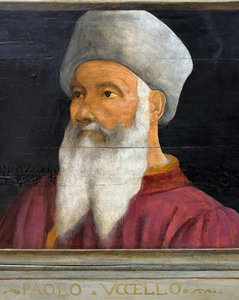
Paolo Uccello
1397 - 1475 , Italië
Snelle feiten
- Artistic Movement Or Style: Vroege Renaissance
- Artists Or Movements Influenced By This Artist:
- Dürer
- Renaissance
- Artists Who Influenced This Artist:
- Ghiberti
- Donatello
- Date Of Birth: 1397
- Date Of Death: 1475
- Full Name: Paolo Uccello
- Nationality: Italiaans
- Notable Artworks:
- San Romano
- Verloss van de Maagd
- Place Of Birth: Pratovecchio, Italië
Gerelateerde artikelen

Tempera on Panel: A Procurement Guide to Durable, High-Quality Art for Large-Scale Hospitality Projects
A professional procurement guide for hotel designers on the durability and prestige of tempera on panel. Discover how these high-quality, large-scale artworks offer unmatched longevity and architectural impact for premium hospitality projects and commercial interiors.

Realism in Art: A Professional Guide to Authentic Detail and Lifelike Masterpieces for Large-Scale Interior Projects
Master the use of Realism in professional interiors. This expert guide explores 19th-century masterpieces, offering procurement managers and designers technical insights into selecting authentic, hand-painted oil reproductions for high-end hotel and corporate projects.


