


 Voorvertoning
 Verstuur
 Delen
Delen
 Details bekijken
 Gids
Gids

 Download
 Vergelijkbare items
 Röntgenonderzoek
 Diavoorstelling
 Vraag & antwoord
 Statistieken
In de Bos 1


 Lees meer
Giclée / Kunstafdrukken
Giclée- of canvasafdruk van museumkwaliteit met een snelle productie en flexibele afwerkingsmogelijkheden. ( Bestel handgeschilderde reproductie Schakel over naar digitale afbeeldingen)




P118B €10

P118H €10

P118W €10

P438Z €10

P508JH €12

P508YH €12

P805H €10

P805Z €10

P919BZ €10

P919G €10

P919XJ €10

P959ZH €10

P968JZ €12

W106C €8

W218G €10

W218JH €8

W218Y €10

W307PJ €10

W316G €10

W316PJ €8

W316Y €10

W398PJ €8

W4111J €10

W500HY €15

W500JH €15

W692G €12

W849H €8

W940BG €15

W953PJ €8




Kies uit onze vooraf ingestelde maten die overeenkomen met de originele verhoudingen van het kunstwerk.

Voer de gewenste breedte en hoogte in, passend bij uw lijst of muur. Een afdruk kan alleen worden ingekort en nooit groter worden gemaakt dan het origineel; een formaat met andere verhoudingen zal daarom een deel van de afbeelding verliezen. Wij sturen u een digitaal mockup ter goedkeuring voordat we tot drukwerk overgaan. De afbeelding op deze pagina toont niet de werkelijke uitsnede — dit is alleen te zien op het mockup.
Wereldwijde levering () binnen 2 weken in plaats van de standaard 4/5 weken. (6 november)

Gratis wereldwijde expressverzending

Hoogwaardig linnen canvas

Volledige verzendverzekering

Garantie op terugbetaling van invoerrechten

Garantie op exacte kleurweergave

Retourbeleid van 100 dagen (alleen bij defecten)

100% Geld-terug-garantie

Korting bij meerdere afnames
 De optie voor glas is alleen beschikbaar bij een formaat kleiner dan 110 cm.

In de Bos 1
Giclée / Kunstafdrukken
Afmetingen reproductie
-


Eindtotaal
€ 58
In The Woods 1: A Post-Impressionist Revelation
Paul Cézanne’s *In The Woods 1*, painted around 1895–1896, isn't merely a depiction of a forest; it’s a profound exploration of perception and form—a pivotal moment in art history that laid the groundwork for modernism. This oil painting, residing within the collection of the Galleria d’Arte Moderna in Brescia, Italy, invites us to step into Cézanne’s world, where nature isn't simply observed but actively constructed through color, line, and spatial arrangement. The scene unfolds with a deliberate simplicity: tall, slender trees dominate the composition, their branches reaching upwards like grasping fingers, while lush green foliage spills across the canvas in a vibrant tapestry of hues. Yet, beneath this apparent tranquility lies a complex interplay of observation and invention—a testament to Cézanne’s revolutionary approach to representation. He wasn't striving for photographic accuracy but rather for an essence, a distilled truth of the natural world as he *felt* it. The painting’s power resides not in its realism, but in its ability to evoke a sense of depth and atmosphere—a feeling of being enveloped by the forest itself. Cézanne’s technique is characterized by a radical departure from Impressionist conventions. Instead of capturing fleeting impressions of light, he meticulously dismantles visual reality into geometric shapes – cylinders, cones, and planes – suggesting their three-dimensionality not through shading but through carefully placed lines and color variations. This approach anticipates Cubism's fragmented forms, challenging the established norms of Western art that had long prioritized realistic depiction. Notice how Cézanne breaks down the trees into fundamental shapes—cylinders, cones, and planes—suggesting their three-dimensionality not through shading but through carefully placed lines and color variations. This technique, anticipating Cubism’s fragmented forms, challenged the established conventions of Western art that had long prioritized realistic depiction.- Style: Post-Impressionism
- Artist: Paul Cézanne
- Date: Circa 1895–1896
- Location: Galleria d’Arte Moderna, Brescia, Italy
Artistic Influences and Technique
Cézanne's work stands as a bridge between Impressionism and Cubism, marking a decisive shift in artistic thinking. While deeply influenced by the Impressionists’ focus on capturing fleeting moments of light and color, Cézanne moved beyond mere optical observation. He rejected the traditional methods of perspective—the illusion of depth created through linear recession—and instead employed a system of geometric simplification. The painting's dappled light, created by broken brushstrokes, adds to this sense of dynamism and movement, as if capturing the shifting patterns of sunlight filtering through the leaves. Furthermore, Cézanne’s brushwork is deliberately visible—a hallmark of Post-Impressionism—adding texture and energy to the surface of the painting. These broken strokes don't blend smoothly; instead, they retain their individual character, contributing to the overall sense of dynamism and movement. The influence of Japanese prints is also evident in Cézanne’s use of flattened planes and simplified forms, reflecting a growing interest in non-Western art during his time.Symbolism and Emotional Resonance
Beyond its formal innovations, *In The Woods 1* possesses a powerful emotional resonance. The forest itself can be interpreted as a symbol of refuge—a place of solitude, contemplation, and connection with nature. Cézanne’s deliberate simplification of forms creates a sense of calm and tranquility, inviting the viewer to escape the complexities of modern life. The upward thrust of the trees suggests aspiration and hope, while the dappled light evokes a feeling of warmth and intimacy. It's as if Cézanne is attempting to convey not just what he saw, but also what he *felt*—a deeply personal and profoundly moving vision of nature. Consider how Cézanne’s use of color contributes to this emotional impact: The greens are particularly striking, ranging from deep emerald to vibrant lime, suggesting the density and complexity of the forest floor.A Legacy of Innovation
*In The Woods 1* exemplifies Cézanne's unique approach to color—a departure from Impressionist pastel hues towards bolder, more saturated tones. He wasn’t simply experimenting with color; he was fundamentally altering the way artists perceived and represented space—a concept that would profoundly influence generations of artists to come. His work paved the way for abstraction by prioritizing form over imitation, a revolutionary idea at the time. Cézanne's unwavering dedication to exploring new artistic possibilities cemented his place as one of the most influential figures in modern art—a testament to his enduring vision and transformative contribution to the history of painting.Veelgestelde vragen
Is "In de Bos 1" door Paul Cézanne een portret, landschap of vierkante compositie?
"In de Bos 1" door Paul Cézanne heeft een Staand formaat-formaat. Het formaat beschrijft de verhoudingen van de compositie.
Waarom heeft het kunstwerk "In de Bos 1" deze auteursrechtelijke status?
De auteursrechtstatus van "In de Bos 1" - bevindt zich in het publiek domein - de auteursrechten zijn verlopen - is gebaseerd op het overlijden van de kunstenaar in 1906.
Waarvoor wordt een reproductie van "In de Bos 1" door Paul Cézanne aanbevolen?
Een afdruk van "In de Bos 1" wordt aanbevolen voor Statementstuk.
Vergelijkbare kunstwerken


Biografie kunstenaar
Een Revolutionaire Visie: Het Leven en Werk van Paul Cézanne
Paul Cézanne, geboren in Aix-en-Provence in 1839, staat als een monumentale figuur die de kloof overbrugt tussen de vluchtige impressies van het Impressionisme en de gefragmenteerde vormen van het Kubisme. Zijn weg was er geen van onmiddellijke erkenning; eerder was het een langzaam smeulen van artistieke exploratie, gekenmerkt door periodes van zelfvertwijfeling en kritische afwijzing, die uiteindelijk culmineerde in een nalatenschap die de loop van de moderne kunst voorgoed zou veranderen. Geboren in een welvarende familie – zijn vader aanvankelijk hoedenmaker, later bankier – genoot Cézanne een financiële zekerheid die ongebruikelijk was voor beginnende kunstenaars, waardoor hij zich zonder de directe druk van commercieel succes aan zijn passie kon wijden. Hoewel aanvankelijk gestuurd in de richting van een juridische carrière door de ambities van zijn vader, bleek de aantrekkingskracht van artistieke expressie te sterk en verliet hij uiteindelijk het recht om zich toe te leggen op schilderen, een beslissing die zijn leven zou definiëren. Vroege invloeden waren onder meer het Romantisme dat in zijn jeugd heerste en de toewijding van de Barbizonschool aan het landschap, maar juist door ontmoetingen met kunstenaars als Paul Gauguin en Georges Seurat, en hun innovatieve benaderingen van kleur en vorm, begon Cézanne zijn eigen unieke pad te smeden.Van Duisternis tot Structuur: De Evolutie van een Stijl
Cézannes vroege werk weerspiegelde vaak de dramatische, emotioneel geladen thema's die kenmerkend waren voor het Romantische schilderij – donkere paletten en expressieve penseelstreken domineerden zijn doeken. Deze eerste fase was echter slechts een opstapje naar een veel analytischere en baanbrekende benadering. Ontevreden met het eenvoudig vastleggen van vluchtige impressies van licht, zoals de Impressionisten dat graag deden, begon Cézanne aan een zoektocht om de onderliggende structuur van objecten zelf te begrijpen en weer te geven. Hij zocht niet alleen *wat* hij zag, maar *hoe* hij de fundamentele vormen die de werkelijkheid vormden waarnam. Dit leidde hem ertoe natuurlijke vormen af te breken tot hun geometrische equivalenten – kegels, cilinders, sferen – en zo decennia voor het materialiseren van de Kubistische revolutie een voorsprong te nemen. Zijn techniek kenmerkte zich door kleine, repetitieve penseelstreken, minutieus gelaagd om complexe velden van kleur en textuur op te bouwen, waardoor een gevoel van soliditeit en diepte ontstond dat voorheen onbekend was in de schilderkunst. Hij was niet geïnteresseerd in illusionistische ruimte; in plaats daarvan presenteerde hij vaak objecten vanuit meerdere standpunten tegelijkertijd, waarmee hij traditionele opvattingen over perspectief uitdaagde en de kijker dwong om actief betrokken te raken bij de geconstrueerde aard van zijn composities. Deze bewuste vervorming was niet willekeurig, maar eerder een poging om een completer begrip van vorm over te brengen, waarbij niet slechts één moment in de tijd werd weergegeven, maar een synthese van waarneming.Landschappen, Stille levens en de Menselijke Vorm: Sleutelwerken en Terugkerende Motieven
Cézannes oeuvre is opmerkelijk divers, omvattende landschappen, stille levens, portretten en afbeeldingen van baders, maar ze zijn allemaal verenigd door zijn unieke benadering van vorm en kleur. De Vijver bij Jas de Bouffan, geschilderd in 1880, is een voorbeeld van zijn landschapswerk, waarin hij zijn vermogen laat zien om de essentie van de natuur vast te leggen door middel van een zorgvuldige ordening van vormen en tonen. Portret van Émile Zola, gemaakt in 1866, onthult zijn ontwikkelende stijl en biedt een overtuigende blik op de intellectuele intensiteit van zijn nauwe vriend en medeschrijver. Zijn stille levens, zoals die met appels en ander fruit, zijn niet slechts representaties van objecten, maar eerder exploraties van volume, licht en ruimtelijke relaties. De Mont Sainte-Victoire serie werd een obsessie voor Cézanne, een terugkerend motief dat hem decennialang in staat stelde om vorm en perspectief meedogenloos te onderzoeken. Deze schilderijen zijn niet simpelweg afbeeldingen van een berg; het zijn studies naar hoe we diepte, volume en het samenspel van licht en schaduw waarnemen. Ten slotte vertegenwoordigen zijn serie Baders, met naakte figuren in idyllische landschappen, een diepgaande verkenning van de menselijke vorm en haar verbinding met de natuur, vaak doordrenkt van een gevoel van tijdloosheid en stille contemplatie.Een Nalatenschap Gesmeed in Innovatie: Cézannes Invloed op de Moderne Kunst
De impact van Paul Cézanne op latere generaties kunstenaars is onmeetbaar. Hij wordt algemeen beschouwd als de “vader van de moderne kunst” vanwege zijn baanbrekende bijdragen aan de picturale taal, die de weg vrijmaakte voor veel van de belangrijkste artistieke bewegingen van de 20e eeuw. Pablo Picasso en Georges Braque waren diep in het schuld aan Cézannes nadruk op geometrische vormen en meervoudige perspectieven, die centrale pijlers werden van het Kubisme. Zijn gedurfde gebruik van kleur inspireerde ook de Fauvisten, onder leiding van kunstenaars als Henri Matisse, die levendige, on-naturalistische tinten omarmden. Zelfs surrealistische kunstenaars vonden weerklank in Cézannes verkenning van subjectieve waarneming en psychologische diepte. Voorbij specifieke bewegingen bevrijdde Cézannes nadruk op de persoonlijke visie van de kunstenaar en zijn afwijzing van traditionele academische beperkingen generaties schilders om nieuwe vormen van expressie te verkennen. Hij daagde de definitie van representatie uit, waarbij hij de focus verlegde van het nabootsen van de werkelijkheid naar het construeren van een visuele ervaring op basis van onderliggende structuur en subjectieve waarneming. Zijn dood in 1906 markeerde niet een einde, maar een begin – de dageraad van een nieuw tijdperk in de kunstgeschiedenis, diepgaand gevormd door zijn revolutionaire visie.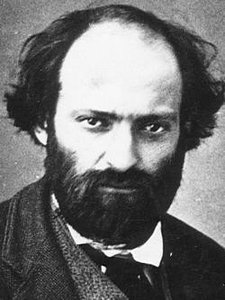
Paul Cézanne
1839 - 1906 , Frankrijk
Belangrijkste feiten
- Artistic Movement Or Style: Postimpressionisme
- Artists Or Movements Influenced By This Artist:
- Kubisme
- Fauvisme
- Surrealisme
- Artists Who Influenced This Artist:
- Romanticisme
- Barbizon school
- Paul Gauguin
- Georges Seurat
- Date Of Birth: 19 januari 1839
- Date Of Death: 23 oktober 1906
- Full Name: Paul Cézanne
- Nationality: Frans
- Notable Artworks:
- The Pond at Jas de Bouffan
- Portrait of Émile Zola
- Mont Sainte-Victoire series
- The Bathers
- Place Of Birth: Aix-en-Provence, Frankrijk
Gerelateerde artikelen

Post-Impressionism Guide: Bold Colors and Expressive Masterpieces for Professional Hotel Decorators
Elevate hospitality interiors with Post-Impressionist masterpieces. A professional guide for hotel designers on selecting bold, expressive oil reproductions and large-scale murals to create impactful, high-end guest experiences through expert art procurement.

Beyond Impressionism: Exploring the Emotional Depth and Vibrant Mastery of Post-Impressionist Art
Discover the profound evolution of art beyond Impressionism. Explore the emotional depth, vibrant colors, and revolutionary techniques of Post-Impressionist masters like Van Gogh and Cézanne in this expert guide to art history's most expressive movement.


