

Oil On Canvas.

§ 1Catalogusgegevens


§ 2Abstract
Beschrijving verzamelobject
Experience the captivating world of Paul Cézanne's 'L'Estaque'! This iconic painting showcases his revolutionary approach to color, form, and landscape – a cornerstone of Post-Impressionism.
 Lees meer
Biografie kunstenaar
De Evolutie van een Stijl</h2> Cézannes vroege werk weerspiegelde vaak de dramatische
§ 3Toelichting
Introduction to Paul Cézanne and Post-Impressionism
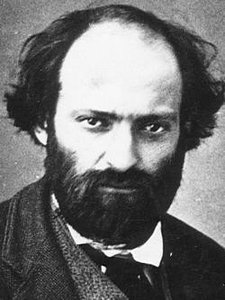
Paul Cézanne (1839-1906) was a French artist who played a crucial role in the transition from 19th-century Impressionism to 20th-century Cubism. He is often referred to as the "father of Post-Impressionism," a movement that emerged as a reaction against Impressionists' concern for naturalistic depiction of light and color. Post-Impressionism encompasses Les Nabis, Neo-Impressionism, Symbolism, Cloisonnism, the Pont-Aven School, and Synthetism, along with some later Impressionists' work.The Painting 'L'Estaque'
One of Cézanne's most famous works is 'L'Estaque,' a painting that showcases his innovative use of color and form. The painting depicts the village of L'Estaque, located near Marseille in the south of France, with its rolling hills and blue waters. It was painted using oil on canvas, a medium that allowed Cézanne to create thick layers of paint (impasto) and achieve a sense of depth and texture.Style and Technique
Cézanne's style is characterized by his emphasis on geometric forms, distorted form for expressive effect, and unnatural or modified color. He sought to express his emotions and ideas through color, often using unnaturally bright and vibrant colors to do so. Cézanne also began to abandon traditional three-dimensional perspective in favor of a more two-dimensional aesthetic, which allowed him to focus on the flat surface of the canvas and create a sense of depth and space using color and form alone.Influence and Legacy
Post-Impressionism had a profound influence on the development of modern art, particularly in its emphasis on subjective expression and exploration of new techniques and materials. It paved the way for movements such as Fauvism, Cubism, and Abstract Expressionism, which further pushed the boundaries of traditional artistic practices. Cézanne's work, in particular, had a significant impact on the development of Cubism, with artists like Pablo Picasso and Georges Braque drawing inspiration from his geometric forms and distorted perspectives.Conclusion
Paul Cézanne's 'L'Estaque' is a masterpiece of Post-Impressionist art that showcases the artist's innovative use of color, form, and perspective. As a pioneer of this movement, Cézanne's work had a profound influence on the development of modern art and continues to inspire artists today. If you are interested in learning more about Paul Cézanne or Post-Impressionism, we invite you to explore our collection of Paul Cezanne paintings at Wahoo Art.- For more information on Post-Impressionism, please visit: Post-Impressionism (Wikipedia)
Veelgestelde vragen
Waar bevindt "L'Estaque" door Paul Cézanne zich binnen de kunstgeschiedenis?
De kunsthistorische classificatie van "L'Estaque" door Paul Cézanne is Post-Impressionism, uit de 19th Century-periode.
Wat voor soort kunstwerk is "L'Estaque"?
"L'Estaque" door Paul Cézanne wordt geclassificeerd als WallArt. Deze categorie beschrijft het type kunstwerk dat het origineel is.
Hoe verhoudt de stijl van "L'Estaque" zich tot het tijdperk van de maker?
"L'Estaque" door Paul Cézanne behoort tot de Post-Impressionism-stroming, uit de 19e eeuw-periode van de maker.


 Schakel over naar print


 Voor kunstwerken of reproducties die aan één zijde groter zijn dan 105 cm (ongeveer 41 inch), wordt de lijst als een losse set verzonden. Deze methode garandeert een veilige levering en voorkomt schade tijdens het transport.


