

Acryl op canvas.

§ 1Catalogusgegevens

§ 2Abstract
Beschrijving verzamelobject
Bekijk een prachtige reproductie van 'Côte de Provence' door Paul Klee! Deze abstracte schilderkunst staat bekend om zijn kleurrijke vormen en gedetailleerde lijnen, geïnspireerd door muziek en Bauhaus.
 Lees meer
Biografie kunstenaar
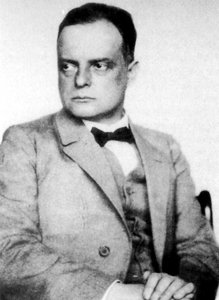
Ontdek Paul Klee (1879-1940): Een Zwitserse kunstenaar die Expressionisme, Kubisme en Surrealisme combineerde tot een speelse abstracte stijl. Laat je inspireren door zijn kleurtheorie & Bauhaus invloed!
§ 3Toelichting
Cote de Provence: A Symphony of Geometric Forms and Tranquil Reflection
“Cote de Provence” by Paul Klee isn’t merely a painting; it's an invitation into a realm where color dances with shape, creating a visual experience that transcends simple representation. Created in 1927 during Klee’s prolific period exploring abstraction, this artwork embodies the artist’s signature style—a harmonious blend of geometric precision and organic fluidity—reflecting his profound engagement with musical principles as much as it does with visual aesthetics. The piece immediately captivates with its understated palette dominated by muted blues, greens, and ochres, hues reminiscent of the Provençal landscape Klee sought to capture. However, these earthy tones are punctuated by bursts of vibrant yellows and reds, strategically positioned to draw the eye and establish a dynamic interplay between calm repose and energetic movement.- Style: Abstract Art – Klee’s approach deliberately eschews realistic depiction, prioritizing instead the exploration of fundamental visual elements like line, color, and form.
- Technique: Watercolor and Gouache on Paper – The delicate watercolor washes combined with gouache accents lend a luminous quality to the composition while maintaining textural depth.
- Composition: Geometric Shapes Interwoven – Dominant squares and rectangles are interspersed with irregular triangles and circles, generating a complex visual rhythm that mimics musical notation.
Historical Context & Influences
Klee’s artistic output during the Weimar Republic was deeply impacted by the burgeoning Bauhaus movement—a revolutionary school of art, design, and architecture advocating for functional unity between craft and art. This influence is palpable in “Cote de Provence,” where Klee meticulously considers every element to achieve a balanced aesthetic harmony. Furthermore, Klee’s fascination with musical notation served as an inspiration for his compositional choices, mirroring the structure and rhythm of musical scores—a deliberate attempt to translate auditory experience into visual form. The painting reflects the broader artistic currents of its time, signaling a move away from traditional representational art toward experimentation and conceptual exploration.Symbolism & Emotional Resonance
Beyond its formal qualities, “Cote de Provence” resonates with symbolic significance rooted in Klee’s personal worldview. The boats scattered across the canvas aren't simply decorative elements; they symbolize journeys—both literal and metaphorical—representing aspiration, exploration, and perhaps even a longing for escape from constraints. The repetition of geometric shapes reinforces the artist’s belief in the power of form to convey emotion and intellect. Viewed closely, one detects an underlying sense of serenity and contemplation—a reflection of Klee's own meditative practice and his desire to capture the essence of nature's beauty through a lens of intellectual curiosity.A Timeless Reflection on Beauty
“Cote de Provence” stands as a testament to Paul Klee’s enduring legacy as one of the most innovative and emotionally resonant artists of the 20th century. Its subtle color palette, meticulous geometric construction, and evocative symbolism continue to inspire viewers today—serving as an exquisite reminder that art can transcend time and communicate profound truths about human experience. A reproduction from AllPaintingsStore offers a chance to bring this masterpiece into your home, allowing you to appreciate its beauty and complexity firsthand.Veelgestelde vragen
Hoe harmonieren de kleuren van "Côte de Provence" met elkaar?
De kleurharmonie van "Côte de Provence" wordt beschreven als Gebalanceerde harmonie.
Welke nationale herkomst ligt ten grondslag aan de Abstract Expressionism van "Côte de Provence"?
"Côte de Provence" verbindt de Abstract Expressionism-stroming met Zwitserland via de geboorteplaats van de maker.
Waar kan ik een gids vinden voor "Côte de Provence"?
Er is een Informatieblad pagina beschikbaar voor "Côte de Provence" door Paul Klee: een printbaar informatieblad over het kunstwerk, ontworpen voor studenten en gebruik in de klas.


 Schakel over naar print


 Voor kunstwerken of reproducties die aan één zijde groter zijn dan 105 cm (ongeveer 41 inch), wordt de lijst als een losse set verzonden. Deze methode garandeert een veilige levering en voorkomt schade tijdens het transport.


