

1923. Acrylic On Canvas, 51.0 x 37.0 cm.

§ 1Catalogue data
 Acrylic On Canvas
- WallArt
- Surrealism
 1923
1923- Modern
 51.0 x 37.0 cm
§ 2Abstract
Beschrijving verzamelobject
 Lees meer
Biografie kunstenaar
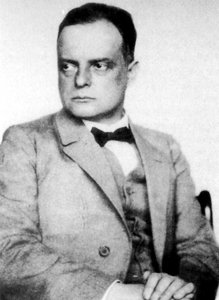
Ontdek Paul Klee (1879-1940): Een Zwitserse kunstenaar die Expressionisme, Kubisme en Surrealisme combineerde tot een speelse abstracte stijl. Laat je inspireren door zijn kleurtheorie & Bauhaus invloed!
§ 3Commentary
Puppet Theater: A Surrealist Dance of Forms by Paul Klee
Paul Klee’s “Puppet Theater,” painted in 1923, isn't merely a depiction of theatrical imagery; it’s an embodiment of Surrealism itself—a testament to the artist’s unwavering belief that art could transcend rational representation and tap into the subconscious realm. Measuring 51 x 37 cm, this watercolor masterpiece exemplifies Klee’s signature style, characterized by its deliberate juxtaposition of geometric shapes and organic forms against a muted, dark backdrop. It's a piece designed to provoke contemplation and invite multiple interpretations, mirroring the very spirit of Surrealist exploration.- Historical Context: Created during the Weimar Republic—a period marked by artistic experimentation and social upheaval—"Puppet Theater" reflects the broader cultural currents of its time. Klee’s engagement with Surrealism aligns perfectly with the movement's desire to liberate thought from conventional constraints, mirroring Leonardo da Vinci’s influence on art history.
- Composition & Technique: The artwork’s central figure—a stylized puppet-like character—dominates the canvas, encircled by a constellation of triangles, rectangles, and amorphous shapes. Klee employs a loose watercolor technique, allowing colors to bleed into each other subtly, creating an ethereal quality that defies precise delineation. Thick lines define areas of color, while thinner lines outline forms, contributing to the overall sense of movement and depth.
Color Palette & Visual Harmony
Klee’s masterful use of color is pivotal to “Puppet Theater’s” emotive power. Vibrant hues—red, yellow, blue, green, and orange—burst forth from the dark canvas, creating a striking contrast that draws the eye inward. These colors aren't applied uniformly; instead, they appear in stripes and planes, fostering a feeling of controlled chaos – a deliberate artistic choice reflecting Surrealist principles. The overall impression is one of visual delight and harmonious balance, mirroring Klee’s fascination with musical arrangement.Symbolism & Interpretations
The painting's symbolism resonates deeply with viewers. Some scholars interpret the stylized figures as representations of performers—puppeteers guiding their creations—symbolizing control and illusion. Others see them as expressions of human emotion, capturing the complexities of relationships and inner turmoil. The prominent sun at the top center serves as a beacon of artificial light, emphasizing the theatrical setting and hinting at an exploration of dreams and fantasies. Ultimately, “Puppet Theater” encourages viewers to engage in personal reflection and discover their own meanings within its abstract landscape.Legacy & Influence
Paul Klee’s unwavering commitment to Surrealism cemented his place as a pioneer of modern art. His groundbreaking approach inspired countless artists who followed him, establishing him as one of the most influential figures in 20th-century artistic discourse. Today, reproductions of “Puppet Theater” grace museums worldwide—allowing audiences to experience Klee’s extraordinary talent and creativity firsthand. Consider bringing this captivating artwork into your home with AllPaintingsStore: https://AllPaintingsStore.com/ – where you can acquire a high-quality reproduction that captures the essence of Surrealist brilliance.Veelgestelde vragen
Kan ik "Puppet theater" door Paul Klee op mijn eigen muur bekijken voordat ik het koop?
"Puppet theater" heeft een augmented reality-preview: de AR-weergave-pagina van het kunstwerk toont het in uw eigen ruimte op een compatibel apparaat.
Hoe komen stroming en tijdperk samen in "Puppet theater" door Paul Klee?
In "Puppet theater" door Paul Klee ontmoet de Surrealism-stroming de Moderne tijd-periode.
Aan welke kunstenaar wordt "Puppet theater" toegeschreven?
"Puppet theater" is gemaakt door Paul Klee. De informatie op deze pagina beschrijft het originele werk van Paul Klee.


 Schakel over naar print


 Voor kunstwerken of reproducties die aan één zijde groter zijn dan 105 cm (ongeveer 41 inch), wordt de lijst als een losse set verzonden. Deze methode garandeert een veilige levering en voorkomt schade tijdens het transport.


