


 Voorvertoning
 Verstuur
 Delen
Delen
 Details bekijken
 Gids
Gids

 Download
 Vergelijkbare items
 Röntgenonderzoek
 Diavoorstelling
 Vraag & antwoord
 Statistieken
Composition with locomotive


 Lees meer
De kunstwerken die op deze pagina worden weergegeven, zijn beschermd door de auteursrechtwetgeving, wat betekent dat het ons wettelijk niet is toegestaan om identieke reproducties te maken of te verkopen. Deze bescherming wordt gehandhaafd onder internationale overeenkomsten zoals de Conventie van Bern en door nationale wetgeving, waaronder de bepalingen van de Amerikaanse auteurswet - Titel 17. Alle rechten voorbehouden. Reproduceren of distribueren van afbeeldingen is niet toegestaan zonder uitdrukkelijke schriftelijke toestemming van WahooArt.com en de rechthebbenden.
Deze methode voldoet volledig aan de auteursrechtwetgeving, omdat het niet gaat om het kopiëren of dupliceren van het beschermde kunstwerk. In plaats daarvan is er sprake van een creatieve herinterpretatie — een nieuw schilderij dat door het origineel wordt geïnspireerd, maar er niet identiek aan is.
Giclée / Kunstafdrukken
Giclée- of canvasafdruk van museumkwaliteit met een snelle productie en flexibele afwerkingsmogelijkheden. ( Bestel handgeschilderde reproductie Schakel over naar digitale afbeeldingen)




P118B €10

P118H €10

P118W €10

P438Z €10

P508JH €12

P508YH €12

P805H €10

P805Z €10

P919BZ €10

P919G €10

P919XJ €10

P959ZH €10

P968JZ €12

W106C €8

W218G €10

W218JH €8

W218Y €10

W307PJ €10

W316G €10

W316PJ €8

W316Y €10

W398PJ €8

W4111J €10

W500HY €15

W500JH €15

W692G €12

W849H €8

W940BG €15

W953PJ €8




Kies uit onze vooraf ingestelde maten die overeenkomen met de originele verhoudingen van het kunstwerk.

Voer de gewenste breedte en hoogte in, passend bij uw lijst of muur. Een afdruk kan alleen worden ingekort en nooit groter worden gemaakt dan het origineel; een formaat met andere verhoudingen zal daarom een deel van de afbeelding verliezen. Wij sturen u een digitaal mockup ter goedkeuring voordat we tot drukwerk overgaan. De afbeelding op deze pagina toont niet de werkelijke uitsnede — dit is alleen te zien op het mockup.
Wereldwijde levering () binnen 2 weken in plaats van de standaard 4/5 weken. (9 november)

Gratis wereldwijde expressverzending

Hoogwaardig linnen canvas

Volledige verzendverzekering

Garantie op terugbetaling van invoerrechten

Garantie op exacte kleurweergave

Retourbeleid van 100 dagen (alleen bij defecten)

100% Geld-terug-garantie

Korting bij meerdere afnames
 De optie voor glas is alleen beschikbaar bij een formaat kleiner dan 110 cm.

Composition with locomotive
Giclée / Kunstafdrukken
Afmetingen reproductie
-


Eindtotaal
€ 58
René Magritte’s “Composition with Locomotive”: A Dream of Industrial Reality
René Magritte's "Composition with Locomotive," painted in 1923, isn’t merely a depiction of a train; it’s an invitation to question the very nature of perception and representation. This iconic work, housed within the Winterbotham Collection at the Art Institute of Chicago, exemplifies Magritte’s unique brand of surrealism – a deliberate disruption of familiar realities that compels viewers to actively engage with the artwork and their own assumptions about what they see.
The painting immediately draws the eye with its stark geometric composition. Bold, angular lines delineate planes of color—primarily shades of brown, grey, blue, white, and black—creating a fragmented cityscape or interior space. The locomotive itself is rendered in simplified forms, almost as if constructed from basic shapes rather than faithfully representing a specific machine. This abstraction isn’t arbitrary; it reflects Magritte's fascination with deconstructing objects to reveal their underlying structure and challenging the viewer’s ability to easily recognize familiar subjects. The influence of Cubism, particularly its emphasis on flattened perspective and multiple viewpoints, is undeniable, yet Magritte transcends mere imitation, imbuing these techniques with a distinctly personal and unsettling quality.
A Dialogue Between Industrial and Domestic
What makes “Composition with Locomotive” so compelling isn’t just the formal arrangement but also the subtle interplay of contrasting elements. The industrial power of the train—symbolic of modernity, progress, and perhaps even alienation—is juxtaposed against the domesticity of a fireplace. The billowing smoke from the locomotive is cleverly integrated with the plumes rising from the chimney, creating a visual metaphor for connection and shared experience. This pairing suggests that even seemingly disparate elements can be linked through abstract associations, prompting viewers to consider how our minds construct meaning from seemingly unrelated sensory information.
Magritte’s choice of color palette further enhances this duality. The cool blues and greys of the locomotive contrast sharply with the warmer browns and blacks of the fireplace, creating a visual tension that mirrors the conceptual one. The limited range of colors contributes to the painting's overall sense of stillness and contemplation, inviting viewers to linger and decipher the hidden connections within the composition.
Roots in Futurism and Surrealist Exploration
To fully appreciate “Composition with Locomotive,” it’s crucial to understand Magritte’s artistic journey. Early influences included Impressionism and Cubism, but a pivotal moment arrived in 1916 when he encountered the work of Italian futurists like Gino Severini. The dynamism and rhythmic energy of Futurist painting—particularly their use of lines and color to convey movement—resonated deeply with Magritte’s own desire to break free from traditional representational conventions. He described this encounter as a revelation, stating that it opened his eyes to “thought for the first time.”
Magritte's engagement with Surrealism, spearheaded by André Breton, provided him with a framework for exploring the subconscious and challenging rational thought. However, Magritte’s surrealism wasn’t driven by dreamlike imagery or irrationality in the traditional sense. Instead, he sought to expose the inherent strangeness of everyday reality—to reveal the “hidden” aspects of our perception that we often overlook. “La duree poignadee,” as it was known at the time, exemplifies this approach, presenting a familiar scene (a train and a fireplace) in an arrangement that defies immediate comprehension.
A Legacy of Ambiguity and Intrigue
“Composition with Locomotive” remains one of Magritte’s most enduringly enigmatic works. It's not a painting that offers easy answers or straightforward narratives; rather, it invites viewers to engage in a process of active interpretation. The ambiguity inherent in the composition—the blurred boundaries between industrial and domestic, reality and representation—is precisely what makes the painting so captivating. It’s a testament to Magritte’s genius that he could create an artwork that simultaneously challenges our assumptions about the world and invites us to contemplate the mysteries of perception itself.
Reproductions of this piece offer a remarkable opportunity to bring this surreal vision into your own space, allowing you to experience the same sense of wonder and contemplation that Magritte intended. Its geometric precision and evocative color palette make it a striking addition to any collection, sparking conversation and inviting viewers to question the familiar.
Veelgestelde vragen
Kan ik een röntgenopname van "Composition with locomotive" door René Magritte bekijken?
De Röntgenanalyse-pagina van "Composition with locomotive" door René Magritte is een interactieve viewer waarmee u door elf optische lagen van het kunstwerk kunt glijden, inclusief een weergave in röntgenstijl.
Welk gevoel roept "Composition with locomotive" bij u op?
"Composition with locomotive" roept een Mysterious gevoel op. De emotionele toon beschrijft de indruk die het werk achterlaat.
Is "Composition with locomotive" door René Magritte een bekend kunstwerk?
Het populariteitsniveau van "Composition with locomotive" door René Magritte is Iconic.
Vergelijkbare kunstwerken


Biografie kunstenaar
Early Life and the Seeds of Surrealism
René Magritte, geboren René François Ghislain Magritte op 21 november 1898 in Lessines, België, kwam in een wereld terecht die zijn enigmatische artistieke visie diepgaand zou vormen. Zijn vroege jaren werden gekenmerkt door een onheilspellend incident – de zelfmoord van zijn moeder toen hij slechts dertien jaar oud was. Het beeld van haar lichaam dat uit de Samber werd opgegraven, met haar jurk die haar gezicht bedekte, werd een spookachtig motief dat subtiel terugkeerde in zijn latere werk, zich manifesteerde in verduisterde figuren en een voortdurende zoektocht naar verborgen realiteiten. Deze vroege trauma’s zaaiden een fascinatie met mysterie, verlies en de verstikkende kracht van wat onthuld blijft. Hoewel details van zijn jeugd enigszins ongrijpbaar zijn, is duidelijk dat deze vormende ervaring de basis legde voor zijn levenslange vraaging naar perceptie en representatie. Hij begon op tienjarige leeftijd met tekenen, wat een innige neiging tot visuele expressie onthulde, maar experimenteerde aanvankelijk met Impressionisme voordat hij een pad insloeg dat hem zou leiden tot het worden van een van de meest significante figuren in de Surrealistische kunst.Artistic Development and Influences
Magritte’s artistieke reis was niet direct of rechtlijnig. Hij studeerde aan de Académie Royale des Beaux-Arts in Brussel, maar vond de traditionele methoden daar verstikkend. Zijn vroege werk experimenteerde met Futurisme en Cubisme, waardoor elementen van deze avantgardistische bewegingen werden opgenomen, maar uiteindelijk weigerde hun puur formele bezorgdheid. Het was pas in 1922, toen hij de schilderij *The Song of Love* van Giorgio de Chirico ontmoette, dat Magritte een resonatie ontdekte die zijn artistieke koers onherstelbaar zou veranderen. De Chirico’s dromerige landschappen en verontrustende juxtaposities openden voor Magritte een nieuwe manier van kijken – een wereld waar het bekende vreemd kon worden gemaakt, en het alledaagse met diepe mystiek werd ingezaaid. Dit ontmoeting leidde tot zijn toewijding aan Surrealisme, hoewel hij vaak een unieke afstand behield van de meer expliciet psychologische of automatische aspecten ervan. Hij prefereerde een nauwkeurige, bijna klinische precisie in zijn schilderkunst, waarbij hij realistische technieken gebruikte om illogische scenario’s weer te geven.The Heart of Surrealism: Challenging Reality
Vanaf 1926 had Magritte zich volledig ingezet voor de principes van Surrealisme, waarbij hij *Le Jockey Perdu (The Lost Jockey)* produceerde, die breed wordt beschouwd als zijn eerste echt surrealistische werk. Echter, zijn soort Surrealisme was uniek. Hij was niet geïnteresseerd in het verkennen van het onbewuste door vrije associatie of dromerige beelden zoals sommige van zijn tijdgenoten. In plaats daarvan zocht Magritte naar een manier om de perceptie van de werkelijkheid uit te dagen door alledaagse objecten in onverwachte contexten te presenteren, waardoor kijkers werden aangemoedigd hun aannames over de wereld om hen heen in twijfel te trekken. Iconische werken zoals *The Treachery of Images (This is not a pipe)* (1929) ontleden het relatie tussen beeld en object briljant, herinnerend ons dat een representatie nooit het ding zelf is. *Les Amants (The Lovers)* (1927-1928), met zijn verduisterde figuren, echoë de trauma’s van zijn moeder dood terwijl tegelijkertijd intimiteit en verborgenheid worden onderzocht. *Time Transfixed* (1938) presenteert een locomatief die door een bakstenen muur barst, waardoor onze perceptie van ruimte en tijd wordt verstoord. En *The Human Condition* (1933), een doek in een doek, vervaagt de grenzen tussen representatie en werkelijkheid, waardoor we worden aangemoedigd om te overwegen hoe we de wereld waarnemen en interpreteren.Later Life, Recognition, and Enduring Legacy
Ondanks initiële moeilijkheden met erkenning, kreeg Magritte’s werk geleidelijk aan meer bekendheid, vooral in de Verenigde Staten door tentoonstellingen in 1936 en latere retrospectieve tentoonstellingen op het Museum of Modern Art (1965) en het Metropolitan Museum of Art (1992). Hij bleef politiek actief gedurende zijn hele leven, waarbij hij artistieke autonomie verdedigde. Hij bleef zijn kenmerkende stijl verfijnen, thema’s van herhaling, illusie en de kracht van taal onderzoeken in schilderijen die zowel intellectueel stimulerend als visueel aantrekkelijk zijn. Magritte stierf op 15 augustus 1967, waardoor een oeuvre achterbleef dat nog steeds kijkers wereldwijd fascineert en uitdaagt. Zijn invloed strekt zich verder uit dan de schilderkunst, beïnvloedt pop art, minimalistische kunst, conceptuele kunst en zelfs reclame en film. Vandaag de dag worden zijn schilderijen in belangrijke museumcollecties over de hele wereld gehouden, waaronder de Musées royaux des beaux-arts de Belgique in Brussel, die het Magritte Museum herbergen – gewijd geheel aan zijn werk en dat de grootste collectie van zijn creaties bezit.- Museum Collecties: Musées royaux des beaux-arts de Belgique, Brussels; Magritte Museum.
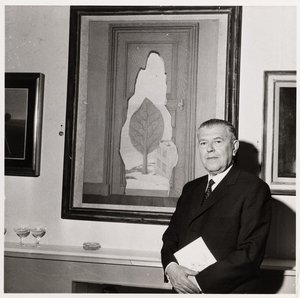
René Magritte
1898 - 1967 , België
Belangrijkste feiten
- Artistic Movement Or Style: Surrealisme
- Artists Or Movements Influenced By This Artist:
- Pop art
- Minimalisme
- Artists Who Influenced This Artist: ['Giorgio de Chirico']
- Date Of Birth: 21 november 1898
- Date Of Death: 15 augustus 1967
- Full Name: René François Ghislain Magritte
- Nationality: Belgisch
- Notable Artworks:
- De Lovers
- Treurkaart
- Tijd verstijfd
- Place Of Birth: Lessines, België
Gerelateerde artikelen

Cubist Portraits: A Professional Guide to Integrating Geometric Abstraction into Modern Hospitality Design
Elevate hospitality interiors with Cubist portraits. Our expert guide for hotel designers explores integrating geometric abstraction into modern spaces through high-quality, scalable oil reproductions and custom multi-panel solutions for large-scale architectural projects.

Neo-Abstract Art Trend Forecast: High-Impact Geometric Compositions for Contemporary Commercial Interiors
Elevate commercial interiors with Neo-Abstract art. Discover how high-impact geometric compositions and custom oil reproductions provide scalable, sophisticated design solutions for hotels, restaurants, and corporate spaces. Expert procurement for large-scale hospitality projects.

Cubist Expression: A Professional Guide to Integrating Geometric Abstraction into Modern Hospitality Design
Elevate hospitality interiors with Cubist art. Our expert guide explores integrating geometric abstraction into hotel design through high-quality, large-scale oil reproductions and custom multi-panel commissions tailored for professional designers and procurement managers.


