


 Bekijk op ware grootte
 Verstuur
 Delen
Delen
 Details bekijken
 Gids voor studentenkunstwerken

 Download
 Vergelijkbare items
 Röntgenonderzoek
 Diavoorstelling
 Statistieken
Unexpected answer


 Lees meer
De kunstwerken die op deze pagina worden weergegeven, zijn beschermd door de auteursrechtwetgeving, wat betekent dat het ons wettelijk niet is toegestaan om identieke reproducties te maken of te verkopen. Deze bescherming wordt gehandhaafd onder internationale overeenkomsten zoals de Conventie van Bern en door nationale wetgeving, waaronder de bepalingen van de Amerikaanse auteurswet - Titel 17. Alle rechten voorbehouden. Reproduceren of distribueren van afbeeldingen is niet toegestaan zonder uitdrukkelijke schriftelijke toestemming van WahooArt.com en de rechthebbenden.
Als een respectvol en legaal alternatief bieden wij op maat gemaakte, handgeschilderde kunstwerken aan die geïnspireerd zijn op het origineel. Onze bekwame en professionele kunstenaars bestuderen zorgvuldig de stijl, sfeer en artistieke essentie van het origineel om een nieuw, uniek werk te creëren dat dezelfde emotie oproept – terwijl het een op zichzelf staande, originele creatie blijft.
Deze methode voldoet volledig aan de auteursrechtwetgeving, omdat het niet gaat om het kopiëren of dupliceren van het beschermde kunstwerk. In plaats daarvan is er sprake van een creatieve herinterpretatie — een nieuw schilderij dat door het origineel wordt geïnspireerd, maar er niet identiek aan is.
Handgemaakte olieverfreproductie
Met de hand geschilderd in olieverf op canvas in uw gewenste maat en lijst, op bestelling gemaakt door onze kunstenaars. ( Schakel over naar print Schakel over naar digitale afbeeldingen)




P118B €10

P118H €10

P118W €10

P438Z €10

P508JH €12

P508YH €12

P805H €10

P805Z €10

P919BZ €10

P919G €10

P919XJ €10

P959ZH €10

P968JZ €12

W106C €8

W218G €10

W218JH €8

W218Y €10

W307PJ €10

W316G €10

W316PJ €8

W316Y €10

W398PJ €8

W4111J €10

W500HY €15

W500JH €15

W692G €12

W849H €8

W940BG €15

W953PJ €8




Kies uit onze vooraf ingestelde maten die overeenkomen met de originele verhoudingen van het kunstwerk.

Voer de breedte en de hoogte in die u nodig heeft, passend bij uw lijst of uw muur. Dit is handgeschilderd, dus bij een afmeting met een andere vormverhouding kan de kunstenaar iets meer rondom het schilderij schilderen of juist iets meer weglaten — u kiest zelf. Wij sturen u een digitaal mockup ter goedkeuring voordat het schilderwerk begint. De afbeelding die op deze pagina wordt getoond, is niet het uiteindelijke resultaat — alleen de mockup geeft dit weer.
Na de bestelling zal het team van AllPaintingsStore.com per e-mail contact opnemen met de klant voor instructies en een mockup-voorbeeld sturen.
Wereldwijde levering () binnen 3 tot 4 weken in plaats van de standaard 5 weken. (23 oktober). Zonder concessies aan de kwaliteit.

Gratis wereldwijde expressverzending

Hoogwaardig linnen canvas

Volledige verzendverzekering

Garantie op terugbetaling van invoerrechten

Garantie op exacte kleurweergave

Retourbeleid van 100 dagen (alleen bij defecten)

100% Geld-terug-garantie

Korting bij meerdere afnames
 De optie voor glas is alleen beschikbaar bij een formaat kleiner dan 110 cm.

Unexpected answer
Reproductiemethode
Formaat reproductie
-


Totaalprijs
€ 227
A Threshold of Mystery: The Enigma of Magritte’s Vision
In the quiet, unsettling realm of René Magritte’s 1933 masterpiece, Unexpected Answer, the boundary between the known and the unknowable begins to dissolve. At first glance, the viewer is presented with a scene of deceptive simplicity: a doorway, framed by textured brickwork, bathed in a diffused, somber light. Yet, as one lingers before this oil on canvas, the domestic familiarity of the setting is punctured by a profound sense of displacement. Magritte does not merely paint a door; he paints a rupture in reality. The central focus—a dark, void-like shadow cast against the wall—suggests the presence of a figure, yet the person remains tantalizingly absent, their identity swallowed by the very light that reveals them. It is a painting that refuses to be solved, inviting the observer into a psychological landscape where every shadow holds a secret and every corner whispers of the unseen.
This work stands as a quintessential pillar of the Surrealist movement, a period defined by its rebellion against the constraints of rational logic. Magritte, working alongside contemporaries like André Breton, sought to tap into the irrational forces of the human subconscious. In Unexpected Answer, he achieves this through a masterful manipulation of form and illusion. The technique is deceptively smooth, utilizing subtle tonal variations to create an illusory depth that pulls the eye toward the irregular, human-shaped void within the door. There is a haunting tension in the way the light interacts with the textures of the brick and wood, creating a space that feels both physically tangible and existentially hollow. For the collector or the lover of fine art, this piece offers more than visual interest; it offers an intellectual challenge, a window into the "mystery" that Magritte himself claimed was the very essence of his work.
Symbolism and the Architecture of the Subconscious
To gaze upon Unexpected Answer is to confront the profound complexities of human perception. The symbolism embedded within the composition is deeply rooted in the artist's own history and the broader Surrealist fascination with the hidden self. The irregular shape cut through the door, vaguely reminiscent of a human silhouette or perhaps two figures caught in an embrace, serves as a powerful metaphor for the layers of identity that we conceal from the world. Magritte often utilized motifs of veiled faces and obscured subjects—a technique many scholars link to the traumatic memory of his mother’s death, where her face was shrouded by her clothing. In this painting, the "answer" promised by the title is intentionally withheld, leaving the viewer to grapple with questions of presence and absence, of what lies behind the threshold, and whether we can ever truly know the reality that exists beyond our immediate sight.
For interior designers and curators, this artwork serves as a sophisticated focal point, capable of injecting a sense of contemplative depth into any space. Its muted palette and dramatic use of chiaroscuro allow it to integrate seamlessly into modern, minimalist, or classical settings, providing a conversation piece that transcends mere decoration. A high-quality reproduction of this work does not just adorn a wall; it transforms a room into a gallery of thought. It invites guests to pause, to wonder, and to engage with the beautiful, unsettling ambiguity of the human condition. In an era of constant visual noise, Magritte’s ability to evoke such profound stillness and mystery remains an unparalleled gift to the world of fine art.
Vragen & Antwoorden
Welke kunstenaar en welke stijl staan achter "Unexpected answer"?
"Unexpected answer" werd gecreëerd door René Magritte in de Surrealist Art-stijl. De kunstenaar en de stroming bepalen de traditie van het werk.
Hoe kan ik de afbeelding van "Unexpected answer" door René Magritte downloaden?
De afbeelding van "Unexpected answer" door René Magritte kan worden gedownload via de Downloaden pagina van het kunstwerk: een download van een digitale afbeelding in hoge resolutie.
Met welk medium is "Unexpected answer" door René Magritte uitgevoerd?
Het medium van "Unexpected answer" door René Magritte is Oil On Canvas. Reproducties zijn bedoeld om de uitstraling van deze techniek weer te geven.
Biografie van de kunstenaar
Early Life and the Seeds of Surrealism
René Magritte, geboren René François Ghislain Magritte op 21 november 1898 in Lessines, België, kwam in een wereld terecht die zijn enigmatische artistieke visie diepgaand zou vormen. Zijn vroege jaren werden gekenmerkt door een onheilspellend incident – de zelfmoord van zijn moeder toen hij slechts dertien jaar oud was. Het beeld van haar lichaam dat uit de Samber werd opgegraven, met haar jurk die haar gezicht bedekte, werd een spookachtig motief dat subtiel terugkeerde in zijn latere werk, zich manifesteerde in verduisterde figuren en een voortdurende zoektocht naar verborgen realiteiten. Deze vroege trauma’s zaaiden een fascinatie met mysterie, verlies en de verstikkende kracht van wat onthuld blijft. Hoewel details van zijn jeugd enigszins ongrijpbaar zijn, is duidelijk dat deze vormende ervaring de basis legde voor zijn levenslange vraaging naar perceptie en representatie. Hij begon op tienjarige leeftijd met tekenen, wat een innige neiging tot visuele expressie onthulde, maar experimenteerde aanvankelijk met Impressionisme voordat hij een pad insloeg dat hem zou leiden tot het worden van een van de meest significante figuren in de Surrealistische kunst.Artistic Development and Influences
Magritte’s artistieke reis was niet direct of rechtlijnig. Hij studeerde aan de Académie Royale des Beaux-Arts in Brussel, maar vond de traditionele methoden daar verstikkend. Zijn vroege werk experimenteerde met Futurisme en Cubisme, waardoor elementen van deze avantgardistische bewegingen werden opgenomen, maar uiteindelijk weigerde hun puur formele bezorgdheid. Het was pas in 1922, toen hij de schilderij *The Song of Love* van Giorgio de Chirico ontmoette, dat Magritte een resonatie ontdekte die zijn artistieke koers onherstelbaar zou veranderen. De Chirico’s dromerige landschappen en verontrustende juxtaposities openden voor Magritte een nieuwe manier van kijken – een wereld waar het bekende vreemd kon worden gemaakt, en het alledaagse met diepe mystiek werd ingezaaid. Dit ontmoeting leidde tot zijn toewijding aan Surrealisme, hoewel hij vaak een unieke afstand behield van de meer expliciet psychologische of automatische aspecten ervan. Hij prefereerde een nauwkeurige, bijna klinische precisie in zijn schilderkunst, waarbij hij realistische technieken gebruikte om illogische scenario’s weer te geven.The Heart of Surrealism: Challenging Reality
Vanaf 1926 had Magritte zich volledig ingezet voor de principes van Surrealisme, waarbij hij *Le Jockey Perdu (The Lost Jockey)* produceerde, die breed wordt beschouwd als zijn eerste echt surrealistische werk. Echter, zijn soort Surrealisme was uniek. Hij was niet geïnteresseerd in het verkennen van het onbewuste door vrije associatie of dromerige beelden zoals sommige van zijn tijdgenoten. In plaats daarvan zocht Magritte naar een manier om de perceptie van de werkelijkheid uit te dagen door alledaagse objecten in onverwachte contexten te presenteren, waardoor kijkers werden aangemoedigd hun aannames over de wereld om hen heen in twijfel te trekken. Iconische werken zoals *The Treachery of Images (This is not a pipe)* (1929) ontleden het relatie tussen beeld en object briljant, herinnerend ons dat een representatie nooit het ding zelf is. *Les Amants (The Lovers)* (1927-1928), met zijn verduisterde figuren, echoë de trauma’s van zijn moeder dood terwijl tegelijkertijd intimiteit en verborgenheid worden onderzocht. *Time Transfixed* (1938) presenteert een locomatief die door een bakstenen muur barst, waardoor onze perceptie van ruimte en tijd wordt verstoord. En *The Human Condition* (1933), een doek in een doek, vervaagt de grenzen tussen representatie en werkelijkheid, waardoor we worden aangemoedigd om te overwegen hoe we de wereld waarnemen en interpreteren.Later Life, Recognition, and Enduring Legacy
Ondanks initiële moeilijkheden met erkenning, kreeg Magritte’s werk geleidelijk aan meer bekendheid, vooral in de Verenigde Staten door tentoonstellingen in 1936 en latere retrospectieve tentoonstellingen op het Museum of Modern Art (1965) en het Metropolitan Museum of Art (1992). Hij bleef politiek actief gedurende zijn hele leven, waarbij hij artistieke autonomie verdedigde. Hij bleef zijn kenmerkende stijl verfijnen, thema’s van herhaling, illusie en de kracht van taal onderzoeken in schilderijen die zowel intellectueel stimulerend als visueel aantrekkelijk zijn. Magritte stierf op 15 augustus 1967, waardoor een oeuvre achterbleef dat nog steeds kijkers wereldwijd fascineert en uitdaagt. Zijn invloed strekt zich verder uit dan de schilderkunst, beïnvloedt pop art, minimalistische kunst, conceptuele kunst en zelfs reclame en film. Vandaag de dag worden zijn schilderijen in belangrijke museumcollecties over de hele wereld gehouden, waaronder de Musées royaux des beaux-arts de Belgique in Brussel, die het Magritte Museum herbergen – gewijd geheel aan zijn werk en dat de grootste collectie van zijn creaties bezit.- Museum Collecties: Musées royaux des beaux-arts de Belgique, Brussels; Magritte Museum.
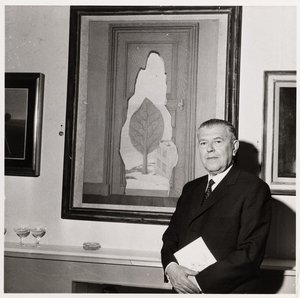
René Magritte
1898 - 1967 , België
Snelle feiten
- Artistic Movement Or Style: Surrealisme
- Artists Or Movements Influenced By This Artist:
- Pop art
- Minimalisme
- Artists Who Influenced This Artist: ['Giorgio de Chirico']
- Date Of Birth: 21 november 1898
- Date Of Death: 15 augustus 1967
- Full Name: René François Ghislain Magritte
- Nationality: Belgisch
- Notable Artworks:
- De Lovers
- Treurkaart
- Tijd verstijfd
- Place Of Birth: Lessines, België
Gerelateerde artikelen

The Treachery of Images: Decoding René Magritte’s Surrealist Philosophy and the Paradox of Representation
Explore the profound mystery of René Magritte’s 'The Treachery of Images.' Dive into an expert analysis of his Surrealist philosophy, the paradox of representation, and how he challenged reality through the interplay of language and visual perception.

Oil on Canvas: A Historical & Technical Exploration of a Timeless Artistic Medium
Explore the rich history & enduring techniques of oil painting on canvas. Discover the science behind its longevity, conservation practices, and contemporary relevance. Expert insights for art enthusiasts.

The Soul of Impressionism: Why Oil on Canvas Captures Eternal Light and Timeless Emotion
Discover the enchanting alchemy of Impressionism. Explore how the mastery of oil on canvas, through glazing and impasto, captures eternal light and emotion. Perfect for lovers of Monet and Van Gogh seeking the profound depth of hand-painted fine art.

The Enduring Legacy of Oil on Canvas: Technique, History & Aesthetic Impact
Explore the rich history & techniques of oil painting – from Renaissance masters to Impressionism. Discover pigments, layering methods, and why this timeless medium endures. Expert insights for artists & art enthusiasts.

The Enduring Power of Painting: A Historical & Contemporary Exploration of Form and Emotion
Explore the rich history & enduring techniques of oil painting with AllPaintingsStore. Discover masterpieces, learn about art collecting, and find authentic handmade reproductions crafted by skilled artists.


