Geld-terug-garantie · 100 dagen Gratis wereldwijde verzending
449.564kunstwerken 30.613kunstenaars 4.660musea 32talen
Catalogue entry

Scupstoel

1448. Acrylic.

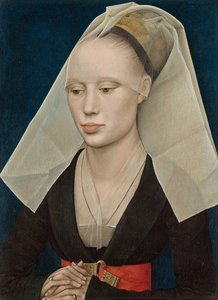
Fig. 1. Rogier van der Weyden, Scupstoel, 1448. Shown as the reproduction you are specifying: , .

§ 1Catalogue data

§ 2Abstract

Beschrijving verzamelobject

Explore Rogier van der Weyden’s haunting ‘Scupstoel,’ a masterful study in quiet intensity capturing the contemplative spirit of Early Netherlandish painting—a revolutionary depiction of emotion and meticulous detail that invites you to discover its timeless beauty.

Biografie kunstenaar

Rogier van der Weyden (1400-1464): Een meester van de vroegere Nederlandse schilderkunst, bekend om zijn emotionele religieuze werken, rijke kleuren en realistische details. Ontdek 'Lamentatie' & meer!

§ 3Commentary

A Study in Quiet Intensity: Examining Rogier van der Weyden’s ‘Scupstoel’

Rogier van der Weyden’s “Scupstoel,” completed around 1448, stands as a remarkable testament to the burgeoning artistic spirit of Early Netherlandish painting. More than just a depiction of a man seated upon a pile of chairs—a seemingly simple subject matter—the artwork embodies profound emotional depth and meticulous craftsmanship that cemented Van der Weyden’s reputation as one of the era's foremost masters.

Style & Technique: The piece exemplifies the stylistic hallmarks of its time, firmly rooted in the Northern Renaissance tradition. Characterized by a restrained palette dominated by muted browns, ochres, and reds—a deliberate choice reflecting the solemnity of religious contemplation—the painting prioritizes naturalistic detail over flamboyant ornamentation. Van der Weyden’s mastery is evident in his painstaking rendering of textures: the worn fabric of the chairs, the subtle creases in the man's clothing, and even the delicate folds of drapery convey a palpable sense of realism.

Historical Context: Created during a period marked by significant religious fervor—the Burgundian Netherlands experienced a fervent devotion to saints and biblical narratives—‘Scupstoel’ speaks directly to this cultural milieu. The artwork likely served as a preparatory sketch or study for a larger altarpiece, reflecting the prevailing artistic practice of exploring compositional ideas before committing them to monumental canvases.

Symbolism & Emotion: While the precise symbolism embedded within ‘Scupstoel’ remains debated by scholars, its central figure—a man seated amidst the chairs—is interpreted as representing contemplation and humility. The arrangement itself suggests a deliberate effort to convey inner turmoil balanced by serene composure. Van der Weyden's ability to capture such nuanced psychological states was revolutionary for his time, marking him as a pioneer in portraying human emotion with unprecedented sensitivity.

Interior Design Inspiration: “Scupstoel”’s understated elegance and masterful execution offer valuable insights into the aesthetic sensibilities of the fifteenth century. Its muted tones and textured surfaces can inspire designers seeking to create spaces imbued with warmth, tranquility, and intellectual curiosity—a timeless reminder that beauty resides not merely in grandeur but also in profound emotional resonance.

Veelgestelde vragen

Welke emotie straalt "Scupstoel" door Rogier van der Weyden uit?

De emotionele toon die is vastgelegd voor "Scupstoel" door Rogier van der Weyden is Reflective. Het vat het gevoel samen dat het werk uitdrukt.

Hoe past "Scupstoel" binnen de thema's en stijl van Rogier van der Weyden?

"Scupstoel" behoort tot het Early Netherlandish Renaissance-werk van Rogier van der Weyden, waarvan de bekende thema's onder meer religious emotion, human expression, medieval tradition, psychological insight, artist legacy omvatten.

Hoe verhoudt het onderwerp van "Scupstoel" zich tot de gebruikelijke thema's van Rogier van der Weyden?

Binnen de bekende thema's van Rogier van der Weyden - religious emotion, human expression, medieval tradition, psychological insight, artist legacy - legt "Scupstoel" een eigen focus op religious painting, human figure, chair arrangement, psychological depth, medieval art, detail rendering, symbolism.
§ 4The artist

Rogier van der Weyden

Rogier van der Weyden

1400 - 1464, België

Quick facts about Rogier van der Weyden

  • Artistic Movement Or Style: Vroege Nederlandse schilderkunst
  • Artists Or Movements Influenced By This Artist:
    • Italiaanse Renaissance
    • Spaanse schilderkunst
  • Artists Who Influenced This Artist:
    • Robert Campin
    • Jan van Eyck
  • Date Of Birth: c. 1400
  • Date Of Death: 1464
  • Full Name: Rogier van der Weyden
  • Nationality: Vlaams
  • Notable Artworks:
    • Lamentatie
    • Aflegging
    • Aanblik
  • Place Of Birth: Tournai, België

Biografie kunstenaar

A Master of Emotion: The Life and Legacy of Rogier van der Weyden

Rogier van der Weyden, initially known as Roger de la Pasture, was born around 1400 in the bustling city of Tournai, nestled within what is now Belgium. His early life remains somewhat shrouded in mystery, though it’s believed he began his artistic journey not with brush and pigment, but as a skilled goldsmith. This formative training instilled within him an unwavering dedication to meticulous detail and a refined sensibility for craftsmanship – qualities that would become the very hallmarks of his distinctive style. The precision demanded by working with precious metals undoubtedly translated into the exquisite rendering of textures, fabrics, and expressions that define his most celebrated masterpieces. He wasn’t merely depicting reality; he was recreating it with painstaking accuracy, imbued with an almost reverent attention to detail.

From Tournai to Brussels: A Rising Star

By 1427, van der Weyden had ascended to the rank of master within the Guild of Saint Luke in Tournai – a significant milestone that solidified his position as a professional artist and opened doors to prestigious commissions. His career truly gained momentum when he entered the service of Philip the Good, Duke of Burgundy, in 1435. This patronage proved transformative, providing him with not only financial security but also invaluable access to an elite circle of influence and exposure to some of the most discerning eyes of the era. During this period, van der Weyden’s artistic vision underwent a remarkable evolution, moving away from the somewhat rigid conventions prevalent in earlier Netherlandish painting towards a more emotionally resonant and naturalistic approach. He wasn't simply painting religious scenes; he was striving to evoke genuine feeling in the viewer – to create an experience that transcended mere observation. His work began to reflect a deeper understanding of human psychology, capturing not just appearances but also the subtle nuances of emotion.

The Language of Feeling: Style and Technique

Rogier van der Weyden’s artistic signature is immediately recognizable through several defining characteristics. His palette was remarkably rich and diverse, a vibrant tapestry of colors carefully chosen to avoid repetition and create depth and complexity within his compositions. He possessed an extraordinary ability to convey profound emotion – *pathos* – particularly in depictions of religious subjects like the Lamentation, where grief and sorrow are palpably present. This emotional intensity wasn’t achieved through dramatic gestures or exaggerated expressions; rather, it was subtly woven into the very fabric of the painting, conveyed through delicate nuances of facial expression, body language, and composition. His figures, while adhering to the conventions of the time, demonstrate a growing interest in realistic representation – not just in anatomy and drapery, but also in capturing the psychological states of his subjects. They possess a dignified, almost sculptural quality, particularly evident in his grand triptychs, lending them an air of solemnity and reverence. He masterfully employed oil paint, building up layers of translucent glazes to achieve luminous effects and create a sense of depth and realism that was revolutionary for its time. The use of *chiaroscuro*, the dramatic interplay of light and shadow, further enhanced the emotional impact of his works.

Notable Works and Enduring Masterpieces

Throughout his prolific career, van der Weyden produced numerous works that stand as testaments to his artistic prowess. St Luke Drawing a Portrait of the Madonna, housed in the Museum of Fine Arts, Boston, showcases his mastery of oil on panel and meticulous observation. The Lamentation, residing in the Musée des Beaux-Arts Tournai, Belgium, is perhaps his most celebrated work – a powerfully emotive depiction of Christ’s mourning, renowned for its dramatic use of *chiaroscuro* and its ability to evoke profound sorrow in the viewer. Multiple versions of The Deposition exist, each demonstrating his skill in conveying grief and drama with breathtaking sensitivity. The Annunciation, a masterpiece of refined style and attention to detail, exemplifies his ability to imbue even the most traditional subjects with a sense of freshness and vitality. And finally, the intricate and richly detailed Bladelin Triptych stands as a monumental achievement – a complex altarpiece that showcases the full range of van der Weyden’s artistic abilities. These works, and many others, continue to captivate audiences today, solidifying his position as one of the most important painters of the 15th century.

Lasting Influence: A Legacy Forged in Paint

Van der Weyden’s influence extended far beyond the borders of his native Flanders. His works were highly sought after throughout Europe, particularly in Italy and Spain, where they introduced a new level of emotional depth and naturalism to local artistic traditions. Although his fame experienced a period of relative decline in the 17th century, a rediscovery during the 19th century cemented his place as one of the most important painters of the 15th century. He stands alongside Jan van Eyck and Robert Campin as one of the “three great” Early Flemish masters, each contributing uniquely to the development of Northern Renaissance art. His innovative techniques and emotionally charged compositions paved the way for future generations of artists, inspiring countless imitators and influencing the course of Western painting for centuries to come. He helped establish oil painting as the dominant medium and elevated the status of the artist within society, transforming them from skilled craftsmen into revered creators. Rogier van der Weyden’s legacy continues to resonate today, a testament to his enduring genius and his profound understanding of the human condition.

§ 5Comparanda

§ 6Questions

Snelle feiten

  • Location: Private Collection
  • Year: 1448
  • Subject or theme: Religious iconography
  • Influences: Jan van Eyck
  • Artistic style: Emotionalism

Kunstquiz

Er is slechts één goed antwoord op elke vraag.

Vraag 1:
What artistic style is ‘Scupstoel’ primarily associated with?
Vraag 2:
The painting's palette predominantly features:
Vraag 3:
‘Scupstoel’ likely served as a preparatory sketch for:
Vraag 4:
What technique is Van der Weyden particularly known for?
Vraag 5:
The central figure in ‘Scupstoel’ symbolizes:

§ 7Cite this entry

AllPaintingsStore.com, “Rogier van der Weyden, Scupstoel (1448)”, https://allpaintingsstore.com/nl/art/rogier-van-der-weyden-scupstoel-D2KVM5-en/ArtistReproduction/ (accessed 6 oktober 2026).

§ 8The reproduction

Handgemaakte olieverfreproductie

Met de hand geschilderd in olieverf op canvas in uw gewenste maat en lijst, op bestelling gemaakt door onze kunstenaars. ( Schakel over naar print Schakel over naar digitale afbeeldingen)

It is specified on the order sheet in the margin; the present state of that sheet reads as follows.

Scupstoel

Druktechniek

Afmetingen reproductie

-

Geselecteerde topkunstenaars

Meer detail, verfijning en extra productietijd

-

Lijst voor reproductie

-

-

Voor kunstwerken of reproducties die aan één zijde groter zijn dan 105 cm (ongeveer 41 inch), wordt de lijst als een losse set verzonden. Deze methode garandeert een veilige levering en voorkomt schade tijdens het transport.

Professionele montage vereist - dit is geen doe-het-zelfproduct.
De set moet worden gemonteerd en het canvas moet worden gespannen door een ervaren professionele lijstenmaker, met gebruik van houtlijm (niet inbegrepen), een doekspanter en klemmen om de sponningen recht te houden terwijl de lijm droogt. Onjuiste montage of een ongelijkmatige spanning op het canvas kan het kunstwerk permanent beschadigen en wordt niet gedekt door onze garantie.

  • Alle massief houten onderdelen zijn inbegrepen, nauwkeurig op maat gesneden voor montage.

  • Te monteren met de meegeleverde schroeven, plus houtlijm voor de hoekverbindingen, die niet wordt meegeleverd en door uw lijstenmaker moet worden aangeschaft.

  • Professioneel gereedschap is vereist en niet inbegrepen: een spanner voor canvas en klemmen om de latten recht te houden terwijl de lijm droogt.

Belangrijk:
De hoekverbindingen vereisen houtlijm, de latten moeten met lijmklemmen worden vastgehouden tot de lijm volledig is opgedroogd, en het spannen van het canvas op het samengestelde frame vereist een doekspanter. Geen van deze artikelen is inbegrepen in de set. Wij adviseren u om een ervaren professionele lijstenmaker te raadplegen voordat u deze maat bestelt.

Naamplaatje

-

-

Beschermende vernislaag

Glanzende vernis (versterkt de kleuren en biedt bescherming tegen licht en vocht)

-

Mijn kunstwerk aanpassen

Voorbeelden van aanpassingen: vervang het gezicht door een eigen foto; voeg een huisdier toe (bijv. vervang de kat door een hond); verwerk een verborgen boodschap in de achtergrond; wijzig het landschap of andere elementen op de achtergrond.

-

Spoedlevering

Wereldwijde levering () binnen 3 tot 4 weken in plaats van de standaard 5 weken. (3 november). Geen concessies aan de kwaliteit.

-

Spoedlevering

Wereldwijde levering naar binnen 5 weken. (10 november).

Inbegrepen

Eindtotaal

€ 229

Included with every order

  • Gratis wereldwijde expressverzending
  • Hoogwaardig linnen canvas
  • Volledige verzendverzekering
  • Garantie op terugbetaling van invoerrechten
  • Garantie op exacte kleurweergave
  • Retourbeleid van 100 dagen (alleen bij defecten)
  • 100% Geld-terug-garantie
  • Korting bij meerdere afnames
Order sheet