


 Voorvertoning
 Verstuur
 Delen
Delen
 Details bekijken
 Gids
Gids

 Download
 Vergelijkbare items
 Röntgenonderzoek
 Diavoorstelling
 Statistieken
Chill-October
 Oil On Canvas
- WallArt
- Pre-Raphaelite Movement
 1870
1870 186.0 x 141.0 cm
 Lees meer
Giclée / Kunstafdrukken
Giclée- of canvasafdruk van museumkwaliteit met een snelle productie en flexibele afwerkingsmogelijkheden. ( Bestel handgeschilderde reproductie Schakel over naar digitale afbeeldingen)




P118B €10

P118H €10

P118W €10

P438Z €10

P508JH €12

P508YH €12

P805H €10

P805Z €10

P919BZ €10

P919G €10

P919XJ €10

P959ZH €10

P968JZ €12

W106C €8

W218G €10

W218JH €8

W218Y €10

W307PJ €10

W316G €10

W316PJ €8

W316Y €10

W398PJ €8

W4111J €10

W500HY €15

W500JH €15

W692G €12

W849H €8

W940BG €15

W953PJ €8




Kies uit onze vooraf ingestelde maten die overeenkomen met de originele verhoudingen van het kunstwerk.

Voer de gewenste breedte en hoogte in, passend bij uw lijst of muur. Een afdruk kan alleen worden ingekort en nooit groter worden gemaakt dan het origineel; een formaat met andere verhoudingen zal daarom een deel van de afbeelding verliezen. Wij sturen u een digitaal mockup ter goedkeuring voordat we tot drukwerk overgaan. De afbeelding op deze pagina toont niet de werkelijke uitsnede — dit is alleen te zien op het mockup.
Wereldwijde levering () binnen 2 weken in plaats van de standaard 4/5 weken. (26 oktober)

Gratis wereldwijde expressverzending

Hoogwaardig linnen canvas

Volledige verzendverzekering

Garantie op terugbetaling van invoerrechten

Garantie op exacte kleurweergave

Retourbeleid van 100 dagen (alleen bij defecten)

100% Geld-terug-garantie

Korting bij meerdere afnames
 De optie voor glas is alleen beschikbaar bij een formaat kleiner dan 110 cm.

Chill-October
Giclée / Kunstafdrukken
Afmetingen reproductie
-


Eindtotaal
€ 57
Sir John Everett Millais's *Chill October*: A Symphony of Autumnal Serenity
Sir John Everett Millais’s *Chill October*, completed in 1870, is more than just a depiction of a tranquil lake; it’s a profound meditation on the beauty and transience of nature, a cornerstone of the Pre-Raphaelite movement's dedication to meticulous observation and emotional resonance. Measuring 186 x 141 cm, this oil on canvas masterpiece transports the viewer to a moment suspended in time – a crisp October afternoon where sunlight dances upon the water and the vibrant hues of autumn leaves create an almost ethereal glow. The painting’s composition is remarkably balanced, with the trees framing the lake like watchful guardians, while the scattered birds subtly reinforce the sense of peaceful solitude.
A Masterclass in Pre-Raphaelite Technique
- Realism Elevated: Millais’s commitment to realism is immediately apparent. Every detail, from the individual veins on a leaf to the subtle ripples in the water, has been rendered with painstaking accuracy – a hallmark of the Pre-Raphaelite style that sought to reject the idealized forms prevalent in earlier art.
- Color as Emotion: The artist’s masterful use of color is crucial to the painting's impact. He employs a rich palette of autumnal reds, oranges, and yellows, not merely for their visual beauty but also to evoke specific emotions – warmth, melancholy, and the poignant awareness of seasonal change.
- Texture and Light: Millais’s technique utilizes thick impasto in areas to build up texture, particularly in the foliage, while delicate glazing creates a luminous effect on the water surface, capturing the play of light with remarkable fidelity.
Historical Context and Symbolism within the Scene
*Chill October* emerged during a period of significant artistic and social change in Britain. The Pre-Raphaelite Brotherhood, founded in 1848, was challenging the conventions of the Royal Academy, advocating for a return to the perceived sincerity and detail of art before Raphael. The painting reflects this rebellion, celebrating nature's untamed beauty rather than imposing idealized narratives. The inclusion of a small boat suggests human interaction with the natural world, but also hints at the fleeting nature of enjoyment – a subtle commentary on mortality. The birds themselves are often interpreted as symbols of hope and resurrection, reflecting the autumnal cycle of life and death.
A Legacy Preserved: Ownership and Reproduction
Currently residing in The Islington Local History Centre and Museum in London, *Chill October* stands as a testament to Millais’s enduring legacy. Its influence can be seen in countless subsequent works that sought to capture the beauty of the natural world with similar precision and emotional depth. Recognizing the profound impact of this artwork, AllPaintingsStore.com offers meticulously crafted, hand-painted oil reproduction reproductions of *Chill October*, allowing art lovers worldwide to experience its breathtaking beauty firsthand. Each reproduction is created using traditional techniques, ensuring that it faithfully captures the original’s nuanced colors, textures, and emotional power – a timeless piece for any discerning collection or interior space.
Veelgestelde vragen
Hoe verhoudt "Chill-October" zich tot het oeuvre van Sir John Everett Millais?
"Chill-October" deelt met andere werken van Sir John Everett Millais de Pre-Raphaelite Movement-stijl en de terugkerende thema's: nature, detail, realism, pre-raphaelite ideals, romantic landscape themes, millais’s signature style, iconic pre-raphaelite work.
Wat voor soort kunstwerk is "Chill-October" door Sir John Everett Millais?
In de catalogus is "Chill-October" door Sir John Everett Millais geclassificeerd als WallArt. Deze categorie helpt bij het vinden van vergelijkbare werken.
Welke kleuren overheersen in "Chill-October" door Sir John Everett Millais?
"Chill-October" door Sir John Everett Millais maakt gebruik van een Dark palet, met Phthalo Green (#352306) als dominante kleur.
Vergelijkbare kunstwerken


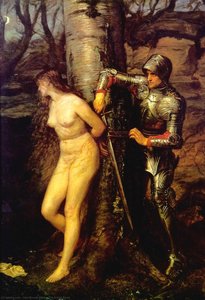


Biografie kunstenaar
A Prodigy of the Pre-Raphaelites: The Life and Art of Sir John Everett Millais
Born in Southampton in 1829, John Everett Millais entered the Royal Academy Schools at the astonishing age of eleven—the youngest student ever admitted. This early demonstration of prodigious talent foreshadowed a career that would not only define an artistic movement but also capture the Victorian imagination with its breathtaking realism and emotional depth. From his earliest days, Millais possessed a remarkable gift for observation, a quality that would become the cornerstone of his artistic style. He wasn’t merely painting what he saw; he was meticulously recreating it, imbuing each brushstroke with an almost photographic fidelity. This dedication to truth in representation set him apart and ultimately led him to challenge the established conventions of British art.The Birth of a Brotherhood and Artistic Rebellion
Millais’s artistic trajectory took a pivotal turn in 1848 when, alongside Dante Gabriel Rossetti and William Holman Hunt, he founded the Pre-Raphaelite Brotherhood. This wasn't simply an aesthetic choice; it was a deliberate rebellion against what they perceived as the artificiality of academic art—art that had strayed too far from the natural world and the sincerity of early Renaissance masters, those working *before* Raphael. The Pre-Raphaelites sought to revive the clarity, detail, and vibrant color palettes of artists like Jan van Eyck and Fra Angelico. Their manifesto was one of truth to nature, a rejection of idealized forms, and an embrace of subjects drawn from literature, mythology, and everyday life. Millais’s early works, such as *Isabella*, immediately showcased this new approach—a meticulous attention to detail combined with a narrative intensity that captivated and often provoked audiences. His most controversial work during this period, Christ in the House of His Parents (1849-50), depicted the Holy Family not as ethereal beings but as ordinary working-class people, sparking outrage among critics who found its realism unsettling and even blasphemous. The painting’s stark depiction of a mother washing her child's clothes, set against the backdrop of a humble home, was a radical departure from traditional religious iconography.Evolving Styles and Victorian Sensibilities
The mid-1850s marked a period of significant change for Millais, both personally and artistically. His marriage to Effie Gray, following the annulment of her marriage to John Ruskin, profoundly influenced his work. He moved away from the intensely detailed, symbolic style of his early Pre-Raphaelite paintings towards a broader, more atmospheric realism. This shift wasn’t simply a matter of stylistic preference; it reflected a growing engagement with contemporary life and a desire to capture the fleeting beauty of the natural world. Paintings like *Autumn Leaves* exemplify this new direction—a serene depiction of a group of young women drifting leaves on a river, imbued with a sense of melancholy and nostalgia. The use of light and color in *Autumn Leaves* is particularly noteworthy, creating an atmosphere of quiet contemplation and capturing the subtle nuances of the autumnal landscape. He also found considerable success as a portraitist, capturing the likenesses of prominent Victorian figures, including John Gladstone and Benjamin Disraeli. This period saw Millais achieve widespread popularity and financial security, but it also drew criticism from some who felt he had compromised his artistic principles.Major Works & Collections
- Christ in the House of His Parents (1849-1850): Tate Britain, London – A controversial masterpiece that exemplifies early Pre-Raphaelite realism.
- Ophelia (1851-1852): Tate Britain, London – Perhaps his most famous work, renowned for its haunting beauty and symbolic depth. The painting’s depiction of Ophelia drowning in a river is both tragic and mesmerizing, capturing the character's vulnerability and despair.
- A Huguenot (1851-1852): Private Collection – A dramatic depiction of religious conflict and forbidden love. The scene depicts a young Huguenot woman being pursued by her brother, highlighting themes of faith, family, and societal pressure.
- Mariana (1850-1851): Manchester Art Gallery – Inspired by Shakespeare and Tennyson, showcasing Millais’s skill in capturing mood and atmosphere. The painting portrays Mariana as a young woman consumed by grief after the death of her lover.
- Autumn Leaves (1855-1856): City of Manchester Art Galleries – A serene and evocative painting that reflects his evolving style. The composition, with its dappled light and delicate colors, creates a sense of tranquility and beauty.
Legacy and Lasting Influence
Despite these criticisms, Sir John Everett Millais remains one of the most important figures in 19th-century British art. His influence extends far beyond the Pre-Raphaelite Brotherhood; he helped to redefine the standards of realism and narrative painting, inspiring generations of artists. His iconic images—*Ophelia*, with its haunting beauty and symbolic richness, A Huguenot, depicting a moment of poignant drama, and countless others—continue to resonate with audiences today. Millais’s ability to blend meticulous observation with emotional depth, his mastery of color and composition, and his willingness to challenge artistic conventions cemented his place as a true innovator. In 1896, he was elected President of the Royal Academy, a testament to his enduring legacy—though sadly, he passed away only months later. His work continues to be celebrated in museums and collections worldwide, ensuring that the beauty and power of his art will endure for generations to come.
Sir John Everett Millais
1829 - 1896 , Verenigd Koninkrijk
Belangrijkste feiten
- Artistic Movement Or Style: Pre-Raphaëlisme, Realisme
- Artists Or Movements Influenced By This Artist: ['Pre-Raphaëlische beweging']
- Artists Who Influenced This Artist: Pre-Raphaëlische beweging
- Date Of Birth: 8 juni 1829
- Date Of Death: 13 aug 1896
- Full Name: Sir John Everett Millais
- Nationality: Engels
- Notable Artworks:
- Christ in huis...
- Ophelia
- Een Huguenot
- Place Of Birth: Southampton, VK
Gerelateerde artikelen
Dante Gabriel Rossetti's Top 25 Meesterwerken: Kunst voor uw Interieur | AllPaintingsStore
Ontdek de 25 meest betoverende meesterwerken van Dante Gabriel Rossetti! Duik in de wereld van Pre-Raphaëlitische kunst, symbolisme & romantiek. Vind museumkwaliteit reproducties en inspiratie voor uw interieur op AllPaintingsStore.com.

Arthur Hughes: Pre-Raphaelite Visions of Beauty & Melancholy
Explore the captivating world of Arthur Hughes (1832-1915), a leading Pre-Raphaelite painter. Discover his dreamy landscapes, poetic narratives & iconic Victorian artworks. Learn about his life, style & collecting today.

Sir John Everett Millais: Pre-Raphaelite Rebellion & Victorian Narrative Detail
Explore the revolutionary art of Sir John Everett Millais & the Pre-Raphaelite Brotherhood. Discover their radical realism, symbolic narratives, and lasting impact on Victorian aesthetics. A deep dive into 19th-century masterpieces.

The Pre-Raphaelite Brotherhood: Rebellion, Romance & Medieval Revival
Explore the captivating world of the Pre-Raphaelite Brotherhood! Discover their rebellious spirit, iconic masterpieces & lasting influence on art history. Learn about Rossetti, Millais & more.

Giclée Prints: Archival Quality & Aesthetic Nuances for the Discerning Collector
Explore the world of giclée prints with AllPaintingsStore. Learn about archival quality, aesthetic nuances & investment potential. Expert guidance for discerning art collectors seeking museum-quality reproductions and lasting value.


