


 Voorvertoning
 Verstuur
 Delen
Delen
 Details bekijken
 Gids
Gids

 Download
 Vergelijkbare items
 Röntgenonderzoek
 Diavoorstelling
 Q&A
Q&A Statistieken
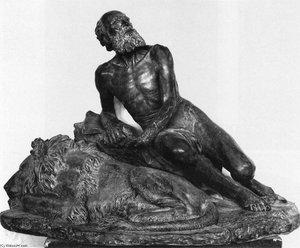
David


 Lees meer
Ontvang een bestand dat klaar is voor drukwerk en de kwaliteit van het online voorbeeld ver overstijgt. Elke digitale afbeelding die wij verkopen, is afkomstig van een high-resolution master uit onze database — meestal tussen de 5.000 en 15.000 pixels breed — zodat u met vertrouwen groot kunt afdrukken, nauwkeurig kunt bijsnijden of fijne details kunt reproduceren.
Geen enkel bestand verlaat ons atelier onbewerkt. Een digitaal expert controleert de kleuren aan de hand van het originele schilderij en corrigeert deze indien nodig, om vervolgens de helderheid en details te verbeteren met professionele retoucheertechnieken — waarbij de penseelstreek en stijl van de kunstenaar altijd strikt worden gerespecteerd. Het resultaat is een afbeelding die oogt als het schilderij zelf, en niet als een gescande foto met een filter.
U keurt de afbeelding goed voordat de bestelling wordt afgerond: onze expert stuurt u binnen 72 uur een e-mail ter beoordeling. Niet tevreden? Vraag om aanpassingen of correcties, of vraag een terugbetaling aan als de kwaliteit niet aan de verwachtingen voldoet.
Dit is de kwaliteit waarop uitgevers, designstudio's, galeries en drukkerijen vertrouwen.
Digitale afbeeldingen
Download een bestand met hoge resolutie voor persoonlijke weergave, afdrukken en creatieve projecten. ( Schakel over naar print Bestel handgeschilderde reproductie)
Inbegrepen bij elke bestelling van een digitale afbeelding
Professionele digitale levering, gegarandeerd
Wanneer u kiest voor AllPaintingsStore.com, ontvangt u niet alleen een afbeelding – u krijgt een professioneel verbeterd digitaal kunstwerk, met precisie vervaardigd en voorzien van een tevredenheidsgarantie. Dit is alles wat automatisch bij uw bestelling is inbegrepen:

Snelle levering per e-mail
Uw hoogwaardige digitale afbeeldingsbestand wordt binnen 72 uur na bestelling naar u gemaild – klaar voor direct gebruik.

AI-verbeterd digitaal bestand
Uw kunstwerk wordt professioneel geoptimaliseerd met behulp van geavanceerde AI-tools en handmatige bewerkingen, waardoor maximale details, helderheid en kleurnauwkeurigheid worden gegarandeerd.

Gratis levenslange herlevering van digitale bestanden
Je bestand per ongeluk verwijderd of kwijtgeraakt? Geen zorgen – we sturen het u op elk gewenst moment gratis opnieuw toe.

Geen invoerkosten – nooit
Geniet direct van uw kunstwerk zonder invoerrechten, belastingen of verzendkosten – digitale downloads zijn altijd belastingvrij.

Garantie op kleurgetrouwheid
Met behulp van professionele hulpmiddelen en kleurbeheer zorgen wij ervoor dat uw digitale afbeelding de originele kleuren zo nauwkeurig mogelijk weergeeft.

100 dagen tevredenheidsgarantie
Mocht u niet tevreden zijn met uw digitale afbeelding, dan passen wij deze aan of storten wij 100% terug binnen 100 dagen – zonder vragen te stellen.

100% Geld-terug-garantie
Niet tevreden? Ontvang een volledige terugbetaling binnen 100 dagen na ontvangst van uw digitale bestand – zonder vragen te stellen.

Korting bij grote bestellingen
Koop 3 afbeeldingen, bespaar 10% - Koop 5, bespaar 15% - Koop 10+, bespaar 20%. Ideaal voor creatieve projecten, galerieën en bureaus.
Vergelijkbare kunstwerken



![Buckle [center-right]\ncompact Cases [upper]\ncompact Cases [lower]\ncompact Cases [center-left] — Jules John Dunand, Art Deco](/media/artworks/images-thumb/82/23/8223c28adcb3bc55cd4d8a7b0b618026.jpg)


Kunstenaarsbiografie
A Life Forged in Clay and Myth: The Singular Vision of Stanisław Szukalski
Stanisław Szukalski, a name resonating with increasing force within the annals of 20th-century art, was an artist whose life mirrored the tumultuous currents of his time. Born in 1893 in Warta, Poland, young Stanisław displayed an astonishing aptitude for sculpting from a remarkably early age—an anecdote about a perfectly carved pencil figure captivating local attention speaks volumes about the innate talent that would define his path. This gift propelled him towards formal training, yet Szukalski’s artistic journey was destined to be anything but conventional. In 1907, he immigrated with his mother and stepfather to Chicago, a city poised to become both a crucible and a catalyst for his unique aesthetic development. While briefly enrolled at the School of the Art Institute of Chicago, Szukalski largely remained self-taught, forging an intensely personal style that defied easy categorization. He wasn’t merely learning technique; he was constructing a worldview, one deeply rooted in ancient civilizations and fueled by a restless imagination.Bent Classicism and the Echoes of Antiquity
Szukalski's artistic fingerprint is immediately recognizable: a style dubbed “Bent Classicism.” This wasn’t simply a revival of classical forms; it was a deliberate distortion, a dynamic reimagining that imbued traditional figures with an unsettling energy. His sculptures and paintings alike feature powerfully muscled bodies contorted in dramatic poses, often set against fragmented architectural backdrops or swirling, chaotic landscapes. The influences informing this distinctive vision were remarkably diverse. He drew inspiration from the monumental grandeur of Egyptian art, the intricate symbolism of Slavic folklore, and the raw power of Aztec sculpture. These ancient sources weren’t merely stylistic touchstones; they fed into a broader fascination with origins, with the search for a primal source of human culture. He absorbed elements of Art Nouveau's flowing lines and early 20th-century European movements like Cubism, Expressionism, and Futurism, yet synthesized them into something wholly his own. He frequently approached painting *through* sculpture, imbuing his two-dimensional works with a palpable sense of volume and physicality—a testament to his foundational training as a sculptor.The Chicago Renaissance and the Seeds of Zermatism
During the 1920s and 30s, Szukalski became a central figure in the vibrant artistic community known as the Chicago Renaissance. He was lauded by his peers—artists like Ruth Van Sickle Ford and Edgar Miller recognized the originality and power of his work—and even hailed as Poland’s “greatest living artist.” This period saw significant recognition for Szukalski, with solo exhibitions at the Art Institute of Chicago and widespread critical acclaim. However, it was also during this time that he began to develop *Zermatism*, a complex and idiosyncratic theory that would come to dominate his later work. Zermatism posited that all human culture originated from post-deluge Easter Island, and that humanity was locked in an eternal struggle against the “Sons of Yeti” (Yetinsyny), monstrous offspring of Yetis and humans. While undeniably pseudoscientific, this theory wasn’t merely a fantastical construct; it provided Szukalski with a framework for interpreting history, mythology, and the human condition. It became the lens through which he viewed the world, shaping his artistic themes and iconography in profound ways.Obscurity, Rediscovery, and Lasting Legacy
Despite the initial acclaim, Szukalski’s career experienced periods of relative obscurity. Following a return to Poland in the 1930s—a journey tragically interrupted by the outbreak of World War II and the subsequent loss of much of his early work—he eventually settled in California, where he lived a largely reclusive life. He continued to create art prolifically, driven by his unwavering belief in Zermatism, but struggled for recognition. It wasn’t until recent years that there has been a significant resurgence of interest in his work, fueled in part by the 2018 documentary *Struggle: The Life and Lost Art of Szukalski*. This renewed attention has brought his unique vision to a wider audience, revealing an artist who was far ahead of his time. Szukalski’s influence can now be seen in contemporary artists exploring themes of mythology, folklore, and alternative histories. His art continues to challenge viewers, prompting us to question our assumptions about cultural origins and the very nature of human existence. He remains a compelling figure—a visionary whose work transcends categorization, leaving an indelible mark on the landscape of 20th-century art. His legacy is not merely one of artistic innovation, but of unwavering conviction in the power of imagination.
Stanisław Szukalski
1893 - 1987 , Poland
Belangrijkste feiten
- Artistic Movement Or Style: Bent Classicism
- Artists Or Movements Influenced By This Artist: ['Contemporary artists']
- Artists Who Influenced This Artist:
- Egyptian art
- Slavic cultures
- Aztec civilizations
- Art Nouveau
- Date Of Birth: 1893
- Date Of Death: 1987
- Full Name: Stanisław Szukalski
- Nationality: Polish-American
- Notable Artworks:
- Defense
- Longing
- Place Of Birth: Warta, Poland