


 Bekijk op ware grootte
 Verstuur
 Delen
Delen
 Details bekijken
 Gids voor studentenkunstwerken

 Download
 Vergelijkbare items
 Röntgenonderzoek
 Diavoorstelling
 Statistieken
Sparrow Hovering
 Nihonga
 104.0 x 34.0 cm
 Lees meer
Handgemaakte olieverfreproductie
Met de hand geschilderd in olieverf op canvas in uw gewenste maat en lijst, op bestelling gemaakt door onze kunstenaars. ( Schakel over naar print Schakel over naar digitale afbeeldingen)




































Kies uit onze vooraf ingestelde maten die overeenkomen met de originele verhoudingen van het kunstwerk.

Voer de breedte en de hoogte in die u nodig heeft, passend bij uw lijst of uw muur. Dit is handgeschilderd, dus bij een afmeting met een andere vormverhouding kan de kunstenaar iets meer rondom het schilderij schilderen of juist iets meer weglaten — u kiest zelf. Wij sturen u een digitaal mockup ter goedkeuring voordat het schilderwerk begint. De afbeelding die op deze pagina wordt getoond, is niet het uiteindelijke resultaat — alleen de mockup geeft dit weer.
Na de bestelling zal het team van AllPaintingsStore.com per e-mail contact opnemen met de klant voor instructies en een mockup-voorbeeld sturen.
Wereldwijde levering () binnen 3 tot 4 weken in plaats van de standaard 5 weken. (23 oktober). Zonder concessies aan de kwaliteit.

Gratis wereldwijde expressverzending

Hoogwaardig linnen canvas

Volledige verzendverzekering

Garantie op terugbetaling van invoerrechten

Garantie op exacte kleurweergave

Retourbeleid van 100 dagen (alleen bij defecten)

100% Geld-terug-garantie

Korting bij meerdere afnames
 De optie voor glas is alleen beschikbaar bij een formaat kleiner dan 110 cm.

Sparrow Hovering
Reproductiemethode
Formaat reproductie
-


Totaalprijs
€ 227
Gerelateerde kunstwerken


Biografie van de kunstenaar
The Master of Light and Line: The Life of Takeuchi Tsunekichi
In the heart of Kyoto’s vibrant textile district, a legacy was born that would forever alter the trajectory of Japanese painting. Takeuchi Tsunekichi, known to the world by his artistic name Takeuchi Seihō, emerged from the Meiji era not merely as a painter, but as a bridge between two worlds. His journey began amidst the rhythmic looms and intricate patterns of his family’s restaurant and textile connections, an upbringing that instilled in him a profound sensitivity to texture, color, and form. As he transitioned from a student of Chinese literature and temple arts to a dedicated pupil of the renowned Kōno Bairei, Seihō began to master the Shijō school's essence—a style defined by its delicate realism and an almost spiritual connection to the natural world.
The evolution of Seihō’s artistry is a testament to his courage in the face of cultural transformation. While many of his contemporaries clung strictly to the traditions of the past, Seihō looked toward the horizon. His pivotal journey to Paris during the 1900 Exposition Universelle served as a transformative encounter with the avant-garde. Immersed in the atmospheric light of Impressionism and the dreamlike depths of Symbolism, he returned to Japan with a vision that was uniquely his own. He did not abandon the traditional Nihonga techniques; instead, he breathed new life into them by synthesizing the meticulous brushwork of Japanese masters with the luminous, spatial depth found in the works of Western legends like Turner and Corot.
A Synthesis of Tradition and Modernity
The true brilliance of Seihō lies in his ability to capture the ephemeral soul of nature through a sophisticated technical duality. His work often oscillates between the minimalist tranquility of sumi-e ink wash and a robust, textured realism. In masterpieces such as "Sparrow Hovering," one can witness the breathtaking simplicity of Japanese aesthetics, where every stroke of ink conveys a sense of weightless motion and profound stillness. Conversely, his larger landscapes and seascapes demonstrate a mastery of light and atmosphere that feels remarkably modern, utilizing subtle gradations to evoke the salt spray of a "Seascape" or the shifting mists of a mountain morning.
His subject matter—ranging from the intimate details of small animals to the sweeping grandeur of the Japanese landscape—serves as a canvas for his exploration of life's fleeting moments. Through his brush, the following elements often converge:
- The Precision of Shijō Realism: A dedication to capturing the anatomical truth and organic vitality of living creatures.
- Western Atmospheric Depth: The use of light and shadow to create a sense of three-dimensional space previously unseen in traditional Japanese styles.
- The Spirit of Nihonga: An unwavering commitment to traditional pigments and materials that ground his modern innovations in historical authenticity.
Legacy and Historical Significance
Takeuchi Seihō’s impact on the art world extends far beyond the borders of Japan. By successfully navigating the tension between the preservation of heritage and the necessity of innovation, he provided a blueprint for modern Japanese art. He proved that tradition is not a static relic to be guarded, but a living, breathing entity capable of absorbing new influences without losing its fundamental identity. His life, spanning the transformative Meiji and early Shōwa periods, mirrors the very evolution of Japan itself—a nation moving from isolation into a complex, interconnected global stage.
Today, his works remain cherished symbols of cultural synthesis. To view a Seihō painting is to experience a moment of profound equilibrium: the stillness of ancient Kyoto meeting the dynamic energy of a modernizing world. He remains a titan of Nihonga, an artist whose name continues to evoke the delicate balance of light, line, and the eternal beauty of the natural world.

Takeuchi Tsunekichi
1864 - 1942 , Japan
Snelle feiten
- Full Name: Takeuchi Tsunekichi
- Nationality: Japanese
- Date Of Birth: 1864
- Date Of Death: 1942
- Place Of Birth: Kyoto, Japan
- Notable Artworks:
- Twelve Animals of the Zodiac
- Seascape
- Artistic Movement Or Style: Nihonga
- Artists Who Influenced This Artist: ['Kōno Bairei']
- Artists Or Movements Influenced By This Artist:
- Turner
- Corot
Gerelateerde artikelen

Katsushika Hokusai's 25 Meesterwerken: Japanse Kunst voor uw Interieur | AllPaintingsStore
Ontdek de 25 meesterwerken van Katsushika Hokusai, de Japanse Ukiyo-e kunstenaar! Reis door zijn iconische prints zoals 'The Great Wave' en Mount Fuji. Vind museumkwaliteit reproducties & inspiratie voor uw interieur op AllPaintingsStore.com.

Echoes of Eternity: Unveiling the Spiritual Depth and Timeless Beauty of Japanese Landscape Painting
Embark on a soulful journey through the ephemeral beauty of Japanese landscape painting. Discover the profound philosophy of Ukiyo-e and the legendary mastery of Hokusai. Explore timeless artistry and find inspiration in the spiritual depth of nature's most captivating landscapes.
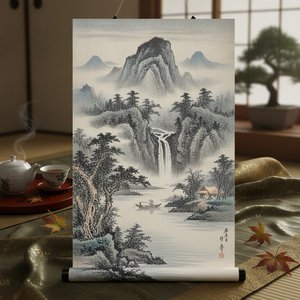
Serenity on Canvas: A Guide to the Timeless Beauty of Japanese Landscape Painting
Discover the serene beauty of Japanese landscape painting. From Hokusai's iconic woodblock prints to meditative sumi-e ink washes, explore a visual journey through the 'floating world' and learn how to bring this timeless Zen aesthetic into your modern home decor.
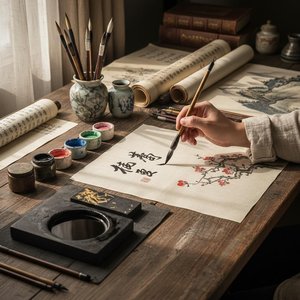
The Alchemy of Ink: Mastering the Timeless Beauty and Art History of Paper and Brush
Embark on a sophisticated exploration of ink wash painting and Sumi-e. Uncover the profound historical lineages, Zen philosophies, and technical mastery behind this timeless medium in our authoritative guide for fine art enthusiasts.

The Beauty of Ink Wash: Discover Serene & Soulful Art for Your Home
Discover the tranquil beauty of ink wash painting. Explore how Sumi-e and monochrome landscapes bring Zen-inspired serenity and soulful elegance to your home decor through expert curation and timeless East Asian aesthetics.

