


 Voorvertoning
 Verstuur
 Delen
Delen
 Details bekijken
 Gids
Gids

 Download
 Vergelijkbare items
 Röntgenonderzoek
 Diavoorstelling
 Statistieken
Spring
 Oil
Oil- WallArt
- Young Poland
 19th Century
 5.0 x 59.0 cm
 Masovian Museum in Płock
 Lees meer
Giclée / Kunstafdrukken
Giclée- of canvasafdruk van museumkwaliteit met een snelle productie en flexibele afwerkingsmogelijkheden. ( Bestel handgeschilderde reproductie Schakel over naar digitale afbeeldingen)




P118B €10

P118H €10

P118W €10

P438Z €10

P508JH €12

P508YH €12

P805H €10

P805Z €10

P919BZ €10

P919G €10

P919XJ €10

P959ZH €10

P968JZ €12

W106C €8

W218G €10

W218JH €8

W218Y €10

W307PJ €10

W316G €10

W316PJ €8

W316Y €10

W398PJ €8

W4111J €10

W500HY €15

W500JH €15

W692G €12

W849H €8

W940BG €15

W953PJ €8




Kies uit onze vooraf ingestelde maten die overeenkomen met de originele verhoudingen van het kunstwerk.

Voer de gewenste breedte en hoogte in, passend bij uw lijst of muur. Een afdruk kan alleen worden ingekort en nooit groter worden gemaakt dan het origineel; een formaat met andere verhoudingen zal daarom een deel van de afbeelding verliezen. Wij sturen u een digitaal mockup ter goedkeuring voordat we tot drukwerk overgaan. De afbeelding op deze pagina toont niet de werkelijke uitsnede — dit is alleen te zien op het mockup.
Wereldwijde levering () binnen 2 weken in plaats van de standaard 4/5 weken. (27 oktober)

Gratis wereldwijde expressverzending

Hoogwaardig linnen canvas

Volledige verzendverzekering

Garantie op terugbetaling van invoerrechten

Garantie op exacte kleurweergave

Retourbeleid van 100 dagen (alleen bij defecten)

100% Geld-terug-garantie

Korting bij meerdere afnames
 De optie voor glas is alleen beschikbaar bij een formaat kleiner dan 110 cm.

Spring
Giclée / Kunstafdrukken
Afmetingen reproductie
-


Eindtotaal
€ 57
A Moment of Introspection: The Radiance of Spring
In the delicate brushstrokes of Teodor Axentowicz’s "Spring," we are invited into a private, sun-drenched sanctuary where time seems to pause. This captivating portrait captures a woman of striking presence, her vibrant red hair and matching hat serving as a brilliant focal point against the soft, natural light of an outdoor setting. As she gazceptively holds a mirror, gazing at her own reflection, the painting transcends mere portraiture to become a profound meditation on identity and self-perception. The composition is masterfully balanced; while the woman remains the emotional heart of the piece, subtle details such as a perched bird in the upper periphery and a quiet arrangement of a vase and book in the lower corner weave a narrative of peaceful coexistence between humanity and the natural world.
The technique employed here speaks to Axentowicz’s rigorous academic training in Munich and Paris. There is a palpable sense of texture in the way light dances across the fabric of her attire and the reflective surface of the mirror, suggesting a mastery of light and shadow that recalls the great masters he once studied. The artist utilizes a palette that celebrates the warmth of a burgeoning season, using luminous tones to evoke the gentle heat of a sunny day. This skillful application of paint creates an atmosphere that is both tactile and ethereal, making the scene feel as though it could be witnessed through a window into another era.
Symbolism and the Spirit of the Era
Beyond its aesthetic beauty, "Spring" carries deep symbolic weight. The mirror, a classic motif in art history, serves as a window into the soul, representing the duality of appearance and essence. In this context, the act of looking inward during the season of rebirth suggests a period of personal renewal and growth. The presence of the bird and the floral elements further reinforces the theme of vitality and the cyclical nature of life. As a key figure in the Young Poland movement, Axentowicz often infused his works with a sense of romanticism and national identity, and here, that spirit manifests as a quiet, introspective joy found in the simple beauty of the outdoors.
For the discerning collector or interior designer, this piece offers more than just visual elegance; it provides an emotional anchor for a room. The painting’s ability to evoke tranquility makes it an ideal centerpiece for spaces designed for contemplation, such as a library, a study, or a serene bedroom. Whether displayed as a high-quality reproduction in a modern gallery setting or integrated into a classical arrangement, "Spring" brings with it an enduring sense of grace and a timeless connection to the beauty of the natural world.
Veelgestelde vragen
Hoe groot is het contrast in "Spring" door Teodor Axentowicz?
Het licht-donkercontrast van "Spring" wordt weergegeven als Gentle. Contrast beschrijft hoe sterk de lichte en donkere vlakken van elkaar verschillen.
Hoe harmonieus zijn de kleuren van "Spring" door Teodor Axentowicz?
De kleurharmonie van "Spring" wordt beschreven als Strong Color Unity.
Wat is de dominante kleur in "Spring" door Teodor Axentowicz?
Een Ochre to Sepia tint loopt door "Spring" door Teodor Axentowicz.
Vergelijkbare kunstwerken


Biografie kunstenaar
Teodor Axentowicz: Life and Legacy
Early Life and Education
- Teodor Axentowicz was born on May 13, 1859, in Brașov (then part of Austria-Hungary, now Romania) to a family with Polish-Armenian ancestry.
- He received his initial artistic training at the Academy of Fine Arts in Munich between 1879 and 1882.
- Axentowicz continued his studies in Paris under Carolus-Duran until 1895, a period crucial for developing his style and technique.
Artistic Development and Influences
- During his time in Paris, Axentowicz worked as a copyist, reproducing works by masters like Titian and Botticelli for publications such as *Le Monde Illustré*. This honed his technical skills and deepened his understanding of art history.
- His early travels to London and Rome allowed him to establish himself as a portrait artist.
- He was influenced by the academic tradition, but also began to explore more modern approaches to painting, particularly in his depictions of folk life.
Collaboration on the Racławice Panorama
- In 1894, Axentowicz collaborated with Wojciech Kossak and Jan Styka on the *Racławice Panorama*, a monumental panoramic painting commemorating the Battle of Racławice during the Kościuszko Uprising.
- This project was a significant undertaking in Polish art history and showcased his ability to work on a large scale and contribute to national narratives.
Professor at Kraków Academy & Artistic Focus
- In 1895, Axentowicz moved to Kraków and became a professor at the local Academy of Fine Arts, a position he held until 1934.
- He founded an artistic conservatory for women in 1897, demonstrating his commitment to art education.
- Axentowicz is best known for his portraits and scenes depicting the life of the Hutsul people – a Ukrainian ethnic group inhabiting the Carpathian Mountains.
- His depictions of Hutsul culture are characterized by their sensitivity, realism, and vibrant color palettes. He captured their rituals, customs, and daily lives with remarkable detail.
Membership in Artistic Societies & Recognition
- He was a founding member of the *Sztuka* (Art) society, an important group within the Young Poland movement. Other members included Józef Chełmoński and Jan Stanisławski.
- Axentowicz became Rector of the Academy of Fine Arts in Kraków in 1910.
- He received numerous awards and accolades throughout his career, including gold medals at international exhibitions in Berlin, St. Louis, Munich, London, Venice, and Paris.
Later Life and Historical Significance
- Axentowicz continued to paint and exhibit his work until his death on August 26, 1938, in Kraków.
- His paintings are held in major public collections throughout Poland and private collections worldwide.
- He is remembered as a significant figure in Polish art history, particularly for his contributions to the depiction of folk culture and his role in shaping artistic education in Kraków. His work provides valuable insights into the lives and traditions of the Hutsul people during a period of cultural change.

Teodor Axentowicz
1859 - 1938 , Romania
Belangrijkste feiten
- Name: Teodor Axentowicz
- Movement: Young Poland
- Birth Date: 1859-05-13
- Death Date: 1938-08-26
- Birth Place: Brașov, Romania
- Nationality: Polish-Armenian
- Date Of Birth: 1859
- Date Of Death: 1938
- Influenced By: Carolus-Duran
- Notable Works:
- Racławice Panorama (collaboration)
- Scenes of Hutsul life
- Portraits
- Place Of Birth: Brașov, Romania
Gerelateerde artikelen

Crimson Threads of Narrative: Exploring Symbolism & Representation in Artworks Featuring the Red Dress
Explore the rich symbolism of the red dress in art history! From ancient power displays to iconic portraits like Cézanne’s 'Madame Cezanne', discover the cultural and artistic significance behind this captivating color. Expert analysis & insights.

Mark Rothko's Top 25 Meesterwerken: Kleur, Emotie & Abstracte Kunst voor uw Interieur
Ontdek de top 25 meesterwerken van Mark Rothko! Duik diep in zijn emotionele kleurveldschilderijen en abstract expressionisme. Vind museumkwaliteit Rothko reproducties & interieurinspiratie op AllPaintingsStore.com.
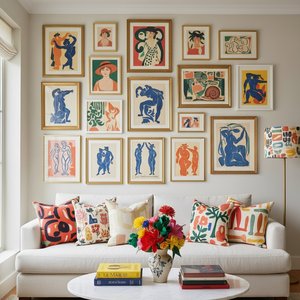
Top 25 Meesterwerken van Henri Matisse: Kleur, Vorm & Emotie voor uw Interieur
Ontdek de top 25 meesterwerken van Henri Matisse! Duik in de wereld van Fauvisme, kleurrijke composities & expressieve kunst. Vind museumkwaliteit reproducties en decoratie-inspiratie op AllPaintingsStore.com. Exploreer de collectie online!

Top 10 Kunstwerken voor Diepe Rust: Collectie & Inspiratie | AllPaintingsStore.nl
Ontdek 10 kunstwerken die diepe rust oproepen! Van Monet's waterlelies tot Van Gogh’s sterrennacht. Leer over de artistieke technieken & emotionele impact van deze iconische schilderijen. Museumkwaliteit reproducties op AllPaintingsStore.com.

Top 10 Kunstwerken over Rust & Sereniteit | AllPaintingsStore
Ontdek 10 kunstwerken die rust en sereniteit uitademen. Van Monet's waterlelies tot Japanse zen-kunst, ervaar de emotie & verhaal achter elk meesterwerk. Museumkwaliteit reproducties op AllPaintingsStore.com!

