


 Voorvertoning
 Verstuur
 Delen
Delen
 Details bekijken
 Gids
Gids

 Download
 Vergelijkbare items
 Röntgenonderzoek
 Diavoorstelling
 Statistieken
James Hope
 Acrylic On Canvas
- WallArt
- Victorian Portraiture
 1841
1841- 19th Century
 Royal College of Physicians of London
 Lees meer
Giclée / Kunstafdrukken
Giclée- of canvasafdruk van museumkwaliteit met een snelle productie en flexibele afwerkingsmogelijkheden. ( Bestel handgeschilderde reproductie Schakel over naar digitale afbeeldingen)




P118B €10

P118H €10

P118W €10

P438Z €10

P508JH €12

P508YH €12

P805H €10

P805Z €10

P919BZ €10

P919G €10

P919XJ €10

P959ZH €10

P968JZ €12

W106C €8

W218G €10

W218JH €8

W218Y €10

W307PJ €10

W316G €10

W316PJ €8

W316Y €10

W398PJ €8

W4111J €10

W500HY €15

W500JH €15

W692G €12

W849H €8

W940BG €15

W953PJ €8




Kies uit onze vooraf ingestelde maten die overeenkomen met de originele verhoudingen van het kunstwerk.

Voer de gewenste breedte en hoogte in, passend bij uw lijst of muur. Een afdruk kan alleen worden ingekort en nooit groter worden gemaakt dan het origineel; een formaat met andere verhoudingen zal daarom een deel van de afbeelding verliezen. Wij sturen u een digitaal mockup ter goedkeuring voordat we tot drukwerk overgaan. De afbeelding op deze pagina toont niet de werkelijke uitsnede — dit is alleen te zien op het mockup.
Wereldwijde levering () binnen 2 weken in plaats van de standaard 4/5 weken. (25 oktober)

Gratis wereldwijde expressverzending

Hoogwaardig linnen canvas

Volledige verzendverzekering

Garantie op terugbetaling van invoerrechten

Garantie op exacte kleurweergave

Retourbeleid van 100 dagen (alleen bij defecten)

100% Geld-terug-garantie

Korting bij meerdere afnames
 De optie voor glas is alleen beschikbaar bij een formaat kleiner dan 110 cm.

James Hope
Giclée / Kunstafdrukken
Afmetingen reproductie
-


Eindtotaal
€ 57
A Portrait of Intellectual Intensity: James Hope by Thomas Phillips
Thomas Phillips’s “James Hope,” painted in 1841, is more than simply a likeness; it's a carefully constructed tableau of Victorian intellect and restrained emotion. The portrait captures James Hope (1801-1841), a prominent English physician and cardiologist, not as a flamboyant figure, but as a man deeply engaged with the complexities of his profession and the world around him. Phillips, a master of the British portrait style, eschews dramatic gestures or overtly expressive features, instead favoring a subtle yet profound exploration of Hope’s inner life.
The painting's composition is remarkably restrained. Hope sits in a simple, dark-toned chair, his gaze fixed directly on the viewer – an act of directness that immediately establishes a connection. His hands, resting calmly on his lap, are rendered with meticulous detail, hinting at both intellectual prowess and a quiet dignity. The background is deliberately muted, almost entirely devoid of distraction, drawing all attention to the subject himself. This deliberate lack of ornamentation speaks volumes about Phillips’s approach: he believed that true character resided not in outward display but in the subtle nuances of expression and demeanor.
The Language of Victorian Portraiture
Phillips was a key figure in the development of Victorian portraiture, a style characterized by its realism, psychological depth, and often, a sense of moral seriousness. He inherited much from his mentor, Benjamin West, but he developed a distinctive approach that prioritized capturing the inner life of his subjects. Unlike earlier portraits which frequently emphasized wealth or social status, Phillips sought to reveal something deeper about the individual’s character – their intellect, their values, and perhaps even their anxieties.
The painting's palette is deliberately subdued, dominated by dark browns, grays, and greens. This somber coloration contributes to the overall sense of introspection and gravitas. The use of light is equally strategic; it highlights Hope’s face and hands, drawing the viewer’s eye to these points of focus while leaving the rest of the composition in shadow. This chiaroscuro effect – the dramatic contrast between light and dark – was a hallmark of Phillips's technique and creates a powerful sense of depth and atmosphere.
Symbolism and Context
“James Hope” must be viewed within the context of 19th-century British society, a period marked by rapid scientific advancement, social reform, and a growing emphasis on education and intellectual pursuits. Hope’s profession as a physician reflected this era's burgeoning interest in science and medicine, and his portrait serves as a testament to the rising status of the medical profession. The serious expression on Hope’s face suggests a man deeply committed to his work, burdened perhaps by the responsibility of caring for others.
Furthermore, the painting can be interpreted through the lens of Victorian moral philosophy. The restrained demeanor and thoughtful gaze reflect the Victorian ideal of self-control and intellectual rigor. Phillips was known for portraying subjects who embodied these values, suggesting that true virtue lay in cultivating one’s mind and resisting impulsive desires.
A Legacy of Psychological Realism
“James Hope” remains a compelling example of Victorian portraiture's ability to capture the complexities of human character. Phillips’s masterful use of light, color, and composition creates an image that is both visually striking and psychologically profound. It’s not merely a representation of a man; it’s a window into his soul – a testament to the enduring power of art to reveal the hidden depths of the human experience. Reproductions of this work offer a valuable opportunity to appreciate Phillips's skill and gain insight into the intellectual currents of Victorian England.
Veelgestelde vragen
Welke kleur domineert de compositie van "James Hope" door Thomas Phillips?
De kleur die het meest opvalt in "James Hope" is Driftwood (#baa060). De dominante kleur is handig bij het afstemmen van een kunstwerk op een interieur.
Voor welke kamer wordt "James Hope" door Thomas Phillips aanbevolen?
Een reproductie van "James Hope" past uitstekend in een Living Room.
Kan "James Hope" door Thomas Phillips, onderdeel van de collectie van Royal College of Physicians of London, op legale wijze worden gereproduceerd?
Het originele "James Hope" bevindt zich in Royal College of Physicians of London en het werk is bevindt zich in het publiek domein - de auteursrechten zijn verlopen.
Vergelijkbare kunstwerken


Biografie kunstenaar
Early Life and Artistic Foundations
Thomas Phillips, geboren in Dudley, Worcestershire, in 1770, kwam uit een bescheiden achtergrond die toch voldoende middelen bood voor een goede opleiding. Zijn vroege leven was echter allesbehalve een pad naar de kunstacademies. In plaats daarvan begon hij zijn artistieke ontwikkeling in het vak van glaskunst, onder Francis Eginton in Birmingham. Deze ervaring, het werken met kleur en licht op glasoppervlakken, legde een stevige basis voor zijn latere werk als portretschilder. Het was een discipline die precisie vereiste, aandacht voor detail en een scherp oog voor compositie – kwaliteiten die hij later zou toepassen op zijn beroemdste werken. Een cruciaal moment in zijn leven kwam in 1790, toen Phillips naar Londen reisde, met een aanbevelingsbrief van Benjamin West, een toonaangevende kunstenaar van het tijd en een belangrijke figuur binnen de Royal Academy. West’s introductie opentelde hem deuren naar de wereld van de professionele kunstenaars en gaf hem toegang tot de prestigieuze omgeving van de Academie. Hij kreeg er werk als glaskunstenaar in de vensters van St George's Chapel in Windsor Castle, een project dat hem niet alleen ervaring opdroogde, maar ook zijn oog voor grootse architectuur en narratieve verhalen in kunst scherp hield.A Rising Portraitist: Style and Subject Matter
Phillips’ talent bleek snel te liggen in het portretteren van mensen. Hoewel hij aanvankelijk werkte met onbekende individuen, wist hij door toewijding en vaardigheid stapsgewijs een hogere sociale status te bereiken. Zijn stijl kenmerkte zich door een uiterst gedetailleerd realisme, een combinatie van de glaskunsttechnieken die hij had geleerd en de artistieke trends van de tijd. Hij had een bijzondere gave om niet alleen het fysieke uiterlijk vast te leggen, maar ook de persoonlijkheid en intelligentie van zijn onderwerpen weer te geven. Dit vermogen maakte hem tot een gevraagde schilder, vooral in de periode rond 1800, toen de Royal Academy nog steeds op zoek was naar talentvolle portretschilders om de groeiende elite van Engeland vast te leggen. Hij werd een bekende naam in de kunstwereld, en zijn werken werden regelmatig tentoongesteld bij prestigieuze tentoonstellingen. Zijn portfolio bestond uit zowel landschappen als historische scenes, maar het was vooral zijn portretten die hem roem brachten.Royal Patronage and Academic Recognition
In 1804 bereikte Phillips een belangrijke mijlpaal in zijn carrière: hij werd benoemd tot associate van de Royal Academy, naast William Owen. Deze erkenning bevestigde zijn positie binnen de kunstwereld en opende nieuwe mogelijkheden. Kort daarna verhuisde hij naar 8 George Street, Hanover Square, een exclusief adres dat zijn thuis- en atelier zou worden gedurende de volgende vier decennia. Zijn clientèle groeide aanzienlijk, met leden van het koninklijke huis en de aristocratie als onderwerpen. Hij schilderde portretten van de Prins van Wales (later Koning George IV), de Marqueses van Stafford, Lord Thurlow en vele andere prominente figuren. Een bijzonder bekend werk uit deze periode is zijn portret van William Blake, een van de meest invloedrijke dichters en kunstenaars van de Romantische Beweging. Het schilderij, nu te zien in het National Portrait Gallery, toont de intense blik en de visionaire geest van de poëtische meester. In 1808 werd Phillips benoemd tot lid van de Royal Academy, een prestigieuze positie die hem toegang gaf tot de hoogste kringen van de kunstwereld.Later Years: Professorship and Legacy
Phillips’ bijdrage aan de kunstwereld strekte zich verder uit dan zijn eigen schilderijen. In 1825 werd hij aangesteld als professor van Schilderkunst aan de Royal Academy, een positie die hij bekleedde tot 1832. Deze rol gaf hem de mogelijkheid om zijn kennis en ervaring door te geven aan nieuwe generaties kunstenaars. Hij publiceerde in 1833 *Lectures on the History and Principles of Painting*, waarin hij zijn artistieke filosofie en pedagogische benadering uitlegde. Ondanks een iets minderijdige reputatie in de latere jaren, bleef Phillips een gerespecteerd figuur binnen de kunstwereld. Zijn nalatenschap is niet alleen te zien in de vele portretten die hij schiep – waarmee hij de gezichten van talloze prominente figuren van zijn tijd vastlegde – maar ook in zijn toewijding aan artistieke onderwijs en zijn bijdrage aan de ontwikkeling van de Engelse portretschilderkunst. Zijn aandacht voor detail, gecombineerd met een gevoeligheid voor karakter, plaatst hem als een belangrijke figuur in de 19e-eeuwse Britse kunst.
Thomas Phillips
1770 - 1845 , Verenigd Koninkrijk
Belangrijkste feiten
- Artistic Movement Or Style: Romanticisme
- Artists Or Movements Influenced By This Artist: ['William Blake']
- Artists Who Influenced This Artist: ['Benjamin West']
- Date Of Birth: 1770
- Date Of Death: 1845
- Full Name: Thomas Phillips
- Nationality: Engels
- Notable Artworks:
- Venus en Adonis
- Lord Byron
- Canon Gisborne
- Place Of Birth: Dudley, Verenigd Koninkrijk
Gerelateerde artikelen

Thomas Cantrell Dugdale: Capturing Victorian Life & Beyond
Explore the life & work of Thomas Cantrell Dugdale, a renowned Victorian portraitist and war artist. Discover his captivating paintings, textile designs, and lasting impact on British art history. Learn more at AllPaintingsStore.

James Sant: Capturing Victorian Childhood & the Evolving Landscape of British Genre Painting
Explore the life & art of James Sant (1820-1916), renowned Victorian portraitist to Queen Victoria. Discover his captivating depictions of childhood, landscapes, and aristocratic society. Learn about his legacy & find fine art reproductions.

Thomas Phillips: Portraiture, Patronage & the Rise of Victorian Society Art
Explore the life & work of Thomas Phillips (1770-1845), a leading Victorian portrait painter renowned for his captivating portrayals of Britain's 'men of genius'. Discover his artistic journey, patronage, and lasting legacy.
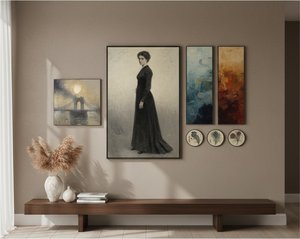
James Abbott McNeill Whistler: Top 25 Meesterwerken voor Kunstliefhebbers | AllPaintingsStore
Ontdek de 25 meest iconische meesterwerken van James Abbott McNeill Whistler, pionier van het esthetisme en impressionisme. Van zijn betoverende Nocturnes tot portretten vol harmonie. Vind museumkwaliteit reproducties & decoratie-inspiratie op AllPaintingsStore.com
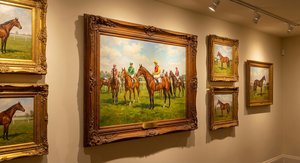
Sir Alfred James Munnings: Top 25 Meesterwerken voor Kunstliefhebbers | AllPaintingsStore.nl
Ontdek de top 25 schilderijen van Sir Alfred James Munnings, meester van paardenkunst & Engelse impressionisme. Leer over zijn leven, techniek en iconische werken. Museumkwaliteit reproducties op AllPaintingsStore.com! Ontdek alle meesterwerken online.

