


 Bekijk op ware grootte
 Verstuur
 Delen
Delen
 Details bekijken
 Gids voor studentenkunstwerken

 Download
 Vergelijkbare items
 Röntgenonderzoek
 Diavoorstelling
 Statistieken
Judith
 Oil On Canvas
- WallArt
- High Renaissance
 1515
1515 90.0 x 72.0 cm
 Galleria Doria Pamphilj
 Lees meer
Handgemaakte olieverfreproductie
Met de hand geschilderd in olieverf op canvas in uw gewenste maat en lijst, op bestelling gemaakt door onze kunstenaars. ( Schakel over naar print Schakel over naar digitale afbeeldingen)




P118B €10

P118H €10

P118W €10

P438Z €10

P508JH €12

P508YH €12

P805H €10

P805Z €10

P919BZ €10

P919G €10

P919XJ €10

P959ZH €10

P968JZ €12

W106C €8

W218G €10

W218JH €8

W218Y €10

W307PJ €10

W316G €10

W316PJ €8

W316Y €10

W398PJ €8

W4111J €10

W500HY €15

W500JH €15

W692G €12

W849H €8

W940BG €15

W953PJ €8




Kies uit onze vooraf ingestelde maten die overeenkomen met de originele verhoudingen van het kunstwerk.

Voer de breedte en de hoogte in die u nodig heeft, passend bij uw lijst of uw muur. Dit is handgeschilderd, dus bij een afmeting met een andere vormverhouding kan de kunstenaar iets meer rondom het schilderij schilderen of juist iets meer weglaten — u kiest zelf. Wij sturen u een digitaal mockup ter goedkeuring voordat het schilderwerk begint. De afbeelding die op deze pagina wordt getoond, is niet het uiteindelijke resultaat — alleen de mockup geeft dit weer.
Na de bestelling zal het team van AllPaintingsStore.com per e-mail contact opnemen met de klant voor instructies en een mockup-voorbeeld sturen.
Wereldwijde levering () binnen 3 tot 4 weken in plaats van de standaard 5 weken. (23 oktober). Zonder concessies aan de kwaliteit.

Gratis wereldwijde expressverzending

Hoogwaardig linnen canvas

Volledige verzendverzekering

Garantie op terugbetaling van invoerrechten

Garantie op exacte kleurweergave

Retourbeleid van 100 dagen (alleen bij defecten)

100% Geld-terug-garantie

Korting bij meerdere afnames
 De optie voor glas is alleen beschikbaar bij een formaat kleiner dan 110 cm.

Judith
Reproductiemethode
Formaat reproductie
-


Totaalprijs
€ 249
The Lamentation's Echo: Unveiling Titian’s “Judith”
Tiziano Vecellio, universally known as Titian, wasn’t merely a painter; he was a revolutionary of color and form. His 1515 oil on canvas, "Judith," residing now within the Galleria Doria Pamphilj in Rome, isn't simply a depiction of a biblical scene—it’s an immersive experience, a testament to Venetian Renaissance artistry at its most potent. The painting immediately draws the eye with its dramatic lighting and the palpable grief radiating from the figures, yet it’s far more complex than a straightforward portrayal of mourning. It’s a carefully constructed tableau of power, vulnerability, and strategic beauty—a window into the political and artistic currents of 16th-century Rome.
- Subject Matter: The painting centers on the biblical story of Judith, a Jewish widow who seduces and then decapitates Holofernes, the Assyrian general, to save her besieged city. However, Titian doesn’t dwell on the gruesome act itself. Instead, he focuses on the aftermath—the lamentation of Judith and her maidservant over the fallen body of Holofernes.
- Historical Context: Commissioned by the Farnese family during his visit to Rome in 1545, “Judith” reflects Titian’s astute understanding of political alliances and allegorical representation. The painting subtly alludes to the power struggles within the Roman court, mirroring the complex relationships between the various families vying for influence.
A Symphony of Color and Form: Titian's Venetian Style
Titian’s genius lay in his mastery of color—a skill he honed through years of studying the vibrant hues of Venice’s canals, dyes, and textiles. In “Judith,” this is immediately apparent. The palette isn’t one of stark contrasts but rather a rich tapestry of muted browns, creams, deep reds, and subtle blues, creating an atmosphere of somber beauty. Notice how he uses light to sculpt the figures, highlighting their faces while casting deep shadows that heighten the sense of drama and loss. The brushwork is remarkably fluid—loose yet controlled, allowing for a remarkable sense of texture, particularly in the rendering of hair, fabric, and skin. This technique wasn’t simply about realism; it was about capturing the *feeling* of these materials – their weight, their sheen, their vulnerability.
Technique Note: Oil on Canvas: The use of oil paints allowed Titian to achieve incredible luminosity and blending capabilities, a hallmark of his style. The layering of thin glazes created depth and richness that was revolutionary for the time.Symbolism Woven into Tragedy: Deeper Meanings
Beyond the biblical narrative, “Judith” is laden with symbolism. The young girl on the left, draped in green, represents a mixture of confusion and empathy—a witness to the tragic events unfolding before her. The woman, clad in red, embodies profound sorrow, her posture conveying both grief and dignity. The deceased Holofernes, lying on the table, is presented with an almost regal bearing, suggesting that even in death, he retains a certain nobility. The presence of the maidservant, holding the severed head, adds another layer of complexity—a symbol of female agency and strategic brilliance. The triangular composition itself reinforces this sense of balance between grief and triumph, loss and resilience.
- Red Dress: Symbolizes mourning and sacrifice.
- Green Garment: Represents innocence and a youthful perspective on tragedy.
- The Head: A potent symbol of power lost and the consequences of ambition.
A Legacy Enduring Through Time
Titian’s “Judith” is more than just a beautiful painting; it's a pivotal work in art history, influencing generations of artists with its innovative use of color, composition, and emotional expression. It stands as a testament to Titian’s ability to seamlessly blend religious narrative with political allegory, creating an artwork that continues to captivate and inspire viewers centuries later. Reproductions of this masterpiece offer a chance to experience the depth and complexity of Titian's vision—a window into the heart of the Venetian Renaissance.
Vragen & Antwoorden
Hoe kan ik kunstwerken ontdekken die lijken op "Judith" door Tiziano Vecellio?
Werken die lijken op "Judith" staan vermeld op de Vergelijkbare werken-pagina van het kunstwerk.
Wat zijn de afmetingen van het originele "Judith" door Tiziano Vecellio?
De vastgestelde afmetingen van "Judith" door Tiziano Vecellio zijn 90 x 72 cm. Reproducties kunnen in andere formaten worden besteld met behoud van dezelfde verhoudingen.
Kan ik "Judith" door Tiziano Vecellio bekijken voordat ik bestel?
Een voorproefje van "Judith" door Tiziano Vecellio is beschikbaar op de Voorvertoning-pagina van het kunstwerk.
Gerelateerde kunstwerken


Biografie van de kunstenaar
The Venetian Titan: A Life in Color and Canvas
Tiziano Vecellio, even more famously known as Titian, stands as a monumental figure of the Italian Renaissance—perhaps its most celebrated colorist and a master who fundamentally reshaped the possibilities of oil painting. Born around 1490 in Pieve di Cadore, nestled amidst the dramatic landscapes of the Venetian Alps, his journey from humble beginnings to international acclaim is a testament to prodigious talent and an unwavering dedication to artistic innovation. The details surrounding Titian’s early life remain somewhat shrouded in mystery, but we know he was one of several children born to Gregorio Vecellio, a military man, and Lucia. Recognizing their sons' potential, the family arranged for young Tiziano and his brother Francesco to apprentice with an artist in Venice—a decision that would irrevocably alter the course of art history.
Venice at the turn of the 16th century was a vibrant hub of commerce, culture, and artistic ferment. Titian’s initial training took place within the workshop of Sebastiano Zuccato, a mosaicist, followed by brief periods under the tutelage of Gentile Bellini and, crucially, his brother Giovanni. However, it was his association with Giorgione—a fellow Venetian painter whose work possessed an ethereal poetic quality—that proved most formative. The two artists collaborated on several projects, including the exterior frescoes for the Fondaco dei Tedeschi, a bustling trading post for German merchants. Even in these early works, Titian’s exceptional skill was evident, earning him recognition among his contemporaries and foreshadowing the brilliance that would soon blossom.
A Master's Evolving Style
Titian’s artistic development can be characterized by a remarkable versatility and an ongoing exploration of painterly techniques. His early works, heavily influenced by Giorgione, exhibit a delicate lyricism and a masterful use of color to create atmospheric effects. Paintings like *A Man with a Quilted Sleeve* (circa 1509) demonstrate his emerging talent for portraiture, capturing not only the physical likeness of his subjects but also their inner character. He favored soft, diffused light and subtle gradations of tone, mirroring Giorgione’s approach. As he matured, Titian began to move away from Giorgione’s delicate subtlety and embrace a bolder, more dramatic approach to color. *The Visitation of Mary and Elizabeth* (now in the Accademia, Venice) exemplifies this shift, showcasing his growing confidence in handling complex compositions and vibrant hues. He experimented with layering colors—often applying thin glazes over dried underpaintings—to achieve luminous effects and intense saturation.
Throughout his long career, Titian consistently pushed the boundaries of artistic expression. He explored a vast range of subjects – mythological scenes, religious narratives, portraits of nobility, and even genre paintings depicting everyday life. He wasn’t afraid to break with convention, often employing unconventional compositions and dramatic lighting. His portraits became renowned for their psychological depth and realistic portrayal of textures and fabrics; he meticulously rendered the sheen of silk, the weight of velvet, and the warmth of skin tones. Simultaneously, he excelled in mythological and religious subjects, imbuing them with a sensuality and dramatic intensity that captivated audiences. A prime example is *Venus of Urbino*, a masterpiece that redefined the depiction of the female nude and established Titian as a leading figure in Venetian painting.
Patronage, Prestige, and Lasting Influence
Titian’s talent attracted the attention of powerful patrons from across Europe. He served as court painter to Emperor Charles V, King Philip II of Spain, and Pope Paul III, among others. This patronage not only provided him with financial security but also allowed him to create monumental works that showcased his artistic prowess on a grand scale. His ability to adapt his style to the tastes of different courts while maintaining his own distinctive voice is a testament to his exceptional skill and diplomatic finesse. He was known for his lavish use of gold leaf, particularly in portraits commissioned by royalty, further enhancing their prestige.
Titian’s influence on subsequent generations of artists was profound. From Peter Paul Rubens and Rembrandt to Eugène Delacroix and Édouard Manet, countless painters drew inspiration from his masterpieces. His innovative use of color, his loose brushwork, and his emphasis on capturing the emotional essence of his subjects profoundly influenced their artistic approaches. He is considered a pivotal figure in the transition from the High Renaissance to the Baroque period, paving the way for new artistic styles and techniques.
A Legacy Enduring Through Centuries
Titian passed away in Venice in 1576, leaving behind an extraordinary body of work that continues to inspire awe and admiration. His paintings can be found in museums around the world, including the Galleria Palatina in Florence, the Prado Museum in Madrid, and the National Gallery in London. To experience a Titian is to encounter a master craftsman at the peak of his powers—a painter who possessed an unparalleled ability to capture the beauty, drama, and complexity of the human condition.
Exploring Further
- Museums & Collections: Discover Titian’s works at the Scuola del Santo in Padua and San Salvador in Venice, both showcasing his breathtaking frescoes.
- Related Artists: Explore the influence of Giorgione on Titian's early style and the later impact of Titian on artists like Rubens and Delacroix.
- Historical Context: Immerse yourself in the world of the Italian Renaissance and Venetian painting to fully appreciate Titian’s artistic achievements.
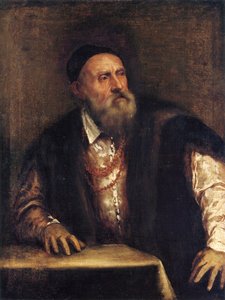
Tiziano Vecellio
1490 - 1576 , Italië
Snelle feiten
- Artistic Movement Or Style: Venetiaanse schilderkunst
- Artists Or Movements Influenced By This Artist: ['Late Italiaanse Renaissance']
- Artists Who Influenced This Artist:
- Giovanni Bellini
- Giorgione
- Date Of Birth: c. 1490
- Date Of Death: 1576
- Full Name: Tiziano Vecellio
- Nationality: Italiaans
- Notable Artworks:
- Een man met een geborduurde mouw
- De bezoeking van Maria en Elisabeth
- Place Of Birth: Pieve di Cadore, Italië
Gerelateerde artikelen

Oil on Canvas: The Professional Guide to Durable, High-Quality Art Reproductions for Hospitality and Large-Scale Interior Projects
A professional guide for hotel designers and procurement managers on selecting durable, high-quality oil on canvas reproductions. Learn about material longevity, custom multi-panel layouts, and efficient bulk ordering solutions for large-scale hospitality projects.


