


 Voorvertoning
 Verstuur
 Delen
Delen
 Details bekijken
 Gids
Gids

 Download
 Vergelijkbare items
 Röntgenonderzoek
 Diavoorstelling
 Statistieken
Tityus
 Oil On Canvas
- WallArt
- Baroque Renaissance
 1548
1548 253.0 x 217.0 cm
 Museo Nacional del Prado
 Lees meer
Giclée / Kunstafdrukken
Giclée- of canvasafdruk van museumkwaliteit met een snelle productie en flexibele afwerkingsmogelijkheden. ( Bestel handgeschilderde reproductie Schakel over naar digitale afbeeldingen)




P118B €10

P118H €10

P118W €10

P438Z €10

P508JH €12

P508YH €12

P805H €10

P805Z €10

P919BZ €10

P919G €10

P919XJ €10

P959ZH €10

P968JZ €12

W106C €8

W218G €10

W218JH €8

W218Y €10

W307PJ €10

W316G €10

W316PJ €8

W316Y €10

W398PJ €8

W4111J €10

W500HY €15

W500JH €15

W692G €12

W849H €8

W940BG €15

W953PJ €8




Kies uit onze vooraf ingestelde maten die overeenkomen met de originele verhoudingen van het kunstwerk.

Voer de gewenste breedte en hoogte in, passend bij uw lijst of muur. Een afdruk kan alleen worden ingekort en nooit groter worden gemaakt dan het origineel; een formaat met andere verhoudingen zal daarom een deel van de afbeelding verliezen. Wij sturen u een digitaal mockup ter goedkeuring voordat we tot drukwerk overgaan. De afbeelding op deze pagina toont niet de werkelijke uitsnede — dit is alleen te zien op het mockup.
Wereldwijde levering () binnen 2 weken in plaats van de standaard 4/5 weken. (26 oktober)

Gratis wereldwijde expressverzending

Hoogwaardig linnen canvas

Volledige verzendverzekering

Garantie op terugbetaling van invoerrechten

Garantie op exacte kleurweergave

Retourbeleid van 100 dagen (alleen bij defecten)

100% Geld-terug-garantie

Korting bij meerdere afnames
 De optie voor glas is alleen beschikbaar bij een formaat kleiner dan 110 cm.

Tityus
Giclée / Kunstafdrukken
Afmetingen reproductie
-


Eindtotaal
€ 57
A Descent Into Darkness: Titian’s “Tityus” – A Renaissance Masterpiece
Tiziano Vecellio's "Tityus," painted in 1548, isn’t merely a depiction of a Greek myth; it’s a profound meditation on suffering, divine justice, and the inescapable consequences of arrogance. Housed within the Museo del Prado, this monumental oil painting offers a visceral experience, transporting the viewer to the desolate underworld where the titan is eternally tormented. The sheer scale – measuring 253 x 217 cm – immediately commands attention, drawing us into a world steeped in shadow and punctuated by the unsettling presence of vultures. Titian’s genius lies not just in his technical prowess but in his ability to imbue a classical narrative with an intensely human drama.
The Mythic Core: Tityus and His Punishment
The story behind “Tityus” is grim, yet powerfully resonant. According to Greek mythology, Tityus was the son of Gaia (Earth) and Tartarus (the abyss). He attempted to seduce Leto, Hera’s mistress, resulting in his immediate punishment: eternal torment chained to a rock, subjected to the relentless feeding of vultures whose appetites could never be satiated. Titian masterfully captures this horrific fate. The figure of Tityus himself is rendered with agonizing realism – his body contorted in a posture of defeated despair, his head bowed as if accepting his unending punishment. He’s not presented as a monstrous brute, but rather as a profoundly vulnerable human being, stripped bare by both physical and spiritual torment.
Color and Light: Titian's Baroque Sensibilities
Titian was a revolutionary in the use of color, and “Tityus” exemplifies this. While firmly rooted in Renaissance principles, the painting anticipates elements of the emerging Baroque style. The palette is dominated by rich, warm tones – deep reds, ochres, and browns – creating an atmosphere of oppressive heat and decay. The artist skillfully employs chiaroscuro, a dramatic contrast between light and shadow, to heighten the emotional impact. Notice how the light catches on Tityus’s skin, highlighting his suffering while plunging the surrounding landscape into darkness. This interplay of light and shadow isn't simply aesthetic; it serves to emphasize the psychological weight of the scene, mirroring the internal struggle of a man facing eternal torment.
- Bold Brushwork: Titian’s signature loose, expressive brushstrokes are evident throughout the painting. These visible marks contribute to the sense of movement and dynamism, suggesting the constant, relentless activity of the vultures and the agonizing struggle of Tityus.
- Color Harmony: The carefully chosen colors create a powerful visual harmony, drawing the eye to the central figure while simultaneously evoking feelings of unease and despair.
- Atmospheric Perspective: The use of atmospheric perspective – where distant elements appear paler and less detailed – adds depth and realism to the rocky landscape, grounding the mythological scene in a tangible environment.
Symbolism and Enduring Relevance
Beyond its immediate depiction of punishment, “Tityus” is laden with symbolic meaning. The vultures represent not just physical consumption but also the relentless passage of time and the inescapable nature of fate. The painting serves as a potent reminder of the dangers of hubris – excessive pride or self-confidence – and the inevitable consequences that follow. Commissioned by Mary of Hungary, this work likely held a didactic purpose, intended to warn against vanity and remind viewers of the importance of humility before God. Even today, “Tityus” continues to resonate with audiences, prompting reflection on themes of morality, justice, and the human condition – timeless subjects rendered with breathtaking artistry and emotional intensity.
A hand-painted reproduction by AllPaintingsStore.com offers a remarkable opportunity to bring this extraordinary masterpiece into your home or office. Experience the drama, the color, and the profound symbolism of “Tityus” in exquisite detail, capturing the spirit of Renaissance art for generations to come.
Veelgestelde vragen
Welke emotionele toon gaat gepaard met de Baroque Renaissance-stijl van "Tityus"?
Binnen de Baroque Renaissance-stroming is "Tityus" vastgelegd met een Melancholic toon.
Waar kan ik een gids vinden voor "Tityus"?
De gids voor "Tityus" is de Informatieblad-pagina van het kunstwerk – een printbaar informatieblad waarop het kunstwerk wordt getoond met het bijschrift, de bronvermelding en de identificatietabel (kunstenaar, data, medium, originele afmetingen, collectie).
Zijn de kleuren van "Tityus" door Tiziano Vecellio levendig of gedempt?
De kleur van "Tityus" heeft een verzadiging van Subtle Color en een intensiteit van Balanced.
Vergelijkbare kunstwerken


Biografie kunstenaar
The Venetian Titan: A Life in Color and Canvas
Tiziano Vecellio, even more famously known as Titian, stands as a monumental figure of the Italian Renaissance—perhaps its most celebrated colorist and a master who fundamentally reshaped the possibilities of oil painting. Born around 1490 in Pieve di Cadore, nestled amidst the dramatic landscapes of the Venetian Alps, his journey from humble beginnings to international acclaim is a testament to prodigious talent and an unwavering dedication to artistic innovation. The details surrounding Titian’s early life remain somewhat shrouded in mystery, but we know he was one of several children born to Gregorio Vecellio, a military man, and Lucia. Recognizing their sons' potential, the family arranged for young Tiziano and his brother Francesco to apprentice with an artist in Venice—a decision that would irrevocably alter the course of art history.
Venice at the turn of the 16th century was a vibrant hub of commerce, culture, and artistic ferment. Titian’s initial training took place within the workshop of Sebastiano Zuccato, a mosaicist, followed by brief periods under the tutelage of Gentile Bellini and, crucially, his brother Giovanni. However, it was his association with Giorgione—a fellow Venetian painter whose work possessed an ethereal poetic quality—that proved most formative. The two artists collaborated on several projects, including the exterior frescoes for the Fondaco dei Tedeschi, a bustling trading post for German merchants. Even in these early works, Titian’s exceptional skill was evident, earning him recognition among his contemporaries and foreshadowing the brilliance that would soon blossom.
A Master's Evolving Style
Titian’s artistic development can be characterized by a remarkable versatility and an ongoing exploration of painterly techniques. His early works, heavily influenced by Giorgione, exhibit a delicate lyricism and a masterful use of color to create atmospheric effects. Paintings like *A Man with a Quilted Sleeve* (circa 1509) demonstrate his emerging talent for portraiture, capturing not only the physical likeness of his subjects but also their inner character. He favored soft, diffused light and subtle gradations of tone, mirroring Giorgione’s approach. As he matured, Titian began to move away from Giorgione’s delicate subtlety and embrace a bolder, more dramatic approach to color. *The Visitation of Mary and Elizabeth* (now in the Accademia, Venice) exemplifies this shift, showcasing his growing confidence in handling complex compositions and vibrant hues. He experimented with layering colors—often applying thin glazes over dried underpaintings—to achieve luminous effects and intense saturation.
Throughout his long career, Titian consistently pushed the boundaries of artistic expression. He explored a vast range of subjects – mythological scenes, religious narratives, portraits of nobility, and even genre paintings depicting everyday life. He wasn’t afraid to break with convention, often employing unconventional compositions and dramatic lighting. His portraits became renowned for their psychological depth and realistic portrayal of textures and fabrics; he meticulously rendered the sheen of silk, the weight of velvet, and the warmth of skin tones. Simultaneously, he excelled in mythological and religious subjects, imbuing them with a sensuality and dramatic intensity that captivated audiences. A prime example is *Venus of Urbino*, a masterpiece that redefined the depiction of the female nude and established Titian as a leading figure in Venetian painting.
Patronage, Prestige, and Lasting Influence
Titian’s talent attracted the attention of powerful patrons from across Europe. He served as court painter to Emperor Charles V, King Philip II of Spain, and Pope Paul III, among others. This patronage not only provided him with financial security but also allowed him to create monumental works that showcased his artistic prowess on a grand scale. His ability to adapt his style to the tastes of different courts while maintaining his own distinctive voice is a testament to his exceptional skill and diplomatic finesse. He was known for his lavish use of gold leaf, particularly in portraits commissioned by royalty, further enhancing their prestige.
Titian’s influence on subsequent generations of artists was profound. From Peter Paul Rubens and Rembrandt to Eugène Delacroix and Édouard Manet, countless painters drew inspiration from his masterpieces. His innovative use of color, his loose brushwork, and his emphasis on capturing the emotional essence of his subjects profoundly influenced their artistic approaches. He is considered a pivotal figure in the transition from the High Renaissance to the Baroque period, paving the way for new artistic styles and techniques.
A Legacy Enduring Through Centuries
Titian passed away in Venice in 1576, leaving behind an extraordinary body of work that continues to inspire awe and admiration. His paintings can be found in museums around the world, including the Galleria Palatina in Florence, the Prado Museum in Madrid, and the National Gallery in London. To experience a Titian is to encounter a master craftsman at the peak of his powers—a painter who possessed an unparalleled ability to capture the beauty, drama, and complexity of the human condition.
Exploring Further
- Museums & Collections: Discover Titian’s works at the Scuola del Santo in Padua and San Salvador in Venice, both showcasing his breathtaking frescoes.
- Related Artists: Explore the influence of Giorgione on Titian's early style and the later impact of Titian on artists like Rubens and Delacroix.
- Historical Context: Immerse yourself in the world of the Italian Renaissance and Venetian painting to fully appreciate Titian’s artistic achievements.
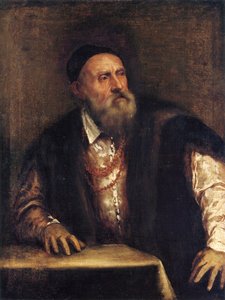
Tiziano Vecellio
1490 - 1576 , Italië
Belangrijkste feiten
- Artistic Movement Or Style: Venetiaanse schilderkunst
- Artists Or Movements Influenced By This Artist: ['Late Italiaanse Renaissance']
- Artists Who Influenced This Artist:
- Giovanni Bellini
- Giorgione
- Date Of Birth: c. 1490
- Date Of Death: 1576
- Full Name: Tiziano Vecellio
- Nationality: Italiaans
- Notable Artworks:
- Een man met een geborduurde mouw
- De bezoeking van Maria en Elisabeth
- Place Of Birth: Pieve di Cadore, Italië
Gerelateerde artikelen

The Enduring Legacy of Oil on Canvas: Technique, History & Aesthetic Impact
Explore the rich history & techniques of oil painting – from Renaissance masters to Impressionism. Discover pigments, layering methods, and why this timeless medium endures. Expert insights for artists & art enthusiasts.

Oil on Canvas: A Historical & Technical Exploration of a Timeless Artistic Medium
Explore the rich history & enduring techniques of oil painting on canvas. Discover the science behind its longevity, conservation practices, and contemporary relevance. Expert insights for art enthusiasts.

The Enduring Power of Painting: A Historical & Contemporary Exploration of Form and Emotion
Explore the rich history & enduring techniques of oil painting with AllPaintingsStore. Discover masterpieces, learn about art collecting, and find authentic handmade reproductions crafted by skilled artists.

Barokke Pracht: Kunst die Grootsheid in Huis Brengt
Ontdek de barokke pracht! Leer over de geschiedenis, kenmerken en toepassingen van deze weelderige kunststijl in uw interieur. Laat u inspireren door meesters en breng grootsheid in huis.

The Dramatic Flourish: Exploring the Baroque Movement's Enduring Legacy in Art History
Explore the dramatic world of Baroque art! Discover iconic artists like Caravaggio & Rubens, defining techniques, and its lasting impact on art history. Expert insights for collectors & enthusiasts at AllPaintingsStore.


