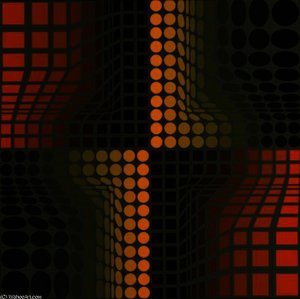
Acrylic On Canvas. Bechtler Museum of Modern Art.

§ 1Catalogue data


Dit kunstwerk is auteursrechtelijk beschermd
De kunstwerken die op deze pagina worden weergegeven, zijn beschermd door de auteursrechtwetgeving, wat betekent dat het ons wettelijk niet is toegestaan om identieke reproducties te maken of te verkopen. Deze bescherming wordt gehandhaafd onder internationale overeenkomsten zoals de Conventie van Bern en door nationale wetgeving, waaronder de bepalingen van de Amerikaanse auteurswet - Titel 17. Alle rechten voorbehouden. Reproduceren of distribueren van afbeeldingen is niet toegestaan zonder uitdrukkelijke schriftelijke toestemming van WahooArt.com en de rechthebbenden.
Als een respectvol en legaal alternatief bieden wij op maat gemaakte, handgeschilderde kunstwerken aan die geïnspireerd zijn op het origineel. Onze bekwame en professionele kunstenaars bestuderen zorgvuldig de stijl, sfeer en artistieke essentie van het origineel om een nieuw, uniek werk te creëren dat dezelfde emotie oproept – terwijl het een op zichzelf staande, originele creatie blijft.
Deze methode voldoet volledig aan de auteursrechtwetgeving, omdat het niet gaat om het kopiëren of dupliceren van het beschermde kunstwerk. In plaats daarvan is er sprake van een creatieve herinterpretatie — een nieuw schilderij dat door het origineel wordt geïnspireerd, maar er niet identiek aan is.
 Lees meer over
§ 2Abstract
Beschrijving verzamelobject
This artwork exemplifies Vasarely’s signature style, characterized by repetitive geometric forms and optical illusions that stimulate perception.
Biografie kunstenaar
Ontdek Victor Vasarely (1906-1997), de pionier van Op Art! Bewonder zijn geometrische abstracties, optische illusies & een blijvende invloed op moderne kunst en design.
§ 3Commentary
Tridem K – A Geometric Revelation by Victor Vasarely
Victor Vasarely (1906-1997) stands as an undisputed titan of Op Art, a movement that revolutionized visual perception in the mid-20th century. Born Győző Vásárhelyi in Pécs, Hungary—a city steeped in Austro-Hungarian heritage—his artistic journey began unexpectedly with aspirations for medicine but swiftly pivoted towards the captivating realm of painting at Eötvös Loránd University in Budapest. This formative decision wasn’t merely a career change; it was an embrace of fundamental principles governing how our eyes perceive reality, propelling him toward groundbreaking explorations into geometric abstraction and optical illusions. The pivotal influence arrived with his enrollment in Sándor Bortnyik’s workshop – Műhely – where he absorbed the essence of Bauhaus design, fostering a dedication to functionality alongside artistic innovation.- The Artwork: Tridem K is a striking acrylic painting on canvas measuring approximately 150.18 x 200.66 inches (381.7 x 509 cm). Its dominant hue is black, serving as the backdrop for an intricate tapestry of vibrant geometric patterns—primarily blues, oranges, greens, purples, reds, and yellows—that dance across the surface.
- Style: Vasarely’s signature style embodies Op Art's core tenets: illusionistic imagery designed to trick the eye into perceiving movement or depth where none exists. The painting exemplifies this aesthetic with its deliberate manipulation of perspective and color gradients, creating a mesmerizing visual experience.
- Technique: Vasarely meticulously crafted Tridem K using a technique characterized by layering acrylic paints in precise geometric shapes—primarily triangles and squares—to generate optical effects. This painstaking process underscores his commitment to scientific rigor alongside artistic creativity.
Historical Context – Bauhaus Influence & The Rise of Kinetic Art
Vasarely’s artistic development coincided with the burgeoning Bauhaus movement, a German school that championed functional design and geometric abstraction as responses to the challenges posed by industrialization. Bortnyik's workshop instilled in him a profound appreciation for these principles, shaping his worldview and informing his creative process. This intellectual milieu fostered an interest in exploring how visual stimuli could stimulate sensory perception—a fascination that would ultimately propel him toward pioneering kinetic art, where movement itself becomes integral to the artwork’s impact. The painting reflects this broader artistic dialogue, embodying the spirit of experimentation and innovation characteristic of its time.Symbolism & Emotional Resonance – Beyond Mere Decoration
Tridem K transcends mere decorative appeal; it speaks to deeper conceptual concerns rooted in Vasarely's exploration of perception and consciousness. The geometric patterns—particularly triangles and squares—represent fundamental building blocks of visual experience, symbolizing stability and order amidst apparent chaos. Furthermore, the vibrant colors evoke emotional responses associated with joy, energy, and dynamism—mirroring the movement-inducing qualities inherent in Op Art itself. Vasarely aimed to create artworks that stimulated not just sight but also thought, prompting viewers to question their assumptions about reality.Location & Legacy – A Testament to Modern Artistic Vision
Currently housed at the Bechtler Museum of Modern Art in Charlotte, United States, Tridem K stands as a lasting monument to Victor Vasarely’s artistic legacy—a testament to his unwavering belief in the transformative power of geometric abstraction and Op Art. Its presence within this prestigious institution underscores its significance as a cornerstone of 20th-century art history, continuing to inspire artists and collectors alike with its captivating visual illusion and profound conceptual depth.Veelgestelde vragen
In welke oriëntatie staat "Tridem K" door Victor Vasarely?
Het formaat van "Tridem K" is Portrait. Dit is handig bij het plannen van de plek waar een reproductie zal worden geplaatst.
Wat is de aanbevolen afmeting voor de print van "Tridem K" door Victor Vasarely?
Voor "Tridem K" door Victor Vasarely wordt een reproductie van Large aanbevolen. De afmetingen kunnen worden aangepast met behoud van de verhoudingen.
Welk gebruik en welke ruimte worden aanbevolen voor "Tridem K" door Victor Vasarely?
Aanbevolen gebruik (Accent) en ruimte (Living Room) zijn de twee aanbevelingen voor "Tridem K" door Victor Vasarely.


 Schakel over naar print


 Voor kunstwerken of reproducties die aan één zijde groter zijn dan 105 cm (ongeveer 41 inch), wordt de lijst als een losse set verzonden. Deze methode garandeert een veilige levering en voorkomt schade tijdens het transport.