


 Voorvertoning
 Verstuur
 Delen
Delen
 Details bekijken
 Gids
Gids

 Download
 Vergelijkbare items
 Röntgenonderzoek
 Diavoorstelling
 Statistieken
Melancholy


 Lees meer
Giclée / Kunstafdrukken
Giclée- of canvasafdruk van museumkwaliteit met een snelle productie en flexibele afwerkingsmogelijkheden. ( Bestel handgeschilderde reproductie Schakel over naar digitale afbeeldingen)




P118B €10

P118H €10

P118W €10

P438Z €10

P508JH €12

P508YH €12

P805H €10

P805Z €10

P919BZ €10

P919G €10

P919XJ €10

P959ZH €10

P968JZ €12

W106C €8

W218G €10

W218JH €8

W218Y €10

W307PJ €10

W316G €10

W316PJ €8

W316Y €10

W398PJ €8

W4111J €10

W500HY €15

W500JH €15

W692G €12

W849H €8

W940BG €15

W953PJ €8




Kies uit onze vooraf ingestelde maten die overeenkomen met de originele verhoudingen van het kunstwerk.

Voer de gewenste breedte en hoogte in, passend bij uw lijst of muur. Een afdruk kan alleen worden ingekort en nooit groter worden gemaakt dan het origineel; een formaat met andere verhoudingen zal daarom een deel van de afbeelding verliezen. Wij sturen u een digitaal mockup ter goedkeuring voordat we tot drukwerk overgaan. De afbeelding op deze pagina toont niet de werkelijke uitsnede — dit is alleen te zien op het mockup.
Wereldwijde levering () binnen 2 weken in plaats van de standaard 4/5 weken. (25 oktober)

Gratis wereldwijde expressverzending

Hoogwaardig linnen canvas

Volledige verzendverzekering

Garantie op terugbetaling van invoerrechten

Garantie op exacte kleurweergave

Retourbeleid van 100 dagen (alleen bij defecten)

100% Geld-terug-garantie

Korting bij meerdere afnames
 De optie voor glas is alleen beschikbaar bij een formaat kleiner dan 110 cm.

Melancholy
Giclée / Kunstafdrukken
Afmetingen reproductie
-


Eindtotaal
€ 57
A Visionary Descent into Sorrow and Spirit
In the hauntingly beautiful Melancholy, attributed to the visionary English master William Blake, we are invited to step beyond the veil of the material world and into a realm where the boundaries between the human soul and the divine are perpetually thin. Created around 1820, this profound meditation on sorrow and faith serves as a breathtaking testament to the Romantic spirit. At its heart, the composition centers upon a woman—often identified as Mary Magdalene—whose presence anchors a celestial tableau of quiet contemplation. Surrounded by figures that suggest both angelic beings and mortal observers, the scene unfolds against a backdrop of lush, ethereal foliage and shimmering stars, establishing an atmosphere where the serenity of the heavens meets the palpable weight of human sadness.
The emotional resonance of this piece lies in its ability to find sublime beauty within suffering. Blake directs the viewer's gaze upward, utilizing a masterful arrangement of figures to emphasize a spiritual dimension that transcends earthly grief. There is a delicate balance achieved here; despite the pervasive sense of introspection and melancholy conveyed through the subjects' expressions, the composition maintains a celestial harmony. For the collector or the interior designer, this artwork offers more than mere decoration; it provides a window into a cosmic architecture of symbols, making it a profound focal point for spaces dedicated to reflection, peace, and deep intellectual engagement.
The Alchemy of Etching and Watercolor
Technically, Melancholy represents the revolutionary spirit of Blake’s approach to printmaking and painting. The work is characterized by a unique dual-medium technique, where the structural precision of etching meets the atmospheric fluidity of watercolor washes. This method allows for an extraordinary textural depth and luminosity that is rare in the works of his era. The intricate, fine linework of the etching provides a rigorous framework, capturing the delicate details of the celestial figures and the organic textures of the surrounding nature. Over this, Blake applied subtle gradations of watercolor, imbuing the scene with a soft, glowing light that seems to emanate from within the paper itself.
This interplay of sharp detail and ethereal color creates a sense of movement and life, as if the stars themselves are pulsing with a quiet energy. The way the light interacts with the translucent washes allows for a dreamlike quality, essential for capturing the "prophetic" nature of Blake's vision. To possess a high-quality reproduction of such a piece is to bring this luminous, textured complexity into one's own environment, allowing the subtle shifts in color and the precision of the line to captivate the eye through every change in light throughout the day.
A Romantic Echo of the Infinite
Emerging from the height of the Romantic era, Melancholy stands as a reaction against the rigid rationalism of the Enlightenment, favoring instead the power of imagination and the intensity of emotion. Blake, working in London, was a man who saw through the industrial soot of his age to witness the whispers of angels and the raw pulse of existence. This painting is a quintessential example of that vision—a landscape where the physical and spiritual realms dissolve into one another. The symbolism of the celestial bodies and the divine figures serves as a reminder of the eternal struggle between innocence and experience, a theme that remains strikingly modern in its clarity.
For those seeking to curate an environment of depth and narrative, this artwork offers an unparalleled opportunity. It is a piece that demands a second, third, and fourth look, revealing new layers of symbolic meaning with every encounter. Whether placed in a private study or a grand living space, Melancholy acts as a silent interlocutor, prompting the viewer to contemplate the profound beauty found in the most tender and sorrowful corners of the human experience.
Veelgestelde vragen
Waarvoor wordt het gebruik van "Melancholy" door William Blake aanbevolen?
Een afdruk van "Melancholy" wordt aanbevolen voor Mood.
Is een download met hoge resolutie van "Melancholy" beschikbaar?
"Melancholy" is beschikbaar als een digitale afbeelding in hoge resolutie om te downloaden, direct te verkrijgen op de Digitale afbeelding pagina.
Voor welke ruimte en welk gebruik wordt "Melancholy" aanbevolen?
"Melancholy" door William Blake wordt aanbevolen voor Mood, bij voorkeur in een Living Room. Gebruik en ruimte bepalen samen waar een reproductie het beste tot zijn recht komt.
Vergelijkbare kunstwerken


Biografie kunstenaar
A Visionary’s Journey: The Life and Art of William Blake
William Blake, born in London on November 28, 1757, was a figure perpetually out of step with his time, yet destined to become one of the most celebrated artists and poets of the Romantic Age. His life unfolded against the backdrop of a rapidly changing England—a world grappling with industrialization, political upheaval, and shifting spiritual beliefs. From humble beginnings as the son of a hosier, Blake’s early years were marked by an intensely vivid imagination and a propensity for visionary experiences that would profoundly shape his artistic trajectory. Though largely self-taught in formal academics, he received drawing instruction at a young age, quickly revealing a talent that hinted at the extraordinary path ahead. His apprenticeship with engraver James Basire proved pivotal, providing him not only with technical mastery but also an understanding of printmaking techniques he would later revolutionize. These early influences—the Gothic grandeur of Westminster Abbey, the classical forms of Raphael and Michelangelo—served as foundational elements in his developing aesthetic, though Blake was never one to remain bound by convention.The Illuminated World: Technique and Innovation
Blake’s artistic innovation wasn't merely about subject matter; it resided fundamentally in *how* he created. Dissatisfied with conventional engraving methods, he developed a unique process known as “illuminated printing.” This involved etching both text and illustrations onto copper plates, then hand-coloring the resulting prints—a laborious but deeply personal approach that allowed for complete artistic control. This wasn’t simply illustration accompanying poetry; it was an integrated art form where image and verse were inextricably linked, each enhancing the meaning of the other. His relief etching technique, born from a claimed visionary experience following his brother's death, further distinguished his work, granting it- A distinctive textural quality
- Greater artistic freedom than traditional methods
Themes of Innocence, Experience, and Rebellion
The core of Blake’s artistic output lies in its exploration of profound themes: the duality of innocence and experience, the constraints of reason versus the liberating power of imagination, and a fierce critique of societal norms.- Songs of Innocence and of Experience (1794), perhaps his most accessible work, presents a contrasting vision of childhood—one idyllic and untainted, the other marked by hardship and corruption.
- The Marriage of Heaven & Hell (1793) is a provocative prose poem that challenges conventional morality, celebrating energy, desire, and rebellion against restrictive doctrines.
- His illustrations for Dante’s *Divine Comedy* showcase his dramatic vision and ability to translate complex narratives into powerful visual imagery.
A Legacy Rediscovered: Blake's Enduring Influence
During his lifetime, William Blake remained largely marginalized, misunderstood by many of his contemporaries. His work was often dismissed as eccentric or even mad. He struggled financially throughout much of his life, relying on commissions and the support of a small circle of patrons like Thomas Butts. However, in the decades following his death on August 12, 1827, Blake’s reputation began to grow steadily. The Pre-Raphaelites, captivated by his visionary style and symbolic imagery, embraced him as a kindred spirit. Later movements—Symbolism and Modernism—found resonance in his emphasis on imagination, subjective experience, and spiritual themes. Blake's influence extends far beyond the realm of art; he inspired writers like Dylan Thomas and poets such as Ted Hughes. Today, William Blake is recognized as a pivotal figure in the Romantic movement, an artist whose work continues to provoke contemplation and inspire creativity—a testament to the enduring power of visionary imagination in confronting societal conventions and exploring the deepest recesses of human consciousness. His unwavering commitment to artistic freedom cemented his place as one of the most original voices of his era.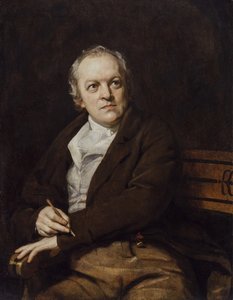
William Blake
1757 - 1827 , Verenigd Koninkrijk
Belangrijkste feiten
- Artistic Movement Or Style: Romantiek
- Artists Who Influenced This Artist:
- Raphael
- Michelangelo
- Date Of Birth: November 28, 1757
- Date Of Death: August 12, 1827
- Full Name: William Blake
- Nationality: Britse kunstenaar
- Notable Artworks:
- Songs of Innocence & Exp.
- The Tyger
- Jerusalem
- Place Of Birth: London, UK
Gerelateerde artikelen

William Blake: Romantic Visionary & Mystical Genius of the Imagination
Explore the mystical art & poetic genius of William Blake (1757-1827). Discover his revolutionary illuminated printing, rich symbolism, and lasting influence on Romanticism. Find handmade reproductions at AllPaintingsStore.

Celestial Messengers: Angels in Painting – A Historical & Artistic Exploration
Explore the captivating history of angels in painting! Discover symbolism, iconic Renaissance & Byzantine masterpieces, and renowned artists. Expert insights for art lovers & collectors at AllPaintingsStore.

Romantic Realism's Finest: 10 Masterpieces for Your Home | AllPaintingsStore
Explore 10 defining masterpieces of Romantic Realism! Discover Courbet, Millet & Daumier's powerful paintings—capturing emotion and social realities. Find museum-quality reproductions for your home at AllPaintingsStore.com.

Divine Beauty: A Curated Guide to the Celestial Majesty of Angelic Figures in Art History
Explore the profound beauty of angelic figures in art history. From Renaissance masterpieces to celestial symbolism, our expert guide offers a sophisticated journey through the divine imagery of the Old Masters for discerning collectors and art enthusiasts.

Celestial Messengers: A Comprehensive Exploration of Angelic Representation in Art History
Explore the captivating history of angels in art! Discover symbolism, iconic Renaissance masterpieces & renowned artists. Expert insights for art lovers & collectors at AllPaintingsStore.


