


 Bekijk op ware grootte
 Verstuur
 Delen
Delen
 Details bekijken
 Gids voor studentenkunstwerken

 Download
 Vergelijkbare items
 Röntgenonderzoek
 Diavoorstelling
 Statistieken
Untitled


 Lees meer
Handgemaakte olieverfreproductie
Met de hand geschilderd in olieverf op canvas in uw gewenste maat en lijst, op bestelling gemaakt door onze kunstenaars. ( Schakel over naar print Schakel over naar digitale afbeeldingen)




P118B €10

P118H €10

P118W €10

P438Z €10

P508JH €12

P508YH €12

P805H €10

P805Z €10

P919BZ €10

P919G €10

P919XJ €10

P959ZH €10

P968JZ €12

W106C €8

W218G €10

W218JH €8

W218Y €10

W307PJ €10

W316G €10

W316PJ €8

W316Y €10

W398PJ €8

W4111J €10

W500HY €15

W500JH €15

W692G €12

W849H €8

W940BG €15

W953PJ €8




Kies uit onze vooraf ingestelde maten die overeenkomen met de originele verhoudingen van het kunstwerk.

Voer de breedte en de hoogte in die u nodig heeft, passend bij uw lijst of uw muur. Dit is handgeschilderd, dus bij een afmeting met een andere vormverhouding kan de kunstenaar iets meer rondom het schilderij schilderen of juist iets meer weglaten — u kiest zelf. Wij sturen u een digitaal mockup ter goedkeuring voordat het schilderwerk begint. De afbeelding die op deze pagina wordt getoond, is niet het uiteindelijke resultaat — alleen de mockup geeft dit weer.
Na de bestelling zal het team van AllPaintingsStore.com per e-mail contact opnemen met de klant voor instructies en een mockup-voorbeeld sturen.
Wereldwijde levering () binnen 3 tot 4 weken in plaats van de standaard 5 weken. (22 oktober). Zonder concessies aan de kwaliteit.

Gratis wereldwijde expressverzending

Hoogwaardig linnen canvas

Volledige verzendverzekering

Garantie op terugbetaling van invoerrechten

Garantie op exacte kleurweergave

Retourbeleid van 100 dagen (alleen bij defecten)

100% Geld-terug-garantie

Korting bij meerdere afnames
 De optie voor glas is alleen beschikbaar bij een formaat kleiner dan 110 cm.

Untitled
Reproductiemethode
Formaat reproductie
-


Totaalprijs
€ 226
A Visionary Encounter Amidst the Shadows
In the enigmatic realm of William Blake’s Untitled, the boundaries between the physical world and the spiritual plane begin to dissolve, inviting the viewer into a landscape where the veil between the mortal and the divine is perpetually thin. The painting presents a striking, dramatic scene centered upon a man with wings, standing precariously atop a rugged pile of rocks. There is an undeniable sense of tension in his posture, as if he is caught in a moment of profound transition, poised on the edge of a fall. In his hand, he grips a large hammer, a tool that suggests a heavy, perhaps even mythological or religious, burden. This central figure does not exist in isolation; around him, a cast of characters—some appearing as angels and others as demons—interact within a space thick with atmosphere. The presence of figures lying down or sitting in the shadows adds to the complexity of the narrative, creating a sense of a larger, unfolding epic that exists just beyond the reach of ordinary perception.
The composition is steeped in a dark and dramatic mood, characteristic of the Romantic Age. Blake masterfully utilizes a palette that emphasizes shadow and light to heighten the emotional stakes of the encounter. The jagged textures of the rocks contrast with the ethereal presence of the winged man, grounding the supernatural elements in a visceral, almost tactile reality. This interplay of light and darkness does more than just define form; it serves to illustrate the eternal struggle between opposing forces, a theme that resonates deeply within Blake’s broader body of work.
Symbolism and the Weight of the Infinite
To gaze upon this piece is to engage with a profound symbolic language. The hammer held by the winged figure acts as a potent emblem, perhaps representing the power of creation, the force of divine judgment, or the heavy labor of the soul. Within the context of Blake’s visionary style, such objects often transcend their literal meaning to become archetypes of human experience. The very arrangement of the figures—the tension between those ascending and those prostrate upon the earth—mirrors the dualities of Innocence and Experience that defined the artist's spiritual journey.
For the discerning collector or interior designer, this artwork offers a captivating focal point that transcends mere decoration. It is an invitation to contemplation, bringing a sense of intellectual depth and mythic grandeur to any space. The intense, cinematic quality of the scene makes it an ideal centerpiece for environments intended to inspire awe and reflection. Whether placed in a private study or a curated gallery setting, this reproduction of Blake’s vision serves as a window into a universe where every shadow holds a secret and every gesture is imbued with cosmic significance.
Vragen & Antwoorden
Is "Untitled" door William Blake een portret, landschap of vierkante compositie?
"Untitled" door William Blake heeft een Portrait-formaat. Het formaat beschrijft de verhoudingen van de compositie.
Hoeveel licht lijken de kleuren van "Untitled" te reflecteren?
De luminantie die is vastgesteld voor "Untitled" door William Blake is Gentle Luminance.
Welk gevoel roept "Untitled" door William Blake op?
De vastgelegde stemming van "Untitled" door William Blake is Dramatic, en de emotionele toon ervan is Dramatic.
Gerelateerde kunstwerken


Biografie van de kunstenaar
A Visionary’s Journey: The Life and Art of William Blake
William Blake, born in London on November 28, 1757, was a figure perpetually out of step with his time, yet destined to become one of the most celebrated artists and poets of the Romantic Age. His life unfolded against the backdrop of a rapidly changing England—a world grappling with industrialization, political upheaval, and shifting spiritual beliefs. From humble beginnings as the son of a hosier, Blake’s early years were marked by an intensely vivid imagination and a propensity for visionary experiences that would profoundly shape his artistic trajectory. Though largely self-taught in formal academics, he received drawing instruction at a young age, quickly revealing a talent that hinted at the extraordinary path ahead. His apprenticeship with engraver James Basire proved pivotal, providing him not only with technical mastery but also an understanding of printmaking techniques he would later revolutionize. These early influences—the Gothic grandeur of Westminster Abbey, the classical forms of Raphael and Michelangelo—served as foundational elements in his developing aesthetic, though Blake was never one to remain bound by convention.The Illuminated World: Technique and Innovation
Blake’s artistic innovation wasn't merely about subject matter; it resided fundamentally in *how* he created. Dissatisfied with conventional engraving methods, he developed a unique process known as “illuminated printing.” This involved etching both text and illustrations onto copper plates, then hand-coloring the resulting prints—a laborious but deeply personal approach that allowed for complete artistic control. This wasn’t simply illustration accompanying poetry; it was an integrated art form where image and verse were inextricably linked, each enhancing the meaning of the other. His relief etching technique, born from a claimed visionary experience following his brother's death, further distinguished his work, granting it- A distinctive textural quality
- Greater artistic freedom than traditional methods
Themes of Innocence, Experience, and Rebellion
The core of Blake’s artistic output lies in its exploration of profound themes: the duality of innocence and experience, the constraints of reason versus the liberating power of imagination, and a fierce critique of societal norms.- Songs of Innocence and of Experience (1794), perhaps his most accessible work, presents a contrasting vision of childhood—one idyllic and untainted, the other marked by hardship and corruption.
- The Marriage of Heaven & Hell (1793) is a provocative prose poem that challenges conventional morality, celebrating energy, desire, and rebellion against restrictive doctrines.
- His illustrations for Dante’s *Divine Comedy* showcase his dramatic vision and ability to translate complex narratives into powerful visual imagery.
A Legacy Rediscovered: Blake's Enduring Influence
During his lifetime, William Blake remained largely marginalized, misunderstood by many of his contemporaries. His work was often dismissed as eccentric or even mad. He struggled financially throughout much of his life, relying on commissions and the support of a small circle of patrons like Thomas Butts. However, in the decades following his death on August 12, 1827, Blake’s reputation began to grow steadily. The Pre-Raphaelites, captivated by his visionary style and symbolic imagery, embraced him as a kindred spirit. Later movements—Symbolism and Modernism—found resonance in his emphasis on imagination, subjective experience, and spiritual themes. Blake's influence extends far beyond the realm of art; he inspired writers like Dylan Thomas and poets such as Ted Hughes. Today, William Blake is recognized as a pivotal figure in the Romantic movement, an artist whose work continues to provoke contemplation and inspire creativity—a testament to the enduring power of visionary imagination in confronting societal conventions and exploring the deepest recesses of human consciousness. His unwavering commitment to artistic freedom cemented his place as one of the most original voices of his era.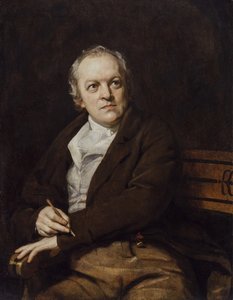
William Blake
1757 - 1827 , Verenigd Koninkrijk
Snelle feiten
- Artistic Movement Or Style: Romantiek
- Artists Who Influenced This Artist:
- Raphael
- Michelangelo
- Date Of Birth: November 28, 1757
- Date Of Death: August 12, 1827
- Full Name: William Blake
- Nationality: Britse kunstenaar
- Notable Artworks:
- Songs of Innocence & Exp.
- The Tyger
- Jerusalem
- Place Of Birth: London, UK
Gerelateerde artikelen

Shadow & Soul: 10 Masterpieces Defined by Deep Black Tones
Explore the power of shadows with our curated list of 10 iconic paintings defined by deep black tones. From chiaroscuro masters to moody modern aesthetics, discover the stories behind these timeless works and find museum-quality reproductions on AllPaintingsStore.com.

Masterpieces of Madness: The Top 25 Most Iconic Artworks by Hieronymus Bosch
Step into the surreal world of Hieronymus Bosch. Explore 25 iconic masterpieces, from dark allegories to Northern Renaissance wonders. Find inspiration for museum-quality art reproductions and curated decor. Discover all masterpieces on AllPaintingsStore.com.

10 Masterpieces Drenched in Rich Espresso Tones
Immerse yourself in the rich, moody beauty of espresso-toned masterpieces. From chiaroscuro classics to dark academia aesthetics, explore 10 iconic paintings that define elegance. Find museum-quality reproductions and decor inspiration at AllPaintingsStore.com. Discover all masterpieces online.

Master of Shadows: The Top 25 Iconic Artworks by Gustave Doré
Step into the dramatic world of Gustave Doré. Explore 25 iconic masterpieces of Romanticism, from haunting Bible illustrations to epic literary engravings. Find inspiration for museum-quality art reproductions and curated decor. Discover all masterpieces on AllPaintingsStore.com.


