Early Life and Artistic Foundations
Edmund Thomas Parris, born in the bustling parish of St. Marylebone, London on June 3rd, 1793, embarked on a journey that would see him become a versatile figure in the British art world. His initial path wasn’t one traditionally associated with high art; he was apprenticed to the jewellers Ray and Montague, where he honed his skills in enamel-painting and metal-chasing. However, even during these formative years, Parris demonstrated an innate curiosity that extended beyond craftsmanship. He devoted his leisure time to the study of mechanics – a pursuit that would later prove invaluable in his ambitious panorama projects. This early blend of artistic precision and technical aptitude foreshadowed the unique contributions he would make to 19th-century painting. In 1816, Parris formally entered the schools of the Royal Academy, immersing himself in anatomical studies under Dr. Carpue, laying a solid foundation for his future work as both a portraitist and historical painter.A Rising Talent: History Painting and Panoramic Visions
Parris’s artistic career gained momentum with “Christ Blessing Little Children,” exhibited at the Royal Academy in 1824 – a significant early achievement that signaled his potential. However, it was his involvement in the restoration of James Thornhill's paintings within the cupola of St. Paul’s Cathedral that truly propelled him into prominence. Parris devised an ingenious apparatus to access the challenging heights of the cathedral dome, attracting considerable attention and leading to a pivotal collaboration with Thomas Hornor on the creation of a monumental panorama of London at the Colosseum in Regent's Park. This immense undertaking, spanning nearly an acre of canvas, demanded not only artistic skill but also remarkable engineering ingenuity. For four years, Parris labored tirelessly, completing the panorama in November 1829 – a testament to his dedication and innovative spirit. He didn’t limit himself to London; soon after, he partnered with William Daniell, R.A., to construct a building for a panoramic view of Madras, further showcasing his architectural and artistic capabilities.Royal Commissions and the Pursuit of Portraiture
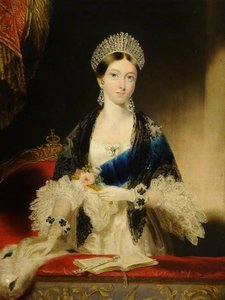
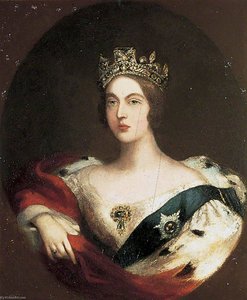
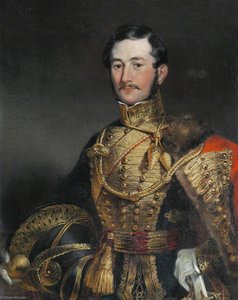
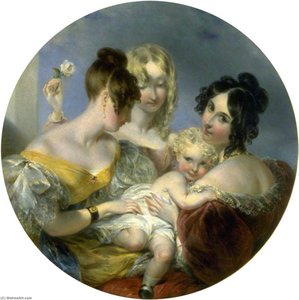
Parris's talent did not go unnoticed by the royal court. He was appointed history painter to Queen Adelaide, consort of William IV, solidifying his position within the established art scene. This appointment led to prestigious commissions, including depictions of significant national events such as Queen Victoria’s coronation in 1838 and the funeral procession of the Duke of Wellington in 1852. Alongside these grand historical scenes, Parris cultivated a successful career as a portrait painter, particularly renowned for his portrayals of female beauty. For several years, he became a fashionable figure, capturing the likenesses of prominent individuals with a style that, while sometimes described as sentimental, resonated with contemporary tastes. His picture “The Bridesmaid,” exhibited at the British Institution in 1830 and subsequently engraved by James Bromley, achieved widespread popularity, becoming emblematic of his aesthetic approach. He further capitalized on this success through illustrated publications like "Flowers of Loveliness," "Gems of Beauty," and "The Passions", alongside illustrations for Lady Blessington’s popular novels.Legacy and the “Parris’s Medium”
Edmund Thomas Parris was not merely a painter; he was an innovator, constantly seeking to refine his techniques and overcome artistic challenges. His most lasting contribution beyond his paintings may be the invention of "Parris's medium," a substance designed to improve the handling and durability of oil paints. While details regarding its exact composition remain somewhat elusive, it reflects his commitment to exploring the technical aspects of art-making. Parris’s career spanned diverse artistic fields – from history painting and portraiture to panorama creation and book illustration – demonstrating a remarkable versatility and adaptability. He died in 1873, leaving behind a legacy as a skilled artist, an ingenious engineer, and a dedicated innovator who played a significant role in shaping the visual landscape of Victorian England. His work continues to offer insights into the artistic sensibilities and historical events of his time, reminding us of a painter who seamlessly blended artistry with technical prowess.Vraag en antwoord
Kan ik een virtueel museum bezoeken met de werken van Edmund Thomas Parris?
De kunstwerken van Edmund Thomas Parris zijn te bewonderen in een 3D-galerie op de 3D-galerie-pagina van de kunstenaar.
Kan ik het kleurgebruik van Edmund Thomas Parris in al het werk bestuderen?
Het kleurgebruik van Edmund Thomas Parris in de werken die op deze website worden vermeld, kan worden bestudeerd op de Kleurenpalet van de kunstenaar pagina van de kunstenaar.
Kan ik de werken van Edmund Thomas Parris bekijken op basis van stemming?
De werken van Edmund Thomas Parris kunnen per stemming worden bekeken op de Sfeercollectie pagina van de kunstenaar, waar de kunstwerken zijn gerangschikt op basis van hun vastgelegde stemmingen.