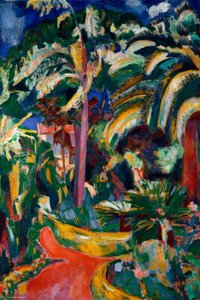
Martin Bloch: A Painter of English Light and Quietude
Born in Neisse, Silesia – a region steeped in shifting borders and cultural exchange – Martin Bloch (1883-1954) emerged as a significant figure in 20th-century British art. Initially drawn to music and architecture, he ultimately found his voice and enduring legacy within the realm of painting, capturing the serene beauty of English gardens, bustling cityscapes, and intimate portraits with a distinctive blend of expressionism and impressionism. His work, often characterized by its luminous color palettes and subtle emotional depth, offers a poignant reflection on the changing landscape of Europe and the artist’s own journey of displacement.
Bloch's early life was shaped by the tumultuous political climate of pre-war Germany. Born into an assimilated Jewish family, he received a solid education that encompassed both classical studies and artistic pursuits. He began his artistic training in Munich, absorbing the influence of local artistic trends while simultaneously grappling with the rising tide of nationalism. This period proved formative, exposing him to new ideas and techniques before the increasingly hostile environment forced his emigration to England in 1934. This relocation marked a pivotal moment, not only for Bloch’s personal life but also for the evolution of his artistic style – he quickly adapted to the English landscape and its unique light.
The Formation of a Distinctive Style
Bloch's artistic development can be traced through several distinct phases. Initially influenced by the vibrant colors and bold brushstrokes of Munich’s Secessionist movement, his early works reflected a dynamic energy and a fascination with urban life. However, following his arrival in Paris, he encountered the Impressionists and Post-Impressionists – particularly Monet and Renoir – whose techniques profoundly impacted his approach to color and light. He began to prioritize capturing fleeting moments of beauty, employing broken brushstrokes and layering hues to create an atmospheric effect that conveyed a sense of tranquility and introspection. This shift culminated in his arrival in England, where he found inspiration in the meticulously cultivated gardens and quiet corners of the countryside.
A key element of Bloch’s style was his deliberate use of color. He eschewed traditional academic palettes, favoring instead a rich and often unconventional combination of hues – warm yellows and oranges juxtaposed against cool blues and greens, creating a sense of visual harmony and emotional resonance. His landscapes, in particular, are renowned for their luminous quality, capturing the subtle shifts in light and shadow that define the English countryside. He was particularly drawn to depicting subjects like laburnum trees, may trees, and cathedrals – motifs that became recurring themes throughout his oeuvre.
Themes and Influences
Bloch’s paintings are not merely representations of their subject matter; they are imbued with a quiet sense of melancholy and nostalgia. His works often evoke a feeling of longing for a lost past, reflecting the artist's own experiences as an immigrant and refugee. The influence of German Expressionism is evident in his use of distorted forms and emotionally charged colors, particularly in his depictions of cityscapes and portraits. However, he tempered this influence with a distinctly English sensibility, capturing the understated beauty of the British landscape and its inhabitants.
Beyond artistic influences, Bloch’s work was shaped by broader historical currents. The rise of fascism in Europe cast a long shadow over his life and career, forcing him to flee Germany and ultimately find refuge in England. This experience profoundly impacted his perspective, informing his paintings with a sense of displacement and uncertainty. His later works often explore themes of memory, loss, and the search for identity – reflecting the challenges faced by those who have been uprooted from their homes.
Legacy and Recognition
Despite facing significant obstacles throughout his career, Martin Bloch established himself as a respected and influential figure in British art. His paintings were exhibited regularly at leading galleries, including Ben Uri Gallery, and he taught at prestigious art schools such as Camberwell School of Arts and Crafts. His work is now held in numerous public and private collections across the United Kingdom, testament to its enduring appeal.
Bloch’s legacy extends beyond his individual artistic achievements. He played a crucial role in fostering a vibrant community of artists in post-war England, inspiring generations of painters with his innovative approach to color and composition. His paintings continue to resonate with viewers today, offering a poignant glimpse into the life and times of an artist who navigated the complexities of a rapidly changing world.
Vraag en antwoord
Hoe vind ik werken van Martin Bloch met een specifiek thema?
De werken van Martin Bloch kunnen via trefwoorden worden verkend op de Op trefwoorden pagina van de kunstenaar. Elk trefwoord groepeert de bijbehorende kunstwerken.
Hoe kan ik het werk van Martin Bloch chronologisch volgen?
Er bestaat een tijdlijn van de werken van Martin Bloch: op de Chronologie kunstwerken pagina van de kunstenaar staan de kunstwerken in chronologische volgorde van creatie.
Welke kunstwerken van Martin Bloch worden het meest bekeken?
Er is een Statistieken-pagina voor Martin Bloch, met statistieken over de kunstwerken van de kunstenaar op deze website.