


 Se i rommet
 Del som digitalt kort
 Del
Del
 Detaljer
 Studentguide

 Last ned
 Liknende objekter
 Røntgen
 Lysbildefremvisning
 Besøksstatistikk
Leigh
 1900
1900 29.0 x 52.0 cm
 Les mer
Kunstverket som vises på denne siden er beskyttet av opphavsretten, noe som betyr at vi ikke har juridisk tillatelse til å lage eller selge identiske reproduksjoner. Denne beskyttelsen håndheves i henhold til internasjonale avtaler som for eksempel Bernerkonvensjonen og av nasjonale lover, inkludert de som er fastsatt i Amerikansk opphavsrettslov – Tittel 17.
Denne metoden er i fullt samsvar med opphavsrettslige regler, da den ikke innebærer kopiering eller duplisering av det beskyttede kunstverket. I stedet er det snakk om en kreativ nytolkning – et nytt maleri som er inspirert av originalen, men ikke identisk med den.
Giclée / Kunsttrykk
Giclée- eller lerretsprint av museumskvalitet med rask produksjon og fleksible valgmuligheter for etterbehandling. ( Bestill håndmalt reproduksjon Gå til digitalt bilde)




































Velg mellom våre forhåndsdefinerte størrelser som bevarer kunstverkets opprinnelige proporsjoner.

Skriv inn bredden og høyden du trenger, slik at den passer til din ramme eller vegg. Et trykk kan kun beskjæres, aldri gjøres større enn bildet, så et format med en annen form vil miste en del av motivet. Vi sender deg en digital mockup for godkjenning før vi trykker noe som helst. Bildet som vises på denne siden viser ikke den faktiske beskjæringen — det er kun mockuppen som gjør det.
Verdensomspennende levering () på 2 uker i stedet for standard 4/5 uker. (26 October)

Gratis ekspressfrakt over hele verden

Lerretsduk av høykvalitets lin

Full transportforsikring

Garanti for refusjon av toll og importavgifter

Garantert fargeekthet

100 dagers returrett ved fabrikasjonsfeil

100% pengene tilbake-garanti

Mengderabatt
 Glassalternativet er kun tilgjengelig i størrelser under 110 cm

Leigh
Giclée / Kunsttrykk
Format på reproduksjon
-


Totalpris
Nkr 609
Relaterte kunstverk


Kunstnerbiografi
Alfred Harvey Moore: A Painter of Coastal Tranquility
Alfred Harvey Moore (born circa 1879 – living) emerged as a prominent British seascape artist during the late Victorian and Edwardian eras, capturing the serene beauty of the English coastline with meticulous detail and imbued with a palpable sense of nostalgia. While biographical information remains somewhat sparse, his artistic legacy speaks volumes about his dedication to portraying the natural world and reflecting the spirit of his time—a testament to an artist who eschewed formal training for profound observation and personal conviction. Moore’s formative years were spent in Liverpool, where he honed his artistic skills through self-study and meticulous observation—a practice that would fundamentally shape his distinctive style. Unlike many artists of his generation who prioritized academic instruction, Moore championed a deeply individual approach to artmaking, prioritizing direct engagement with the subject matter above prescribed conventions. This unwavering commitment to realism is vividly apparent in his canvases, which depict harbors, beaches, and estuaries with breathtaking accuracy—down to subtle nuances in light and texture that convey an astonishing level of detail. His artistic sensibilities were profoundly influenced by Impressionism and Luminism, movements championed for their ability to capture fleeting moments of atmospheric illumination and prioritizing tonal gradations over harsh outlines. Artists such as Frederic Church and George Inness served as guiding lights for Moore’s technique, inspiring him to adopt a painterly style characterized by soft brushstrokes and muted palettes—a deliberate choice that mirrored the prevailing aesthetic sensibilities of his era. However, Moore transcended mere imitation; he infused his landscapes with an emotional resonance that communicated the grandeur and tranquility of the British countryside—a genre particularly favored by collectors seeking idealized representations of Victorian summers. Moore gained considerable recognition during his lifetime, establishing himself as a respected member of the Watermill Art Gallery and exhibiting extensively in London. His paintings resonated deeply with audiences who appreciated their understated elegance and evocative portrayal of coastal life—a reflection of the broader artistic currents that celebrated natural beauty and contemplative contemplation. Among his most celebrated works are “The Old Water Mill,” “Leigh,” and “The Thames off Yantlett Creek, Kent”—each demonstrating Moore’s mastery of tonal painting and capturing the essence of a bygone era with remarkable sensitivity. These landscapes stand as enduring symbols of Victorian artistic ideals. His contribution to British art history lies in his unwavering dedication to portraying the natural world with honesty and empathy—a stance that aligns seamlessly with the broader artistic ethos of his time. Alfred Harvey Moore’s paintings continue to captivate viewers today, serving as poignant reminders of a period marked by both scientific breakthroughs and an enduring appreciation for the pastoral landscapes of Britain.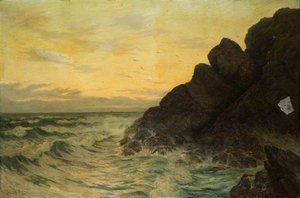
Kort om kunstneren
- Artistic Movement Or Style: Watermill Paintings
- Artists Who Influenced This Artist:
- Frederic Church
- George Inness
- Full Name: Alfred Harvey Moore
- Nationality: British
- Notable Artworks:
- The Old Water Mill, Walton on the Naze
- Leigh
- The Thames off Yantlett Creek, Kent
- Place Of Birth: Liverpool

