

Olje på lerret.

§ 1Catalogue data

Dette kunstverket er beskyttet av opphavsrett
Kunstverket som vises på denne siden er beskyttet av opphavsretten, noe som betyr at vi ikke har juridisk tillatelse til å lage eller selge identiske reproduksjoner. Denne beskyttelsen håndheves i henhold til internasjonale avtaler som for eksempel Bernerkonvensjonen og av nasjonale lover, inkludert de som er fastsatt i Amerikansk lov om opphavsrett – Tittel 17.
Som et respektfullt og lovlig alternativ tilbyr vi skreddersydde, håndmalte kunstverk inspirert av originalen. Våre dyktige og profesjonelle kunstnere studerer nøye originalens stil, stemning og kunstneriske essens for å skape et nytt og unikt verk som vekker den samme følelsen – samtidig som det forblir en original skapelse i seg selv.
Denne metoden er i fullt samsvar med opphavsrettslige regler, da den ikke innebærer kopiering eller duplisering av det beskyttede kunstverket. I stedet er det snakk om en kreativ nytolkning – et nytt maleri som er inspirert av originalen, men ikke identisk med den.
 Les mer om dette
§ 2Abstract
Beskrivelse av objektet
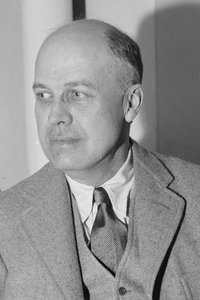
Utforsk Edward Hoppers ikoniske selvportrett – et stille og melankolsk bilde av ensomhet i det moderne Amerika. Et mesterverk som fanger tidens ånd.
Om kunstneren
Edward Hopper: En mester i amerikansk realisme, fanger ensomhet og byliv med kraftfullt lys & skygge. Oppdag ikoniske malerier som Nighthawks! Kvalitetsreproduksjoner fra AllPaintingsStore.
§ 3Commentary
Edward Hopper’s Solitude: An Exploration of ‘Self Portrait’
Edward Hopper's 'Self Portrait,' painted between 1925 and 1930, isn’t merely a depiction of an artist; it’s a profound meditation on isolation, introspection, and the quiet dignity of the individual within the bustling landscape of early 20th-century America. This oil painting, measuring approximately 64.5 by 51.8 centimeters, offers a remarkably intimate glimpse into Hopper's psyche – a world often reflected in his later, more famous works like ‘Nighthawks’ and ‘Gas Station.’ The piece stands as a testament to his mastery of capturing fleeting moments of loneliness and the subtle poetry of everyday life.
The painting itself is characterized by its stark simplicity. Hopper employs a restrained palette – primarily browns, blues, and greys – creating an atmosphere of muted melancholy. The subject, rendered in charcoal on canvas, possesses a directness that’s both unsettling and compelling. His gaze, fixed intently upon the viewer, isn't one of overt confrontation but rather a quiet observation, a sense of contained thoughtfulness. The slightly slumped posture and the subtle lines etched around his eyes hint at years spent contemplating the world from a distance – a characteristic often associated with Hopper’s artistic vision.
A Bridge Between Impressionism and Modernism
Hopper's style during this period represents a fascinating convergence of influences. He was deeply rooted in the traditions of realism, inheriting a commitment to depicting the world as he saw it from William Merritt Chase and Robert Henri at the New York School of Art. However, unlike the bright, vibrant colors often associated with Impressionism, Hopper favored a more subdued approach, utilizing light and shadow to evoke mood and atmosphere rather than simply capturing visual reality. This technique anticipates the tenets of early Modernism – a focus on form, composition, and the exploration of psychological states—and is evident in his later works.
The painting’s composition further reinforces this duality. The stark simplicity of the background, devoid of extraneous details, directs all attention to the figure in the foreground. This deliberate reduction emphasizes the subject's isolation, creating a visual echo of the emotional distance he so often portrayed. Notice how the dark, undefined space behind him doesn’t offer any comforting presence or distraction; it simply amplifies his solitude.
Symbolism and the American Psyche
‘Self Portrait’ is rich in symbolic meaning, reflecting Hopper's broader engagement with the anxieties and uncertainties of modern America. The artist’s introspective gaze can be interpreted as a commentary on the alienation felt by individuals within an increasingly industrialized and urbanized society. The lack of immediate connection – no other figures are present—underscores this sense of detachment. It speaks to a fundamental human experience: the feeling of being alone even amidst crowds, of observing life from behind a veil of quiet contemplation.
Furthermore, the painting’s muted colors and somber mood resonate with the prevailing atmosphere of the 1920s and 30s – an era marked by economic hardship, social upheaval, and a growing sense of disillusionment. Hopper's work, in this context, becomes a poignant reflection of the psychological landscape of the time. The painting’s quiet intensity invites viewers to contemplate their own experiences of solitude and introspection.
A Legacy of Quiet Observation
‘Self Portrait’ is more than just a depiction of an artist; it's a window into the soul of Edward Hopper – a master of capturing the subtle nuances of human emotion and the quiet beauty of everyday life. It exemplifies his signature style, characterized by its evocative use of light, shadow, and composition to convey a sense of loneliness, introspection, and profound observation. Reproductions of this powerful work offer a chance to experience firsthand the enduring appeal of Hopper’s ability to transform ordinary scenes into moments of poignant emotional resonance – a testament to his lasting contribution to American art.
Spørsmål og svar
Er fargene i "Selvportrett" av Edward Hopper livlige eller dempede?
Fargene i "Selvportrett" av Edward Hopper har en Dempet fargemetning metning med en Harmonisk balansert intensitet.
Hvor harmonisk er fargebruken i "Selvportrett" av Edward Hopper?
Fargene i "Selvportrett" av Edward Hopper utviser en Mykt sammensatt palett harmoni. Harmoni beskriver hvordan fargene samspiller med hverandre.
Er fargene i "Selvportrett" av Edward Hopper mettede eller dempede?
Fargene i "Selvportrett" av Edward Hopper har en Dempet fargemetning metning. Metning beskriver hvor levende eller dempede fargene er.


 Bytt til trykk


 For kunstverk eller reproduksjoner som er større enn 105 cm (ca. 41 tommer) på noen side, vil rammen bli sendt som et sett som må monteres. Denne metoden sikrer trygg levering og forhindrer skader under transport.


