


 Forhåndsvisning
 Send
Send Del med andre
 Vis detaljer
 Veiledning

 Last ned bildet
 Liknende objekter
 Røntgenundersøkelse
 Lysbildefremvisning
 Statistikk
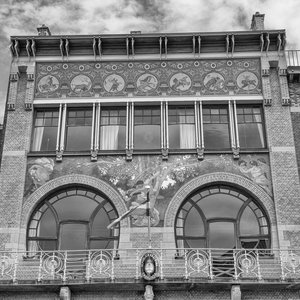
Building. Geological Museum of Budapest in Budapest, Hungary

 Vis hele teksten
Håndlaget oljereproduksjon
Håndmalt olje på lerret i din valgte størrelse og ramme, laget på bestilling av våre kunstnere. ( Bytt til trykk Bytt til digitalt bilde)




































Velg mellom våre forhåndsdefinerte størrelser som bevarer kunstverkets opprinnelige proporsjoner.

Du kan angi egne mål for å tilpasse en spesifikk ramme eller plass. Dersom den valgte størrelsen ikke samsvarer med originalbildets proporsjoner, vil vi enten beskjære kunstverket eller utvide maleriet med ytterligere håndmalte elementer. En digital mockup vil bli sendt til din godkjenning før produksjonen starter.
Vennligst merk at forhåndsvisningen på skjermen ikke gjenspeiler den faktiske beskjæringen eller utvidelsen. Kun mockuppen vil vise den endelige komposisjonen nøyaktig.
Selv om tilpassede størrelser er tilgjengelige, anbefaler vi å velge et mål fra den forhåndsdefinerte listen for å bevare de originale proporsjonene.
Etter bestilling vil AllPaintingsStore.com-teamet sende e-post til kunden for instruksjoner og sende et utkast (mockup) som forhåndsvisning.
Verdensomspennende levering () på 3–4 uker i stedet for standard 5 uker. (21 September). Ingen kompromisser med kvaliteten.

Gratis ekspressfrakt over hele verden

Lerretsduk av høykvalitets lin

Full forsikring under transport

Garanti for refusjon av toll og importavgifter

Garantert korrekt fargegjengivelse

100 dagers returrett (kun ved mangler)

100% pengene tilbake-garanti

Rabatt ved flere kjøp
 Glassalternativet er kun tilgjengelig i størrelser under 110 cm

Building. Geological Museum of Budapest in Budapest, Hungary
Teknikk for reproduksjon
Størrelse på reproduksjon
-


Endelig pris
$ 258
Lignende kunstverk



Om kunstneren
Ödön Lechner: Architect of Hungarian Szecesszió
Ödön Lechner (born János Ödön Lechner; 27 August 1845 – 10 June 1914) stands as a towering figure in Hungarian architectural history, embodying the spirit and aesthetic ideals of the Szecesszió movement—a vibrant expression of Art Nouveau that flourished across Europe during the fin de siècle. He remains an undisputed champion of Hungarian artistic heritage, whose buildings continue to captivate visitors with their grandeur and intricate detailing.Lechner’s formative years were spent in Budapest, Hungary, where he received a remarkably thorough education encompassing mathematics and architecture. Recognizing his innate talent early on, he pursued his studies at Technische Universität Wien (Vienna University of Technology) under Viktor Hammerstein, absorbing the foundational principles of classical Beaux Arts alongside the burgeoning excitement of modernist ideas – a duality that would profoundly shape his artistic vision.
- The Szecesszió Vision: Lechner’s architectural philosophy wasn't merely about constructing buildings; it was about crafting experiences. Inspired by the rich tapestry of Hungarian folk art—particularly motifs drawn from Magyar and Turkic traditions—he sought to imbue his creations with a palpable sense of national identity. Simultaneously, he embraced the transformative advancements of the era, notably ironwork and Zsolnay tiles, skillfully merging these elements into structures that defied convention and celebrated innovation.
- Notable Projects: Lechner’s prolific career produced an astonishing array of buildings that exemplify Szecesszió's distinctive style with breathtaking precision. The Budapest Geological Museum stands as a testament to his ambition—a monumental edifice adorned with mesmerizing Zsolnay tile panels depicting Hungarian landscapes and flora, transporting viewers into the heart of Magyar natural beauty. Equally impressive is ‘The Blue Church,’ Bratislava – a masterpiece of Art Nouveau design featuring a striking blue façade and an elaborate clock tower that dominates the cityscape.
- Zsolnay Tiles & Artistic Influence: Lechner’s collaboration with Zsolnay Tile Factory was arguably his most significant contribution to Hungarian architectural aesthetics. He possessed an unparalleled eye for color and pattern, meticulously selecting Zsolnay tiles—renowned for their luminous hues and intricate designs—to transform ordinary spaces into immersive environments. This technique wasn't merely decorative; it represented a deliberate effort to elevate the visual experience and solidify Szecesszió’s legacy as a movement dedicated to artistic excellence.
Lechner’s influence extended beyond his own buildings, resonating throughout Hungarian architectural circles. He championed the use of ironwork—a symbol of industrial progress—integrating it seamlessly into monumental structures alongside Zsolnay tiles, establishing a stylistic hallmark that distinguishes Szecesszió from other artistic movements. His work was recognized by contemporaries like Gustav Klimt and Josef Hoffmann, who admired his ability to fuse tradition with modernity.
Lechner’s enduring legacy is enshrined in the UNESCO World Heritage designation awarded in 2008 for Budapest's Szecesszió architecture—a recognition of his contribution to Hungarian cultural heritage and a testament to the timeless beauty of Szecesszió’s artistic vision. His buildings continue to inspire awe and admiration, serving as tangible reminders of Hungary’s golden age in art and design.

eugen lechner
1845 - 1914 , Ungarn
Kort om kunstneren
- Artistic Movement Or Style: Szecesszió / Art Nouveau
- Artists Who Influenced This Artist:
- Gustav Klimt
- Josef Hoffmann
- Date Of Birth: August 27, 1845
- Date Of Death: June 10, 1914
- Full Name: János Ödön Lechner
- Nationality: Ungarsk
- Notable Artworks:
- Budapest Geological Museum
- The Church of St. Elizabeth
- Place Of Birth: Budapest, Hungary

