


 Forhåndsvisning
 Send
Send Del med andre
 Vis detaljer
 Veiledning

 Last ned bildet
 Liknende objekter
 Røntgenundersøkelse
 Lysbildefremvisning
 Statistikk
Portrait of Henri II
 Oil On Canvas
- WallArt
- Renaissance
 1547
1547- Renaissance
 192.0 x 105.0 cm
 Vis hele teksten
Håndlaget oljereproduksjon
Håndmalt olje på lerret i din valgte størrelse og ramme, laget på bestilling av våre kunstnere. ( Bytt til trykk Bytt til digitalt bilde)




P118B $10

P118H $10

P118W $10

P438Z $10

P508JH $12

P508YH $12

P805H $10

P805Z $10

P919BZ $10

P919G $10

P919XJ $10

P959ZH $10

P968JZ $12

W106C $8

W218G $10

W218JH $8

W218Y $10

W307PJ $10

W316G $10

W316PJ $8

W316Y $10

W398PJ $8

W4111J $10

W500HY $15

W500JH $15

W692G $12

W849H $8

W940BG $15

W953PJ $8




Velg mellom våre forhåndsdefinerte størrelser som bevarer kunstverkets opprinnelige proporsjoner.

Du kan angi egne mål for å tilpasse en spesifikk ramme eller plass. Dersom den valgte størrelsen ikke samsvarer med originalbildets proporsjoner, vil vi enten beskjære kunstverket eller utvide maleriet med ytterligere håndmalte elementer. En digital mockup vil bli sendt til din godkjenning før produksjonen starter.
Vennligst merk at forhåndsvisningen på skjermen ikke gjenspeiler den faktiske beskjæringen eller utvidelsen. Kun mockuppen vil vise den endelige komposisjonen nøyaktig.
Selv om tilpassede størrelser er tilgjengelige, anbefaler vi å velge et mål fra den forhåndsdefinerte listen for å bevare de originale proporsjonene.
Etter bestilling vil AllPaintingsStore.com-teamet sende e-post til kunden for instruksjoner og sende et utkast (mockup) som forhåndsvisning.
Verdensomspennende levering () på 3–4 uker i stedet for standard 5 uker. (21 September). Ingen kompromisser med kvaliteten.

Gratis ekspressfrakt over hele verden

Lerretsduk av høykvalitets lin

Full forsikring under transport

Garanti for refusjon av toll og importavgifter

Garantert korrekt fargegjengivelse

100 dagers returrett (kun ved mangler)

100% pengene tilbake-garanti

Rabatt ved flere kjøp
 Glassalternativet er kun tilgjengelig i størrelser under 110 cm

Portrait of Henri II
Teknikk for reproduksjon
Størrelse på reproduksjon
-


Endelig pris
$ 258
A Royal Encounter with the Renaissance
In the quiet, hallowed halls of the Galleria Palatina, there exists a window into the sixteenth century that transcends time itself. The Portrait of Henri II, a masterwork executed in 1547 by the incomparable François Clouet, is far more than a mere depiction of a monarch; it is an intimate encounter with the very soul of the French Renaissance. As one gazes upon this magnificent oil on canvas, the viewer is immediately struck by the profound presence of the King. Clouet, a painter who breathed life into the courtly figures of the Valois monarchy, utilizes a meticulous realism to bridge the gap between centuries, allowing us to feel the weight of history in every brushstroke.
The composition is a masterclass in controlled elegance. Henri II is presented with a poised, commanding confidence that speaks of his absolute sovereignty. Dressed in a somber yet luxurious black doublet, accented by a crisp white collar, the King embodies the refined austerity of the era's upper nobility. The dark, atmospheric background serves a deliberate purpose: it eliminates all worldly distractions, forcing the eye to converge upon the subject’s face and hands. This technique creates a dramatic chiaroscuro effect, where light dances across the contours of his features, highlighting the subtle textures of skin, hair, and fabric with an almost tactile precision.
The Artistry of Detail and Symbolism
To study this portrait is to admire the technical virtuosity of Clouet’s hand. The artist’s ability to render the intricate textures of the Renaissance wardrobe—the heavy weave of the doublet and the delicate lace of the collar—demonstrates a profound understanding of both medium and material. Every fold in the fabric is treated with a sculptural depth, achieved through a sophisticated layering of oil glazes that catch the light in ways that suggest movement and dimension. His mastery of human anatomy is equally evident in the lifelike rendering of the King’s facial features, from the thoughtful gaze to the carefully groomed beard and mustache.
Beyond the surface beauty, the painting is rich with subtle symbolism. The subject's relaxed yet authoritative pose, with one hand resting firmly on his hip, communicates a sense of stability and power. Furthermore, the inclusion of a small book or manuscript held in his right hand serves as a poignant emblem of the Renaissance ideal: the ruler as an intellectual. It suggests that Henri II was not merely a man of war and politics, but a patron of the arts and a seeker of knowledge. This layer of meaning transforms the portrait from a simple likeness into a complex narrative about the character and values of the French crown during a period of immense cultural flourishing.
A Timeless Addition to the Collector's Gallery
For the discerning art lover, the collector, or the interior designer, the Portrait of Henri II offers an unparalleled opportunity to infuse a space with historical gravity and aesthetic sophistication. The painting’s palette—dominated by deep blacks, luminous whites, and warm skin tones—possesses a versatile elegance that complements both classical and contemporary settings. Whether placed in a grand library or a modern study, a high-quality reproduction of this masterpiece acts as a focal point that commands attention and invites contemplation.
Owning a hand-painted reproduction of such a significant work allows one to preserve the legacy of François Clouet within a private collection. These meticulously crafted pieces capture the essence of the original, from the dramatic lighting to the intricate textures, providing an evocative atmosphere of prestige and timeless beauty. It is an investment not just in decor, but in a tangible connection to the grandeur of the 16th-century French court, offering a daily inspiration drawn from one of the most illustrious eras in art history.
Lignende kunstverk


Om kunstneren
A Legacy of Likeness: The World of François Clouet
François Clouet, a name synonymous with the refined portraiture of the French Renaissance, emerged from a lineage steeped in artistic skill and courtly favor. Born around 1510 in Tours, France, his life unfolded against a backdrop of evolving artistic sensibilities and the opulent world of the Valois monarchy. He wasn’t merely a painter; he was a chronicler of an era, capturing the essence of kings, queens, and courtiers with a meticulousness that continues to captivate viewers today. The shadow of his father, Jean Clouet, loomed large – both artists shared not only a profession but also the familiar nickname ‘Janet,’ leading to occasional confusion in attributing their works across generations. Yet, François carved his own distinct path, blending Flemish naturalism with an emerging Italianate grace, and establishing himself as one of France’s most celebrated portraitists.Inheriting a Tradition: Early Life and Artistic Formation
The early years of François Clouet remain somewhat veiled in historical obscurity, but his artistic trajectory was undeniably shaped by the legacy of his father. Jean Clouet, originating from the Southern Netherlands, brought with him to the French court the meticulous detail and realistic approach characteristic of Flemish painting. This foundation formed the bedrock of François’s training. A pivotal moment arrived in 1541 when François inherited his father's estate, formally stepping into his artistic inheritance and assuming the responsibilities that came with it. This wasn’t simply a transfer of property; it was an assumption of a role within the very fabric of the French court. The Clouet family also enjoyed a unique connection to the Italian Renaissance through Jean’s time in Amboise, exposing François to the burgeoning ideals and innovative techniques emanating from Italy – a subtle but significant influence that would later manifest in his work. He absorbed not just technique, but an understanding of how art could serve as both documentation and celebration of power and status. He diligently studied the works of Leonardo da Vinci and Michelangelo, absorbing their mastery of perspective and anatomical accuracy—skills he would skillfully integrate into his own artistic practice.The Art of Revelation: Style and Major Works
François Clouet’s oeuvre is defined by a remarkable precision and elegance. His portraits weren't merely likenesses; they were insightful studies of character, capturing not only physical features but also the personality and social standing of his subjects. He possessed an extraordinary ability to convey royal authority and sophistication, as evidenced in several notable depictions of Francis I, examples of which reside in prestigious collections like the Uffizi Gallery and the Louvre Museum. Beyond Francis I, Clouet’s brush immortalized other key figures of the era. He likely painted portraits of Catherine de' Medici at Versailles, contributing to a visual record of her influential reign. Perhaps one of his most celebrated achievements is the chalk drawing of Mary, Queen of Scots, held in the Bibliothèque nationale – a work that showcases his mastery of capturing delicate features and conveying emotional depth with astonishing subtlety. Other notable works include portraits of Elizabeth of Austria (Louvre), Marguerite of France (Chantilly), and Charles IX (Château de Chantilly). His meticulous style and attention to detail profoundly influenced subsequent generations of French portraitists.A Defining Aesthetic: Characteristics of Clouet’s Art
Several hallmarks define François Clouet's distinctive style.- Elaborate Detail: A meticulous attention to detail permeates his work, evident in the intricate rendering of clothing, jewelry, and facial features – every element contributing to a sense of realism and opulence.
- Accurate Drawing: Clouet’s portraits are grounded in precise anatomical rendering and skillful use of line, demonstrating a mastery of draftsmanship that underpinned his artistic vision.
- Exquisite Completeness: His compositions convey a sense of wholeness and personality, going beyond mere physical representation to capture the inner life of his subjects. He didn’t just paint faces; he painted individuals.
A Lasting Impression: Historical Significance and Legacy
François Clouet’s contributions to French Renaissance art are profound. He played a crucial role in establishing portraiture as a prominent genre in France, elevating the status of the artist and providing invaluable visual records of the royal court. He bridged the gap between medieval artistic traditions and the emerging Renaissance ideals, incorporating naturalism and humanistic principles into his work. As a court painter for multiple French monarchs – Francis I, Henry II, Francis II, and Charles IX – he documented the lives and appearances of key figures in French history, creating a visual archive that continues to inform our understanding of this period. His meticulous style and attention to detail profoundly influenced subsequent generations of French portraitists. He died on December 22, 1572, shortly after the tumultuous St. Bartholomew’s Day Massacre – a poignant end for an artist who had dedicated his life to immortalizing the world around him. His will offers glimpses into his personal life and financial standing, further cementing his legacy as both an artistic master and a significant figure in French society.
François Clouet
1510 - 1572 , Frankrike
Kort om kunstneren
- Artistic Movement Or Style: Renaissance portraiture
- Artists Or Movements Influenced By This Artist: ['Franske portrettister']
- Artists Who Influenced This Artist:
- Jean Clouet
- Leonardo da Vinci
- Date Of Birth: c. 1510
- Date Of Death: 1572
- Full Name: François Clouet
- Nationality: Fransk
- Notable Artworks:
- Elisabeth av Østerrike
- Marguerite av Frankrike
- Charles IX
- Place Of Birth: Tours, France
Relaterte artikler
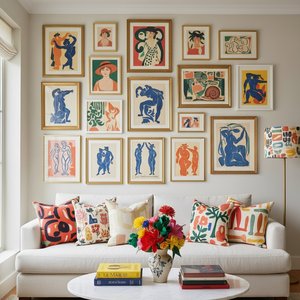
Henri Matisse' Mesterverk: Topp 25 Kunstverk for Din Vegg – AllPaintingsStore.no
Utforsk 25 ikoniske malerier av Henri Matisse! Oppdag historien bak fauvismens fargerike mesterverk, fra 'The Dance' til 'Red Studio'. Finn kunsttrykk og reproduksjoner i museumskvalitet for din interiørdesign på AllPaintingsStore.com.

Svart Kunst: Topp 10 Maler som Definerer Skyggenes Skjønnhet | AllPaintingsStore.no
Utforsk 10 ikoniske malerier dominert av svart – fra Rembrandts skygger til Munchs ekspresjonisme. Oppdag historiene bak mesterverkene og finn kunsttrykk for ditt hjem på AllPaintingsStore.no. Utforsk hele samlingen online!

Henri-Joseph Harpignies: Capturing the Poetic Essence of the French Landscape
Explore the serene landscapes of Henri-Joseph Harpignies, a master of the Barbizon School. Discover his atmospheric paintings, recurring themes & enduring legacy in 19th-century French art. Learn more at AllPaintingsStore.

François Boucher: Rococo Master of Myth, Sensuality, and the French Court
Explore the captivating world of François Boucher, master of Rococo painting! Discover his iconic works, aristocratic patronage, and lasting influence on French art history. Learn more at AllPaintingsStore.

Fauvismens 10 Mesterverk: Kunst som Definerte en Epoke | AllPaintingsStore.no
Oppdag fauvismens 10 mest ikoniske malerier! Lær historien bak Matisse, Derain og andre ekspresjonistiske mestere. Finn kunsttrykk av høy kvalitet & inspirasjon til ditt hjem på AllPaintingsStore.com.


