

Acrylic On Canvas.

§ 1Catalogue data

Dette kunstverket er beskyttet av opphavsrett
Kunstverket som vises på denne siden er beskyttet av opphavsretten, noe som betyr at vi ikke har juridisk tillatelse til å lage eller selge identiske reproduksjoner. Denne beskyttelsen håndheves i henhold til internasjonale avtaler som for eksempel Bernerkonvensjonen og av nasjonale lover, inkludert de som er fastsatt i Amerikansk lov om opphavsrett – Tittel 17.
Som et respektfullt og lovlig alternativ tilbyr vi skreddersydde, håndmalte kunstverk inspirert av originalen. Våre dyktige og profesjonelle kunstnere studerer nøye originalens stil, stemning og kunstneriske essens for å skape et nytt og unikt verk som vekker den samme følelsen – samtidig som det forblir en original skapelse i seg selv.
Denne metoden er i fullt samsvar med opphavsrettslige regler, da den ikke innebærer kopiering eller duplisering av det beskyttede kunstverket. I stedet er det snakk om en kreativ nytolkning – et nytt maleri som er inspirert av originalen, men ikke identisk med den.
 Les mer om dette
§ 2Abstract
Beskrivelse av objektet
Explore Georges Braque's 'Black Chariot,' a dynamic Cubist masterpiece depicting a thrilling scene of horses and riders. Discover the artist’s innovative style and its historical context through this captivating work.
Om kunstneren
Georges Braque’s «Harbor i Normandie» (1909) revolusjonerte kubismen med fragmenterte former og dynamisk komposisjon – et tidløst kunstverk!
§ 3Commentary
The Genesis of a Fragmented Vision
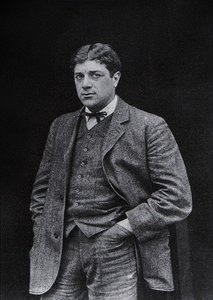
Georges Braque’s “Black Chariot,” painted in 1958, isn't merely a depiction of horses and riders; it’s a potent distillation of primal energy and the enduring allure of myth. Born in Argenteuil, France, in 1882, Braque’s artistic journey was deeply rooted in the practicalities of his family’s trade – house painting and decoration – an experience that instilled within him a profound understanding of form, structure, and material. This foundation, combined with rigorous academic training at the École des Beaux-Arts, provided him with a unique perspective, allowing him to deconstruct traditional artistic conventions and rebuild them into something entirely new.
The painting’s genesis lies within the fertile ground of Cubism, a movement Braque co-founded alongside Pablo Picasso. This revolutionary style sought to represent objects from multiple viewpoints simultaneously, fracturing reality into geometric fragments and reassembling them on the canvas in a dynamic interplay of planes and perspectives. “Black Chariot” exemplifies this approach perfectly – it’s not a straightforward representation of a chariot race, but rather an exploration of movement, power, and the very essence of the scene through its fragmented composition.
Deconstructing Reality: Braque's Cubist Techniques
Braque’s masterful use of color and texture is central to the painting’s impact. The predominantly monochrome palette – dominated by shades of black, grey, and cream – creates a sense of dramatic intensity, emphasizing the forms and planes within the composition. He employs a technique known as “collage,” incorporating elements that suggest layering and depth, mimicking the way our eyes perceive objects from different angles. Notice how the horses are not rendered with smooth curves but rather broken down into sharp, angular shapes, conveying their speed and force. The figures surrounding the chariot are similarly fragmented, contributing to the overall sense of dynamism and disorientation.
- Geometric Abstraction: Braque reduces recognizable forms – the horses, the charioteers, even the background elements – into simplified geometric shapes.
- Multiple Perspectives: The painting presents a simultaneous view of the scene, as if we are witnessing it from several positions at once.
- Monochromatic Palette: The limited color range intensifies the forms and creates a dramatic atmosphere.
Symbolism and Mythic Resonance
“Black Chariot” resonates with ancient symbolism, evoking images of power, speed, and ritualistic procession. The chariot itself is a potent symbol throughout history – representing authority, conquest, and divine transport. Braque’s choice to render it in monochrome further elevates its symbolic weight, suggesting a timeless quality beyond the specific historical context. The fragmented figures surrounding the chariot could be interpreted as representations of the participants in this ancient ritual, caught in a whirlwind of action and emotion. The lack of clearly defined faces adds to the painting's enigmatic quality, inviting viewers to project their own interpretations onto the scene.
A Legacy of Innovation
Georges Braque’s “Black Chariot” stands as a testament to his pioneering spirit and his profound influence on 20th-century art. It exemplifies the core principles of Cubism – fragmentation, multiple perspectives, and an exploration of form and space – while simultaneously conveying a powerful sense of movement, drama, and mythic resonance. Reproductions of this iconic work offer a unique opportunity to experience Braque’s revolutionary vision firsthand, bringing a touch of artistic history into any interior space.
Spørsmål og svar
Hvilket rom passer best for "Black chariot", med tanke på fargepaletten?
Med sine Earthy farger anbefales "Black chariot" for et Living Room.
Hva slags kunstverk er "Black chariot" av Georges Braque?
I katalogen er "Black chariot" av Georges Braque klassifisert som WallArt. Kategorien bidrar til å finne lignende verk.
Hvilken kunstretning tilhører "Black chariot" av Georges Braque?
Kunstretningen knyttet til "Black chariot" av Georges Braque er Cubism. Denne klassifiseringen plasserer verket sammen med relaterte kunstnere og kunstverk.


 Bytt til trykk


 For kunstverk eller reproduksjoner som er større enn 105 cm (ca. 41 tommer) på noen side, vil rammen bli sendt som et sett som må monteres. Denne metoden sikrer trygg levering og forhindrer skader under transport.


