

Acrylic On Canvas.

§ 1Katalogdata

Dette kunstverket er beskyttet av opphavsrett
Kunstverket som vises på denne siden er beskyttet av opphavsretten, noe som betyr at vi ikke har juridisk tillatelse til å lage eller selge identiske reproduksjoner. Denne beskyttelsen håndheves i henhold til internasjonale avtaler som for eksempel Bernerkonvensjonen og av nasjonale lover, inkludert de som er fastsatt i Amerikansk lov om opphavsrett – Tittel 17.
Som et respektfullt og lovlig alternativ tilbyr vi skreddersydde, håndmalte kunstverk inspirert av originalen. Våre dyktige og profesjonelle kunstnere studerer nøye originalens stil, stemning og kunstneriske essens for å skape et nytt og unikt verk som vekker den samme følelsen – samtidig som det forblir en original skapelse i seg selv.
Denne metoden er i fullt samsvar med opphavsrettslige regler, da den ikke innebærer kopiering eller duplisering av det beskyttede kunstverket. I stedet er det snakk om en kreativ nytolkning – et nytt maleri som er inspirert av originalen, men ikke identisk med den.
 Les mer om dette
§ 2Abstrakt
Beskrivelse av objektet
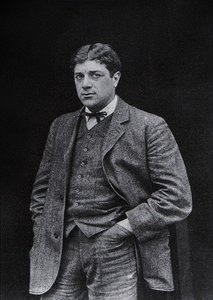
Om kunstneren
Georges Braque’s «Harbor i Normandie» (1909) revolusjonerte kubismen med fragmenterte former og dynamisk komposisjon – et tidløst kunstverk!
§ 3Kommentarer
Georges Braque’s “The Order of Birds”: A Fragment of Cubist Harmony
“The Order of Birds,” created in 1914, stands as a testament to Georges Braque's pivotal role in shaping the nascent language of Cubism. This etching, executed during the height of artistic experimentation—a period marked by profound shifts away from traditional representation—captures an arresting stillness amidst dynamic geometric forms. It’s not merely a depiction of birds; it’s an embodiment of Braque’s revolutionary approach to visual perception and his desire to dismantle illusionistic space.- Subject Matter: The etching portrays two birds perched atop a sheet of paper, presenting a deceptively simple composition that belies the complex intellectual underpinning of Cubist theory.
- Style: Braque’s masterful manipulation of perspective and form aligns perfectly with the core tenets of Cubism—specifically Analytical Cubism—where objects are fragmented into interlocking planes to reveal their underlying structure.
Technique & Material Considerations
Braque employed a meticulous etching process, utilizing zinc plates treated with mordant acid and meticulously engraved with fine lines to achieve remarkable tonal gradations. The resulting image possesses an understated elegance—a deliberate contrast to the bold experimentation occurring across Europe at the time. Unlike Impressionists who sought to capture fleeting moments of light and color, Braque prioritized structural clarity, prioritizing geometric precision over sensory experience. This technique underscores his commitment to conveying not just what is seen but how it is perceived.Historical Context: The Birth of Cubism
“The Order of Birds” emerged from the crucible of artistic innovation that defined 1914—the year Picasso and Braque formally established Cubism alongside Pablo Cézanne. Influenced by Cézanne’s explorations of volume and spatial recession, artists like Braque sought to represent objects as they appear simultaneously from multiple viewpoints. This radical departure from academic conventions challenged the accepted norms of artistic representation, sparking heated debate within the art world and irrevocably altering the trajectory of modern painting. The etching reflects this intellectual fervor—a desire to dissect and reconstruct reality through geometric abstraction.Symbolism & Emotional Resonance
While seemingly devoid of overt narrative content, “The Order of Birds” carries a subtle symbolic weight. Birds have long been associated with freedom, aspiration, and spiritual contemplation – themes that resonate powerfully within the broader context of Cubist thought. The positioning of the birds on paper symbolizes the artist's attempt to capture an essence beyond mere visual appearance—a striving for intellectual understanding and aesthetic harmony. It invites viewers to consider not just what is depicted but also how it communicates deeper ideas about perception and representation.A Legacy of Geometric Precision
“The Order of Birds” remains a cornerstone of Braque’s oeuvre and exemplifies the transformative impact of Cubism on artistic practice. Its quiet contemplation—achieved through masterful etching technique—serves as an enduring reminder that beauty can be found in simplification and structural integrity. Reproductions offer collectors and interior designers alike the opportunity to experience this seminal artwork's understated elegance and intellectual depth, transporting them back to a pivotal moment in art history.Spørsmål og svar
Hvilken kunstretning tilhører "The bird" av Georges Braque?
"The bird" av Georges Braque tilhører Cubist Abstraction-retningen. Denne retningen gir det stilistiske kontekstet til verket.
Hva anbefales en reproduksjon av "The bird" av Georges Braque til?
Anbefalt bruk av et trykk av "The bird" er Accent.
Hvordan beskrives stemningen i "The bird" av Georges Braque?
"The bird" har en Minimalist atmosfære.


 Bytt til trykk


 For kunstverk eller reproduksjoner som er større enn 105 cm (ca. 41 tommer) på noen side, vil rammen bli sendt som et sett som må monteres. Denne metoden sikrer trygg levering og forhindrer skader under transport.


