

Acrylic On Canvas.

§ 1Catalogue data

Dette kunstverket er beskyttet av opphavsrett
Kunstverket som vises på denne siden er beskyttet av opphavsretten, noe som betyr at vi ikke har juridisk tillatelse til å lage eller selge identiske reproduksjoner. Denne beskyttelsen håndheves i henhold til internasjonale avtaler som for eksempel Bernerkonvensjonen og av nasjonale lover, inkludert de som er fastsatt i Amerikansk lov om opphavsrett – Tittel 17.
Som et respektfullt og lovlig alternativ tilbyr vi skreddersydde, håndmalte kunstverk inspirert av originalen. Våre dyktige og profesjonelle kunstnere studerer nøye originalens stil, stemning og kunstneriske essens for å skape et nytt og unikt verk som vekker den samme følelsen – samtidig som det forblir en original skapelse i seg selv.
Denne metoden er i fullt samsvar med opphavsrettslige regler, da den ikke innebærer kopiering eller duplisering av det beskyttede kunstverket. I stedet er det snakk om en kreativ nytolkning – et nytt maleri som er inspirert av originalen, men ikke identisk med den.
 Les mer om dette
§ 2Abstract
Beskrivelse av objektet
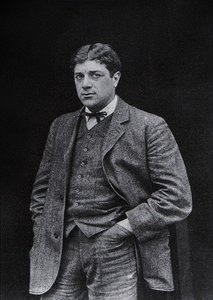
Om kunstneren
Georges Braque’s «Harbor i Normandie» (1909) revolusjonerte kubismen med fragmenterte former og dynamisk komposisjon – et tidløst kunstverk!
§ 3Commentary
Georges Braque’s Violin On A Table: Fragmented Reality and Musical Resonance
Georges Braque's "Violin On A Table," painted circa 1909-10, stands as a cornerstone of Cubist innovation—a visual manifesto that irrevocably altered the course of modern art alongside Pablo Picasso. More than just a depiction of an instrument and its surroundings; it embodies a profound exploration of perception itself, reflecting the burgeoning intellectual currents of the era and cementing Braque’s position as one of the movement's foremost architects. The painting’s deceptively simple subject matter—a violin resting upon a wooden tabletop alongside scattered books—serves as a springboard for a complex visual language that defies traditional representation.Deconstructing Form: Cubist Technique
At its core, Braque’s approach is rooted in the principles of Analytical Cubism. Rejecting illusionistic depth and embracing geometric abstraction, he dismantled objects into fragmented planes of color and texture—a technique meticulously executed with oil paint on canvas. The violin itself isn't rendered as a unified form but rather dissected into interlocking cubes and parallelograms, mirroring the fractured viewpoints inherent in human experience. These planes overlap and intersect, creating an unsettling yet mesmerizing interplay of light and shadow that challenges viewers to actively reconstruct the image mentally. This deliberate fragmentation wasn’t merely stylistic; it mirrored the philosophical debates surrounding epistemology at the time—the questioning of how we know what we see. As noted in “Georges Braque: Pioneering Cubism & the Evolution of Modern Form,” Braque's method aimed to capture "the essence of an object rather than its appearance."A Musical Echo: Symbolism and Context
The inclusion of books adds another layer of significance to the composition. These aren’t merely props; they represent knowledge, contemplation, and perhaps even a yearning for order amidst chaos—themes prevalent in Cubist thought. The violin itself carries considerable symbolic weight, traditionally associated with musical virtuosity and refined sensibilities. Considering Braque's fascination with music as highlighted in “Violin and Sheet Music: \"Petit Oiseau\"", the instrument becomes more than just an object; it embodies a spirit of artistic exploration and intellectual curiosity. Furthermore, the tabletop—a neutral surface—acts as a grounding element, juxtaposed against the fragmented planes of color to emphasize the instability of visual perception.Emotional Impact: Fragmented Beauty
Despite its intellectual rigor, “Violin On A Table” possesses an undeniable aesthetic beauty. The muted palette—primarily browns and ochres—creates a sense of quiet contemplation, inviting viewers into the artist’s inner world. However, beneath this surface tranquility lies a palpable tension—a reflection of the anxieties and uncertainties characteristic of the period. Braque's masterful manipulation of form and color compels us to confront the limitations of representation, prompting us to consider alternative ways of perceiving reality. The painting lingers in the mind long after viewing, leaving an impression of fragmented beauty that speaks to the enduring power of art to provoke thought and emotion.- Explore reproductions of “Violin On A Table” at AllPaintingsStore.com.
- Discover similar artworks by Georges Braque: Still-Life With A Violin, Glass And Pipe On Table, Violin and Clarinet on a Table.
Spørsmål og svar
Hvordan balanserer "Violin On A Table" lys og mørke?
"Violin On A Table" har en samlet lysstyrke på balanced, og luminansen er Soft Shadow.
Hvilken stemning formidler Cubist Exploration-verket "Violin On A Table"?
"Violin On A Table" har en Reflective emosjonell tone innenfor Cubist Exploration-retningen.
Hvor mye lys ser fargene i "Violin On A Table" ut til å reflektere?
"Violin On A Table" av Georges Braque har en luminans på Soft Shadow. Luminans beskriver hvor mye lys fargene ser ut til å reflektere.


 Bytt til trykk


 For kunstverk eller reproduksjoner som er større enn 105 cm (ca. 41 tommer) på noen side, vil rammen bli sendt som et sett som må monteres. Denne metoden sikrer trygg levering og forhindrer skader under transport.


