


 Forhåndsvisning
 Send
Send Del med andre
 Vis detaljer
 Veiledning

 Last ned bildet
 Liknende objekter
 Røntgenundersøkelse
 Lysbildefremvisning
 Statistikk
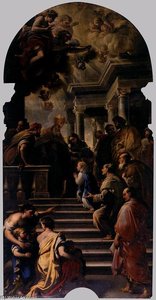
Jesus At The Temple, Notre-dame De Senlis

 Vis hele teksten
Håndlaget oljereproduksjon
Håndmalt olje på lerret i din valgte størrelse og ramme, laget på bestilling av våre kunstnere. ( Bytt til trykk Bytt til digitalt bilde)




































Velg mellom våre forhåndsdefinerte størrelser som bevarer kunstverkets opprinnelige proporsjoner.

Du kan angi egne mål for å tilpasse en spesifikk ramme eller plass. Dersom den valgte størrelsen ikke samsvarer med originalbildets proporsjoner, vil vi enten beskjære kunstverket eller utvide maleriet med ytterligere håndmalte elementer. En digital mockup vil bli sendt til din godkjenning før produksjonen starter.
Vennligst merk at forhåndsvisningen på skjermen ikke gjenspeiler den faktiske beskjæringen eller utvidelsen. Kun mockuppen vil vise den endelige komposisjonen nøyaktig.
Selv om tilpassede størrelser er tilgjengelige, anbefaler vi å velge et mål fra den forhåndsdefinerte listen for å bevare de originale proporsjonene.
Etter bestilling vil AllPaintingsStore.com-teamet sende e-post til kunden for instruksjoner og sende et utkast (mockup) som forhåndsvisning.
Verdensomspennende levering () på 3–4 uker i stedet for standard 5 uker. (21 September). Ingen kompromisser med kvaliteten.

Gratis ekspressfrakt over hele verden

Lerretsduk av høykvalitets lin

Full forsikring under transport

Garanti for refusjon av toll og importavgifter

Garantert korrekt fargegjengivelse

100 dagers returrett (kun ved mangler)

100% pengene tilbake-garanti

Rabatt ved flere kjøp
 Glassalternativet er kun tilgjengelig i størrelser under 110 cm

Jesus At The Temple, Notre-dame De Senlis
Teknikk for reproduksjon
Størrelse på reproduksjon
-


Endelig pris
$ 383
Lignende kunstverk




Om kunstneren
Georges Lallemant (1575-1636): A Parisian Mannerist Painter
Georges Lallemand, born around 1575 in Nancy, France, remains a figure shrouded in artistic obscurity—a testament to the capricious nature of art history and the unfortunate fate that befell many talented artists during the turbulent era of Louis XIV. Despite the scarcity of surviving paintings and biographical details, Lallemand’s legacy persists through his masterful woodcuts and the enduring impact of his stylistic innovations on a generation of painters. His artistic education is largely unknown, yet speculation suggests he was influenced by Jacques Bellange, whose distinctive style—characterized by bold color palettes and expressive brushwork—clearly resonated within Lallemand's oeuvre. Around 1601, Lallemand relocated to Paris, establishing himself as a prolific artist and fostering a studio that nurtured the talents of luminaries like Philippe de Champaigne, Laurent de la Hyre, and Nicolas poussin. This Parisian environment proved pivotal in shaping his artistic vision, propelling him into the heart of the burgeoning Baroque movement. His style was remarkably eclectic, deftly blending Flemish realism with Mannerist tendencies—a fusion that produced images imbued with both meticulous detail and a heightened sense of drama and emotion. The resulting paintings are notable for their dynamic compositions and masterful use of chiaroscuro, techniques borrowed directly from Bellange’s work. Few of Lallemand's canvases survive today; many were dispersed during the French Revolution when church property was seized, erasing much of his artistic output from public view. However, his earliest known masterpiece, “The Mayor and Aldermen of Paris” (circa 1611), housed in Musée Carnavalet, offers a glimpse into his early stylistic explorations—a scene rendered with remarkable precision and imbued with subtle psychological nuance. In 1626, he ascended to the prestigious position of peintre ordinaire du roi, securing royal patronage and furthering his artistic endeavors. During his final years, Lallemand undertook ambitious commissions for altarpieces and tapestries destined for Notre Dame Cathedral, alongside six monumental paintings commissioned for Saint Geneviève Church in Paris—works that exemplify the grandeur and sophistication of Baroque art. Furthermore, his contributions can be appreciated in St Joseph’s Carmelite Church in Lille and another version of “The Adoration of Magi” resides in The Hermitage Museum. Lallemand's artistic reputation gained considerable traction through the collaborative efforts of Ludolph Büsinck, who produced a series of striking woodcuts based on Lallemand’s smaller religious and genre compositions. These prints—characterized by their dramatic lighting effects and expressive linework—served as an invaluable conduit for disseminating Lallemand’s artistic vision beyond the confines of Parisian ateliers and solidified his place within the broader artistic landscape of 17th-century France. His enduring influence can be seen in the stylistic choices of subsequent artists, cementing his position as a significant figure in the history of Mannerist painting and Baroque printmaking.- Notable Works: “The Mayor and Aldermen of Paris”, “Jesus At The Temple”, “Adoration of Magi”
- Influences: Jacques Bellange
- Style: Flemish Realism & Mannerism

Georges Lallemant
1575 - 1636 , France
Kort om kunstneren
- Artistic Movement Or Style: Mannerist & Flemish Realist
- Artists Or Movements Influenced By This Artist: Philippe de Champaigne
- Artists Who Influenced This Artist: Jacques Bellange
- Date Of Birth: Nancy, France (1575)
- Date Of Death: 1636
- Full Name: Georges Lallemant
- Nationality: French
- Notable Artworks:
- The Mayor and Aldermen of Paris
- Jesus At The Temple
- Adoration of Magi
- Place Of Birth: Nancy, France
Relaterte artikler
Georges Braques 25 Mesterverk: En Kunstnerisk Reise for Din Bolig
Utforsk Georges Braques 25 mest ikoniske verk! Fordyp deg i kubismens verden, fargepaletter og kunstnerisk nyskapning. Finn inspirasjon til din bolig med museumskvalitets reproduksjoner på AllPaintingsStore.com.

Georges Seurat: Topp 25 Maler – Impresjonisme og Punktillismens Mesterverk | AllPaintingsStore.no
Utforsk Georges Seurats 25 mest ikoniske malerier! Oppdag historien bak punktillismen, impresjonismen og mesterverk som 'Et søndagsettermiddag på La Grande Jatte'. Finn kunsttrykk av høy kvalitet for ditt hjem på AllPaintingsStore.com.

Barokkens Mesterverk: Topp 10 Kunstverk som Definerte en Epoke | AllPaintingsStore.no
Opplev barokkens prakt! Utforsk Rembrandts, Caravaggios og Rubenses mest ikoniske verk. Lær om historien bak disse mesterverkene og finn inspirasjon til din interiørdekor på AllPaintingsStore.com. Museums kvalitet kunsttrykk.

Barokkens drama: Å bringe prakt og følelser inn i moderne interiører
Oppdag barokkens praktfulle drama! Lær om stilens historie, kjennetegn og hvordan du kan integrere den i ditt hjem med s eksklusive kunstutvalg.

The Dramatic Flourish: Exploring the Baroque Movement's Enduring Legacy in Art History
Explore the dramatic world of Baroque art! Discover iconic artists like Caravaggio & Rubens, defining techniques, and its lasting impact on art history. Expert insights for collectors & enthusiasts at AllPaintingsStore.

