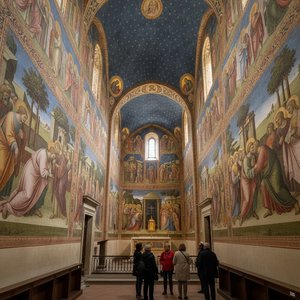
Fresko.

§ 1Katalogdata


§ 2Abstrakt
Beskrivelse av objektet
Opplev Giottos mesterverk 'Vask av føtter' i Scrovegnis kapell! Et kraftfullt bilde om ydmykhet og begynnelsen på renessansen. Utforsk dette unike kunstverket fra Padua.
 Vis hele teksten
Om kunstneren
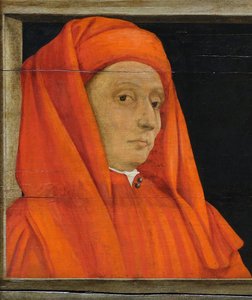
Oppdag Giotto di Bondone (1267-1337)! Italiensk mester som revolusjonerte kunsten med realisme og følelser. Se hans fresker, inkludert Scrovegni-kapellet.
§ 3Kommentarer
A Moment of Humble Devotion: Giotto’s *Washing of Feet*
Giotto di Bondone's *Washing of Feet*, part of the breathtaking fresco cycle within the Cappella Scrovegni in Padua, Italy, is not merely a depiction of a biblical scene; it’s a profound exploration of humility, service, and the nascent humanism that would define the Renaissance. Completed around 1305, this masterpiece transcends its religious subject matter to offer a deeply moving portrayal of human interaction and spiritual significance.Subject & Narrative
The painting vividly captures the moment described in the Gospel of John (13:1-17), where Jesus humbly washes the feet of his twelve disciples before sharing the Last Supper. Giotto masterfully conveys the initial shock and discomfort of the apostles, gradually yielding to acceptance and reverence. The composition is dynamic, filled with expressive gestures and individualized reactions from each figure. We witness Peter’s initial resistance, Judas’ shadowed isolation, and the dawning understanding on the faces of the others. It's a narrative frozen in time, brimming with psychological depth.Artistic Style & Technique
*Washing of Feet* exemplifies Giotto’s revolutionary break from the stylized Byzantine tradition. While still employing elements of Gothic art – evident in the rich color palette and decorative details – Giotto introduces a new level of naturalism. He utilizes chiaroscuro, the interplay of light and shadow, to model forms and create a sense of volume, giving his figures a three-dimensionality previously unseen in Italian painting. The fresco technique itself—pigments applied to wet plaster—contributes to the work’s enduring vibrancy and textural quality. Giotto's innovative use of perspective, though not fully developed as it would be later in the Renaissance, creates a believable spatial depth within the architectural setting.Historical Context & The Scrovegni Chapel
Commissioned by Enrico Scrovegni, a wealthy Paduan merchant, the Cappella Scrovegni was intended as an act of atonement for his family’s usurious practices. This context imbues the frescoes with an added layer of meaning – a visual testament to repentance and divine mercy. Giotto's cycle narrates the lives of Mary and Christ, offering a comprehensive theological program presented with unprecedented emotional resonance. The chapel itself is a landmark of Early Renaissance art, and *Washing of Feet* stands as one of its most iconic images.Symbolism & Emotional Impact
The act of foot washing was traditionally performed by servants, making Jesus’ gesture an extraordinary display of humility and selfless love. This symbolism is central to the painting's message: true leadership lies in service, and spiritual purity requires a willingness to embrace even the most menial tasks. The scene evokes feelings of piety, compassion, and reverence. Giotto doesn’t simply depict a religious event; he invites viewers to contemplate its profound moral implications. The emotional weight of the moment is palpable, drawing us into the intimate circle of Jesus and his disciples.A Timeless Masterpiece for Today's Spaces
*Washing of Feet* continues to inspire awe and contemplation centuries after its creation. Its powerful narrative, innovative style, and enduring symbolism make it a compelling subject for art lovers, collectors, and interior designers alike. A high-quality reproduction of this masterpiece can bring a sense of history, spirituality, and artistic beauty to any home or office, serving as a constant reminder of the power of humility and the transformative potential of faith.- Style: Gothic/Proto-Renaissance
- Technique: Fresco
- Location: Cappella Scrovegni, Padua, Italy
- Period: Early 14th Century (Trecento)
Spørsmål og svar
Hva anbefales en reproduksjon av "30" av Giotto di Bondone til?
Anbefalt bruk for "30" av Giotto di Bondone er Blikkfang. Den kan også brukes til andre formål.
Hvordan beskrives fargepaletten i "30" av Giotto di Bondone?
Fargepaletten i "30" av Giotto di Bondone beskrives som Mørke toner. Det er en kortfattet beskrivelse av verkets farger.
Hvilken teknikk og stil karakteriserer "30" av Giotto di Bondone?
"30" av Giotto di Bondone kombinerer Fresko-teknikken med Early Italian Renaissance-stilen. Teknikk og stilretning beskriver verkets utførelse og estetiske uttrykk.

![Scrovegni - Sistensdømmene (detalj) [03] — Giotto Di Bondone, Proto-renaissance](/media/artworks/images-thumb/7d/a9/7da93e3737abc9f37453cee26f9f9796.jpg)


![Legend Of St Francis - [18] - Apparition At Arles — Giotto Di Bondone, Proto-renaissance](/media/artworks/images-thumb/79/1c/791c45725458c47701a241d551e6298f.jpg)


 Bytt til trykk


 For kunstverk eller reproduksjoner som er større enn 105 cm (ca. 41 tommer) på noen side, vil rammen bli sendt som et sett som må monteres. Denne metoden sikrer trygg levering og forhindrer skader under transport.