Pengene tilbake-garanti · 100 dager Gratis levering over hele verden
449587kunstverk 30613kunstnere 4660museer 32språk
Valuta
    Språk
      Atelier · Etablert 2015 · Paris, Frankrike
      AllPaintingsStore
      allpaintingsstore.com
      Catalogue entry

      Roman Ruins

      1760. Oil On Canvas. Worcester Art Museum.

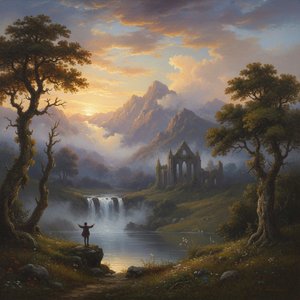
      Fig. 1. Hubert Robert, Roman Ruins, 1760. Shown as the reproduction you are specifying: , .

      § 1Catalogue data

      § 2Abstract

      Beskrivelse av objektet

      Discover "Roman Ruins" by Hubert Robert (1760). A Romantic masterpiece showcasing crumbling architecture & pastoral life. Oil on canvas, dramatic lighting & serene beauty. Perfect for art lovers!

      Om kunstneren

      Hubert Robert (1733-1808): En fransk maler kjent for sine stemningsfulle landskapsmalerier og fantasifulle ruinbilder. Oppdag hans kunst!

      § 3Commentary

      A Symphony of Decay and Eternal Beauty

      In the quietude of Hubert Robert’s Roman Ruins, one finds more than a mere depiction of crumbling stone; one encounters a profound meditation on the relentless passage of time. Created around 1760, this masterpiece serves as a window into the heart of the Romantic imagination, where the grandeur of antiquity meets the soft, persistent embrace of nature. The canvas invites the viewer to wander through a landscape where monumental architecture—once the pride of an empire—now yields to the slow, rhythmic pulse of vegetation and light. It is a scene that captures a fleeting moment of ethereal beauty, frozen in the amber of oil on canvas, offering a sense of pastoral tranquility that resonates deeply with the modern soul seeking refuge from the frenetic pace of contemporary life.

      The composition is masterfully orchestrated to draw the eye deep into a world of architectural wonder and quiet human drama. A majestic, weathered archway stands as the central protagonist, its heavy columns and fractured masonry framing a vista that stretches toward an infinite horizon. Through this portal, the viewer perceives a vast, open space where the boundaries between man-made structures and the wild landscape begin to blur. The foreground is alive with the gentle rhythms of everyday existence: figures engaged in quiet contemplation, a woman tending to livestock, and children playing amidst the rocky outcrops. This juxtaposition—the monumental scale of the ruins against the intimate, humble activities of life—establishes a poignant dialogue between historical glory and the enduring continuity of the human spirit.

      The Artistry of the Romantic Capriccio

      Robert’s technical prowess is most evident in his command of light and texture, elements that elevate this work from a topographical study to a capriccio—a genre of imaginative fantasy. Utilizing the rich, versatile medium of oil paint, the artist achieves a remarkable tonal range that breathes life into the scene. Warm ochres, deep browns, and radiant golds dominate the palette, bathing the ruins in a sun-drenched glow that evokes a sense of nostalgic warmth. His brushwork is both deliberate and expressive; while the architectural elements are defined by structured lines, the foliage and distant clouds are rendered with a looser, more spontaneous touch. This interplay of precision and fluidity creates a dynamic atmosphere, where the light seems to dance across the textured surfaces of stone and leaf alike.

      For the discerning collector or interior designer, Roman Ruins offers an unparalleled emotional depth that transcends mere decoration. The painting functions as a symbolic vessel, carrying themes of memory, loss, and the sublime power of nature. It evokes a sense of "melancholic grandeur"—a feeling of being moved by the beauty of what has passed while finding peace in the persistence of life. Integrating such a high-quality reproduction into a curated space provides more than just a visual focal point; it introduces a narrative of timelessness and sophistication. Whether placed in a sunlit library or a grand salon, Robert’s vision of the Roman past serves as an enduring inspiration, reminding us that even amidst decay, there is a profound and lasting splendor to be found.

      Spørsmål og svar

      Hvem skapte "Roman Ruins", og i hvilket år?

      Hubert Robert skapte "Roman Ruins" i 1760.

      Oppbevares "Roman Ruins" av Hubert Robert i kunstnerens hjemland?

      Nei – kunstverket oppbevares i utlandet. "Roman Ruins" befinner seg i USA, mens Hubert Robert ble født i Frankrike.

      Hvor kan jeg laste ned "Roman Ruins" av Hubert Robert?

      Nedlasting er tilgjengelig for "Roman Ruins": kunstverkets Last ned digitalt bilde-side tilbyr nedlasting av et digitalt bilde i høy oppløsning.

      § 4The artist

      Hubert Robert

      Hubert Robert

      1733 - 1808, Frankrike

      Quick facts about Hubert Robert

      • Artistic Movement Or Style: Romantikk, Neoklassisisme
      • Artists Or Movements Influenced By This Artist: ['Romantikk']
      • Artists Who Influenced This Artist:
        • Giovanni Panini
        • Piranesi
      • Date Of Birth: 22 mai 1733
      • Date Of Death: 15 apr 1808
      • Full Name: Hubert Robert
      • Nationality: Fransk
      • Notable Artworks:
        • Port av Roma
        • Galatea's flykt
        • Louvrens galleri
      • Place Of Birth: Paris, Frankrike

      Om kunstneren

      A Painter of Ruins and Visions: The World of Hubert Robert

      Hubert Robert, a name inextricably linked to the evocative beauty of ruins and the romantic allure of bygone eras, stands as a singular figure in 18th-century French art. Born in Paris in 1733, his life unfolded against a backdrop of profound artistic transformation—a journey from the ornate elegance of the Rococo to the nascent spirit of Neoclassicism, culminating in the dramatic upheaval of the French Revolution and its aftermath. Robert’s genius wasn't merely in replicating decay; it resided in crafting meticulously detailed visions that resonated with both a poignant nostalgia for the past and an anticipatory gaze towards the future. His artistic odyssey began within the structured confines of formal training, initially under the tutelage of sculptor Michel-Ange Slodtz, who recognized Robert’s innate talent but wisely steered him toward painting, sensing a deeper calling—a capacity to capture light, atmosphere, and the subtle poetry inherent in form.

      Roman Reveries: Shaping an Artistic Identity

      The defining moment in Robert's artistic development arrived with his extended sojourn to Rome between 1754 and 1765. This period wasn’t simply a vacation; it was a crucible where his artistic identity was forged. Accompanying Étienne-François de Choiseul, the young ambassador of France to the Papal court, Robert immersed himself in the city's ancient heart—a world saturated with history and architectural grandeur. For over a decade, Rome became his open-air studio, its crumbling temples, majestic arches, and overgrown gardens fueling an imagination that would forever shape his artistic vision. He didn’t merely document what he saw; he actively reimagined it, infusing the ruins with a sense of melancholic beauty—a poignant awareness of time's relentless passage. His early works, often categorized as *capricci*, reflected this approach. These fanciful compositions juxtaposed classical ruins with contemporary life, creating dreamlike scenarios that hinted at Robert’s unique ability to blend observation and imagination. Crucially, he spent considerable time working alongside Giovanni Paolo Panini, a master of topographical painting who specialized in rendering Roman ruins. While Robert initially imitated Panini's meticulous style, he quickly transcended mere replication, developing his own distinctive voice characterized by an unparalleled sensitivity to light, atmosphere, and the subtle nuances of form. His sketchbooks from this period—filled with hundreds of drawings—offer invaluable insights into his artistic process, revealing a keen eye for architectural detail and a profound understanding of landscape composition. The influence of Piranesi, another artist fascinated by Roman ruins, is also evident in Robert’s work, particularly his depictions of labyrinthine interiors and the interplay of light and shadow within ancient structures.

      Parisian Acclaim and Royal Patronage

      Robert's return to Paris in 1765 marked a significant shift in his career trajectory. He swiftly gained recognition within the artistic establishment, securing admission to the Académie Royale de Peinture et de Sculpture with “The Port of Rome, Ornamented with Different Monuments of Architecture, Ancient and Modern.” This success propelled him into the spotlight, attracting the attention of discerning collectors and art critics alike. His subsequent exhibitions at the Salon—the official annual exhibition of the French Academy—garnered widespread acclaim, captivating audiences with his evocative depictions of ruins and picturesque landscapes. The critic Denis Diderot, a leading figure of the Enlightenment, famously praised Robert’s paintings for their ability to transport viewers to another time and place—a testament to the artist's remarkable skill in evoking atmosphere and emotion. This burgeoning popularity led to royal patronage, with commissions for decorative projects within grand palaces and gardens, as well as appointments as “Designer of the King’s Gardens” and later, “Keeper of the King’s Pictures.” He became a highly sought-after artist, not only for his easel paintings but also for his innovative designs for elaborate garden layouts—a reflection of the prevailing taste for *capriccio* painting, which appealed to collectors fascinated by history, archaeology, and the picturesque. Robert elevated this genre beyond mere decorative art, imbuing it with a unique sensibility that combined historical accuracy with imaginative vision.

      Revolution, Resilience, and Lasting Legacy

      The French Revolution presented an unprecedented challenge for Robert, as for many artists of his time. While navigating the turbulent political climate, he demonstrated remarkable resilience, continuing to paint prolifically despite the upheaval. He even faced a brief period of imprisonment during the Reign of Terror—a harrowing experience that undoubtedly informed some of his later works. Following the Revolution, Robert was appointed curator of the newly established Muséum Central des Arts—the future Musée du Louvre—a significant recognition of his expertise and dedication to preserving France’s cultural heritage. He played a crucial role in organizing and cataloging the museum's burgeoning collection, ensuring that its artistic treasures were safeguarded for future generations. Hubert Robert died in Paris in 1808, leaving behind an extraordinary body of work—a testament to his unique vision and enduring legacy. His paintings continue to captivate viewers with their evocative beauty, blending historical accuracy with imaginative vision and solidifying his place as a pivotal figure bridging the Rococo and Neoclassical periods, and anticipating aspects of Romanticism with his fascination for history and imagination.
      • Key Influences: Giovanni Paolo Panini, Piranesi, the architectural landscape of Rome.
      • Major Themes: Ruins, landscapes, *capriccio* paintings, historical memory, the passage of time.
      • Artistic Style: Meticulous detail, atmospheric perspective, evocative lighting, blending observation with imagination.

      § 5Comparanda

      § 6Questions

      Kort om verket

      • Title: Roman Ruins
      • Medium: Oil on Canvas
      • Subject or theme: Ancient Architecture & Pastoral Life
      • Movement: Romanticism
      • Year: 1760

      Kunnequiz om kunst

      Det er kun ett riktig svar på hvert spørsmål.

      Spørsmål 1:
      What artistic movement is Hubert Robert’s "Roman Ruins" primarily associated with?
      Spørsmål 2:
      Describe the dominant color palette used in "Roman Ruins". How does it contribute to the overall mood of the artwork?
      Spørsmål 3:
      What is a key characteristic of Hubert Robert’s painting technique – specifically regarding the brushstrokes?
      Spørsmål 4:
      The image description mentions ‘atmospheric perspective,’ what does this technique achieve?
      Spørsmål 5:
      What symbolic element is present in "Roman Ruins" that reflects broader themes related to time and memory?

      § 7Cite this entry

      AllPaintingsStore.com, “Hubert Robert, Roman Ruins (1760)”, https://allpaintingsstore.com/no/art/hubert-robert-roman-ruins-8YDS5F-en/ArtistReproduction/ (accessed 2 October 2026).

      § 8The reproduction

      Håndlaget oljereproduksjon

      Håndmalt olje på lerret i din valgte størrelse og ramme, laget på bestilling av våre kunstnere. ( Bytt til trykk Bytt til digitalt bilde)

      It is specified on the order sheet in the margin; the present state of that sheet reads as follows.

      Roman Ruins

      Trykkmetode

      Størrelse på reproduksjon

      -

      Utvalgte mesterkunstnere

      Mer detaljrikdom, finesse og ekstra produksjonstid

      -

      Innramming av reproduksjon

      -

      -

      For kunstverk eller reproduksjoner som er større enn 105 cm (ca. 41 tommer) på noen side, vil rammen bli sendt som et sett som må monteres. Denne metoden sikrer trygg levering og forhindrer skader under transport.

      Krever profesjonell montering – dette er ikke et DIY-produkt.
      Settet må monteres og lerretet strammes av en erfaren profesjonell rammelegger, ved bruk av trelim (følger ikke med), en lerretstang og klemmer for å holde rammelisten vinkelrett mens limet tørker. Feilaktig montering eller ujevn stramming av lerretet kan påføre kunstverket permanente skader og er ikke dekket av vår garanti.

      • Alle massive trelister er inkludert, presist tilpasset i størrelse.

      • Monteres med de medfølgende skruene, samt trelim til hjørnene, som ikke er inkludert og må anskaffes av din rammehandler.

      • Profesjonelt verktøy er nødvendig og er ikke inkludert: en lerretstang (strammer) og klemmer for å holde rammene vinkelrette mens limet tørker.

      Viktig:
      Hjørnene krever trelim, listene må holdes på plass med tvinger til limet er helt tørt, og stramming av lerretet på den ferdige rammen krever en lerretstang. Ingen av disse produktene er inkludert i settet. Vennligst sørg for tilgang til en erfaren profesjonell rammehandler før du bestiller denne størrelsen.

      Navneskilt

      -

      -

      Beskyttende ferniss

      Blank lakk (forsterker farger, beskytter mot lys og fuktighet)

      -

      Tilpass mitt kunstverk

      Eksempler på hva som kan endres: Erstatt ansikt med bilde av kunden; Legg til kjæledyr (f.eks. bytt ut katt med hund); Inkluder en skjult melding i bakgrunnen; Endre bakgrunnslandskap eller elementer.

      -

      Ekspresslevering

      Verdensomspennende levering () på 3–4 uker i stedet for standard 5 uker. (30 October). Ingen kompromisser med kvaliteten.

      -

      Ekspresslevering

      Verdensomspennende levering til innen 5 uker. (6 November).

      Inkludert frakt

      Totalpris for valgte alternativer

      Nkr 2485

      Included with every order

      • Gratis ekspressfrakt over hele verden
      • Lerretsduk av lin av høy kvalitet
      • Full transportforsikring
      • Garanti for refusjon av toll og importavgifter
      • Garantert fargegjengivelse
      • 100 dagers returrett ved fabrikasjonsfeil
      • 100% pengene tilbake-garanti
      • Rabatt ved flere kjøp
      Order sheet