


 Forhåndsvisning
 Send
Send Del med andre
 Vis detaljer

 Last ned bildet
 Liknende objekter
 Røntgenundersøkelse
 Lysbildefremvisning
Light Bay Mare
 Romanticism
 1812
1812 70.0 x 90.0 cm
 Brodsworth Hall
 Vis hele teksten
Giclée / Kunsttrykk
Giclée- eller lerretsprint av museumskvalitet med rask produksjon og fleksible valgmuligheter for etterbehandling. ( Kjøp håndlaget maleri Kjøp bilde)




P118B $10

P118H $10

P118W $10

P438Z $10

P508JH $12

P508YH $12

P805H $10

P805Z $10

P919BZ $10

P919G $10

P919XJ $10

P959ZH $10

P968JZ $12

W106C $8

W218G $10

W218JH $8

W218Y $10

W307PJ $10

W316G $10

W316PJ $8

W316Y $10

W398PJ $8

W4111J $10

W500HY $15

W500JH $15

W692G $12

W849H $8

W940BG $15

W953PJ $8




Velg mellom våre forhåndsdefinerte størrelser som bevarer kunstverkets opprinnelige proporsjoner.

Du kan oppgi egne mål for å tilpasse en spesifikk ramme eller et bestemt område. Dersom den valgte størrelsen ikke samsvarer med det originale bildets proporsjoner, vil vi enten beskjære kunstverket eller utvide bildet med en speilet eller ensfarget kant. En digital mockup vil bli sendt til din godkjenning før produksjonen starter.
Vennligst merk at forhåndsvisningen på skjermen ikke gjenspeiler den faktiske beskjæringen eller utvidelsen. Kun mockuppen vil vise den endelige komposisjonen nøyaktig.
Selv om tilpassede størrelser er tilgjengelige, anbefaler vi å velge et mål fra den forhåndsdefinerte listen for å bevare de originale proporsjonene.
Verdensomspennende levering () på 2 uker i stedet for standard 4/5 uker. (24 August)

Gratis ekspressfrakt over hele verden

Lerretsduk av høykvalitets lin

Full forsikring under transport

Garanti for refusjon av toll og importavgifter

Garantert korrekt fargegjengivelse

60 dagers returrett (kun ved feil)

100% pengene tilbake-garanti

Rabatt ved flere kjøp
 Glassalternativet er kun tilgjengelig i størrelser under 110 cm

Light Bay Mare
Giclée / Kunsttrykk
Størrelse på reproduksjon
-


Endelig pris
$ 64
Lignende kunstverk


Om kunstneren
The Master of the English Hunt: The Life and Legacy of James Barenger
In the dappled sunlight of the early nineteenth-century English countryside, few artists captured the pulse of the hunt and the quiet majesty of the animal kingdom as vividly as James Barenger. Born on Christmas Day in 1780 within the industrious enclave of Kentish Town, London, Barenger was destined for a life steeped in artistic precision. He was the son of James Barenger Snr., a celebrated metal chaser whose meticulous skill in portraying insects for the Royal Academy provided a foundational blueprint for his son’s later mastery of anatomical realism. This familial lineage of craftsmanship meant that from his earliest years, Barenger viewed the natural world not merely as scenery, and certainly not as mere decoration, but as a subject requiring scientific accuracy and profound emotional resonance.
Barenger’s artistic evolution was a journey from the delicate landscapes of his youth to the robust, muscular energy of equestrian portraiture. While he initially found footing as a landscape artist, his true calling emerged through his fascination with the movement and spirit of horses and hounds. By the time he made his formal debut at the Royal Academy in 1807, he had begun to cultivate a style that would define him: a seamless blend of naturalism and narrative tension. His work did not simply sit static upon the canvas; it breathed with the rhythmic panting of hounds and the nervous twitch of a horse's ear, capturing those fleeting, breathless moments of the chase that defined the sporting culture of his era.
Technique, Texture, and the Sporting Tradition
What truly distinguishes Barenger’s oeuvre is his unparalleled ability to render texture and light with an almost tactile quality. Whether he was depicting the coarse, wiry fur of a hunting dog or the sleek, shimmering coat of a bay mare, his brushwork conveyed a deep understanding of organic matter. In masterpieces such as Pheasant Shooting, one can sense the tension of the hunt through his strategic use of composition. He utilized the lush, textured underbrush to guide the viewer’s eye, creating a sense of depth that mirrors the very search conducted by the hunter. This mastery of light and shadow—the interplay of sunbeams piercing through thick woodland canopy—allowed him to elevate sporting scenes from mere documentation to high art.
His influence extended far beyond the walls of private galleries, reaching the wider public through the burgeoning medium of print. Barenger’s paintings were frequently reproduced in prestigious sporting publications of the day, including:
- W. H. Scott’s British Field Sports
- The Sporting Repository
- The Annals of Sporting
- The Sporting Magazine
These engravings, often executed by skilled hands like those of his brother Samuel or W. H. Scott himself, ensured that Barenger’s depictions of legendary animals, such as the famed Blucher, became iconic images within British sporting history. His work served as a visual record of an aristocratic way of life, immortalizing the breeds and the traditions of the English landed gentry.
A Lasting Impression on the English School
Though his life was tragically short, ending in 1831, James Barenger left behind a legacy that solidified his position within the prestigious English School of painting. He moved through the artistic circles of London with distinction, securing commissions from influential families like the Tattersall family, whose patronage allowed him to pursue his passion for animal breeding and fine art simultaneously. His life was a testament to the synergy between observation and execution; he lived much of his life as an avid breeder, a pursuit that undoubtedly informed the anatomical perfection found in his canvases.
Today, Barenger is remembered not merely as an illustrator of hunts, but as a pioneer who brought a new level of dignity and scientific rigor to animal painting. His ability to imbue his subjects with individual character—transforming a mere horse into a portrait of strength and grace—ensures that his work remains a vital chapter in the history of British realism. Through his eyes, we continue to witness the timeless, evocative beauty of the natural world and the enduring spirit of the English sporting tradition.

james barenger
1780 - 1831
Kort om kunstneren
- Artistic Movement Or Style: Early American Art
- Artists Or Movements Influenced By This Artist: ['British School']
- Artists Who Influenced This Artist: ['Dutch Masters']
- Date Of Birth: 1780
- Date Of Death: 1831
- Full Name: James Barenger
- Nationality: English
- Notable Artworks: ['Blucher']
- Place Of Birth: Kentish Town, London
Relaterte artikler
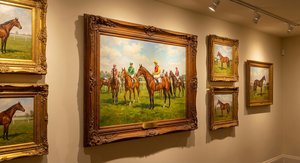
Sir Alfred James Munnings' 25 Mesterverk: En Hyllest til Heste og Engelsk Landskap | AllPaintingsStore.com
Oppdag Sir Alfred James Munnings' 25 mest ikoniske malerier! Fordyp deg i hestemalerier, engelsk landskapskunst og impresjonistisk skjønnhet. Finn museumskvalitets reproduksjoner & interiørinspirasjon på AllPaintingsStore.com.

John Constable: Topp 25 Maler – Engelsk Landskapskunst i Ditt Hjem
Opplev John Constables 25 mest ikoniske malerier! Fordyp deg i engelsk romantikk, landskapskunst og atmosfæriske scener. Finn museumskvalitets reproduksjoner & interiørinspirasjon på AllPaintingsStore.com. Utforsk samlingen online!
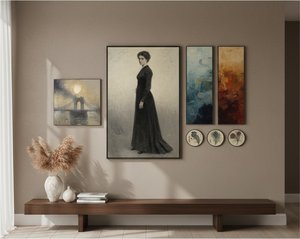
James Abbott McNeill Whistler: Topp 25 Kunstverk – Skjønnhet og Harmoni for Ditt Hjem
Utforsk James Abbott McNeill Whistlers 25 mest ikoniske kunstverk! Oppdag historien bak Nocturnes, portretter og impresjonistisk harmoni. Finn museumskvalitets reproduksjoner & interiørinspirasjon på AllPaintingsStore.com.

Cultivating Visions: A Historical Journey Through Rural Landscapes in Art
Explore the rich history of rural landscape painting with AllPaintingsStore. Discover Impressionist masterpieces, key artists & movements. Find your perfect serene artwork and bring nature's beauty home.
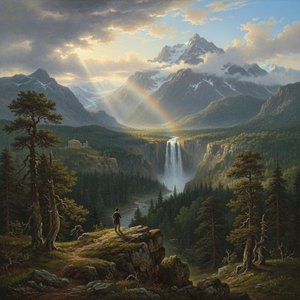
Evoking Nature's Sublime: A Comprehensive Exploration of 19th-Century Landscape Painting
Explore the captivating world of 19th-century landscape painting! Discover renowned artists like Friedrich & Monet, key movements, and find the perfect artwork to bring nature's serenity into your home. Expert insights at AllPaintingsStore.


