


 Forhåndsvisning
 Send
Send Del med andre
 Vis detaljer

 Last ned bildet
 Liknende objekter
 Røntgenundersøkelse
 Lysbildefremvisning
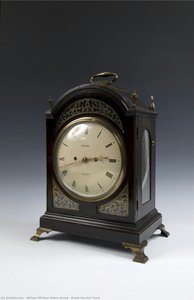
Grohe Bracket Clock
 1881
1881 39.0 x 29.0 cm
 Bank of England Museum
 Vis hele teksten
Giclée / Kunsttrykk
Giclée- eller lerretsprint av museumskvalitet med rask produksjon og fleksible valgmuligheter for etterbehandling. ( Kjøp håndlaget maleri Kjøp bilde)




































Velg mellom våre forhåndsdefinerte størrelser som bevarer kunstverkets opprinnelige proporsjoner.

Du kan oppgi egne mål for å tilpasse en spesifikk ramme eller et bestemt område. Dersom den valgte størrelsen ikke samsvarer med det originale bildets proporsjoner, vil vi enten beskjære kunstverket eller utvide bildet med en speilet eller ensfarget kant. En digital mockup vil bli sendt til din godkjenning før produksjonen starter.
Vennligst merk at forhåndsvisningen på skjermen ikke gjenspeiler den faktiske beskjæringen eller utvidelsen. Kun mockuppen vil vise den endelige komposisjonen nøyaktig.
Selv om tilpassede størrelser er tilgjengelige, anbefaler vi å velge et mål fra den forhåndsdefinerte listen for å bevare de originale proporsjonene.
Verdensomspennende levering () på 2 uker i stedet for standard 4/5 uker. (24 August)

Gratis ekspressfrakt over hele verden

Lerretsduk av høykvalitets lin

Full forsikring under transport

Garanti for refusjon av toll og importavgifter

Garantert korrekt fargegjengivelse

60 dagers returrett (kun ved feil)

100% pengene tilbake-garanti

Rabatt ved flere kjøp
 Glassalternativet er kun tilgjengelig i størrelser under 110 cm

Grohe Bracket Clock
Giclée / Kunsttrykk
Størrelse på reproduksjon
-


Endelig pris
$ 64
Beskrivelse av samleobjektet
Lignende kunstverk




Om kunstneren
The Architect of Time: The Life and Legacy of James Grohé
In the grand tapestry of the nineteenth century, few figures captured the intersection of mechanical precision and aesthetic splendor as profoundly as James Grohé. Born in 1803 in the heart of Baden-Württemberg, Germany, Grohé was far more than a mere craftsman; he was an architect of time itself. His early life was defined by a rigorous apprenticeship under the master Johann Georg Wolffenbüttel in Stuttgart, where he mastered the delicate art of horology. This formative period did not merely teach him the movement of gears and escapements but instilled in him a deep reverence for sculptural artistry. By blending the technical demands of clockmaking with a profound appreciation for form, Grohé developed a unique sensibility that would eventually allow his creations to transcend mere utility and become icons of Victorian elegance.
The year 1832 marked a pivotal turning point in Grohé’s journey as he migrated to London, the beating heart of the industrial revolution. Amidst the vibrant, soot-stained energy of the British metropolis, he established a workshop that would become synonymous with luxury and refinement. In this era of burgeoning wealth and social climbing, his exquisite carriage clocks became essential status symbols for the elite. Grohé’s work was characterized by an uncompromising pursuit of perfection, often incorporating advanced technical innovations such as Breguet escapements and the intricate, shimmering patterns of guilloché engraving. His ability to harmonize functional accuracy with breathtaking beauty ensured that his timepieces were sought after not just by collectors of science, but by connoisseurs of fine art.
Mastery in Motion: Technique and Artistry
To examine a piece by Grohé is to witness a dialogue between metal and light. His mastery extended beyond the internal mechanisms to the very skin of his creations. He possessed an uncanny ability to manipulate materials, using mahogany, silvered dials, and pierced panels to create depth and texture. One might consider the remarkable characteristics of his broader works, such as his striking bracket clocks, which often featured:
- Intricate Enclosures: The use of mahogany cases adorned with squat ball feet, providing a sense of grounded permanence.
- Decorative Paneling: Pierced fish-scale panels backed with rich red fabric, creating a visual warmth that contrasted with the cold precision of the metal.
- Exquisite Engraving: Silver-colored dials featuring Roman numerals and faces meticulously engraved with decorative flourishes that caught the flickering candlelight of Victorian parlors.
- Functional Sophistication: The inclusion of specialized switches to toggle between striking and silent modes, catering to the varied atmospheres of grand estates and quiet studies alike.
The historical significance of his work is perhaps best illustrated by its presence in the most prestigious institutions of the age; for instance, certain pieces of his craftsmanship were even utilized within the Bank of England, testifying to the absolute trust placed in his mechanical reliability. Through his hands, the passage of time was transformed into a decorative experience, making every second felt through the lens of beauty.
A Lasting Impression on Horological History
Though the era of the great independent clockmakers eventually gave way to mass production, the legacy of James Grohé remains untarnished. He represents a golden age where the artisan’s touch was visible in every gear and every engraving. His life, spanning from the traditional workshops of Germany to the industrial heights of London, mirrors the broader movement of European craftsmanship during the nineteenth century. Even as history moved forward into more utilitarian ages, the elegance Grohé captured in his timepieces continues to resonate, reminding us that even the most functional objects can serve as vessels for profound artistic expression.

james grohé
1803 - , Germany
Kort om kunstneren
- Artistic Movement Or Style: Victorian Clockmaking
- Date Of Birth: 1803
- Full Name: James Grohé
- Nationality: German
- Notable Artworks:
- Carriage Clocks
- Decorative Timepieces
- Place Of Birth: Baden-Württemberg, Germany


