

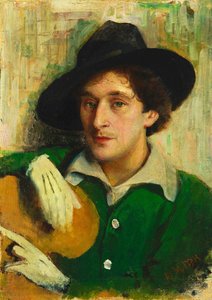
1820. Acrylic On Canvas, 32.0 x 24.0 cm.

§ 1Katalogdata

- 32.0 x 24.0 cm


Dette kunstverket er beskyttet av opphavsrett
Kunstverket som vises på denne siden er beskyttet av opphavsretten, noe som betyr at vi ikke har juridisk tillatelse til å lage eller selge identiske reproduksjoner. Denne beskyttelsen håndheves i henhold til internasjonale avtaler som for eksempel Bernerkonvensjonen og av nasjonale lover, inkludert de som er fastsatt i Amerikansk lov om opphavsrett – Tittel 17.
Som et respektfullt og lovlig alternativ tilbyr vi skreddersydde, håndmalte kunstverk inspirert av originalen. Våre dyktige og profesjonelle kunstnere studerer nøye originalens stil, stemning og kunstneriske essens for å skape et nytt og unikt verk som vekker den samme følelsen – samtidig som det forblir en original skapelse i seg selv.
Denne metoden er i fullt samsvar med opphavsrettslige regler, da den ikke innebærer kopiering eller duplisering av det beskyttede kunstverket. I stedet er det snakk om en kreativ nytolkning – et nytt maleri som er inspirert av originalen, men ikke identisk med den.
 Les mer om dette
§ 2Abstrakt
Beskrivelse av objektet
Om kunstneren
Opplev Marc Chagall (1887-1985), en russisk-fransk kunstner kjent for sine drømmende malerier, jødiske temaer og fantastiske glasskunstverk. Utforsk hans arv!
§ 3Kommentarer
Solomon on the Throne: A Dreamscape of Wisdom and Divine Judgment
Marc Chagall’s “Solomon on the Throne” (circa 1956), a striking etching produced during his prolific period in Naïve Art, transcends mere visual representation; it embodies a profound meditation on biblical narrative and the enduring fascination with themes of authority, faith, and contemplation. Executed in monochrome – primarily black ink accented by subtle tonal variations – this artwork exemplifies Chagall’s signature style: an imaginative blend of realism and fantasy that prioritizes emotional resonance over meticulous detail. The image depicts Solomon, King of Israel, seated upon a throne adorned with stylized floral motifs, flanked by two dogs—a deliberate allusion to the biblical tale recounted in I Kings X, 18-20 where Solomon judges between two women claiming paternity of the same child. The etching’s composition is deliberately asymmetrical, furthering its dreamlike quality and mirroring the unpredictable nature of divine judgment. Scattered throughout the scene are additional animals – three cats—each positioned with careful consideration, contributing to a rich tapestry of symbolism rooted in Jewish folklore. Cats traditionally represent wisdom and vigilance within Hasidic tradition, aligning perfectly with Solomon’s role as a ruler known for his intellect and piety. The dogs, similarly symbolic, embody loyalty and guardianship, reinforcing the overarching message of righteousness and divine protection. Chagall's technique is characterized by loose hatching lines that convey texture and depth without striving for photographic accuracy. This approach distinguishes him from academic realism, opting instead for a visual language that prioritizes feeling over observation. The artist’s masterful manipulation of tonal values creates an atmosphere of solemn grandeur, inviting viewers to immerse themselves in the contemplative mood of the biblical scene. It's not merely a depiction; it’s an emotional distillation of the story itself—a testament to Chagall’s ability to transform historical narrative into universally accessible art.- Artist: Marc Chagall (1887-1985)
- Style: Naïve Art (Primitivism)
- Medium: Etching
- Size: 32 x 24 cm
- Date: Circa 1956
Symbolism and Biblical Narrative
The etching’s central motif—Solomon judging between the two women—represents a cornerstone of Jewish tradition, illustrating the importance of justice and discernment. Chagall skillfully captures this narrative tension through visual elements like the throne's floral ornamentation and the positioning of the animals, symbolizing wisdom, loyalty, and divine guardianship. The monochrome palette enhances the solemnity of the scene, emphasizing the gravity of Solomon’s decision and inviting contemplation on themes of righteousness and faith.Chagall’s Distinctive Technique
Unlike academic art movements focused on precise representation, Chagall embraced a technique that prioritized emotional expression over photographic realism. His loose hatching lines create texture and depth while conveying an ethereal quality—a hallmark of his Naïve Art style. This approach allows for a more intuitive engagement with the subject matter, prioritizing feeling and imagination over meticulous observation.Emotional Impact
“Solomon on the Throne” resonates deeply with viewers through its evocative imagery and masterful tonal manipulation. The artwork’s dreamlike atmosphere encourages introspection and invites contemplation on fundamental questions of morality and divine judgment—themes that continue to captivate audiences across cultures and generations. It stands as a poignant reminder of Chagall's ability to transform biblical stories into emotionally resonant visual experiences.Spørsmål og svar
Hvilken metning og intensitet har "Solomon on the throne" av Marc Chagall?
"Solomon on the throne" av Marc Chagall er gjengitt med en Muted metning og en Monochromatic intensitet.
Er "Solomon on the throne" av Marc Chagall blant de ettertraktede verkene innen Expressionist Monochrome?
"Solomon on the throne" er registrert som Iconic blant Expressionist Monochrome-verkene i katalogen.
Hvilket medium er "Solomon on the throne" av Marc Chagall utført i?
"Solomon on the throne" er utført i Acrylic On Canvas.


 Bytt til trykk


 For kunstverk eller reproduksjoner som er større enn 105 cm (ca. 41 tommer) på noen side, vil rammen bli sendt som et sett som må monteres. Denne metoden sikrer trygg levering og forhindrer skader under transport.


