Pengene tilbake-garanti · 100 dager Gratis levering over hele verden
449564kunstverk 30613kunstnere 4660museer 32språk
Katalogoppføring

Village

1975. Akryl på lerret, 45.0 x 55.0 cm.

Fig. 1. Marc Chagall, Village, 1975. Vist som den reproduksjonen du har spesifisert: , .

§ 1Katalogdata

Dimensjoner
45.0 x 55.0 cm

§ 2Abstrakt

Beskrivelse av objektet

Russian village

Om kunstneren

Opplev Marc Chagall (1887-1985), en russisk-fransk kunstner kjent for sine drømmende malerier, jødiske temaer og fantastiske glasskunstverk. Utforsk hans arv!

§ 3Kommentarer

A Dreamscape of Rural Life: Analyzing Marc Chagall’s “Village”

Marc Chagall's "Village," painted in 1975, stands as a quintessential example of Naïve Art—a style that prioritizes raw emotion and imaginative storytelling over meticulous realism. Created during his prolific period in Saint-Paul-de-Vence, France, this oil painting on wood embodies Chagall’s signature blend of Cubist influences with the expressive freedom characteristic of Primitivism. Measuring 73 x 92 cm, it captures a serene nighttime scene depicting a man holding a sheep in his arms amidst a quaint village nestled beneath a luminous moon.

The Essence of Naïve Art: Simplicity and Symbolism

Naïve Art emerged in the early 20th century as a reaction against academic conventions, championed by artists like Niko Pirosmani—a Georgian painter who eschewed formal training for an intuitive approach to artmaking. Chagall’s “Village” exemplifies this aesthetic perfectly; its bold colors – predominantly reds, blues, and yellows – are juxtaposed with simplified forms that convey profound meaning beyond mere visual representation. The artist deliberately avoids perspective and anatomical accuracy, opting instead for a dreamlike quality that invites contemplation and emotional resonance.

A Detailed Examination of Composition and Technique

The painting’s composition is carefully balanced, guiding the viewer's eye across the canvas. A man dominates the foreground, cradling a sheep—a recurring motif in Chagall’s oeuvre symbolizing innocence and vulnerability. Scattered figures populate the hillside landscape, illuminated by the moon’s ethereal glow, adding to the narrative richness of the scene. Two prominent birds – one positioned near the top left corner and another towards the bottom right – serve as visual anchors and contribute to the painting's symbolic depth, representing freedom and aspiration. Chagall employs loose brushstrokes and vibrant pigments—a hallmark of his technique—to achieve an impressionistic effect that captures the atmosphere of rural tranquility.

Chagall’s Artistic Legacy: Modernism Meets Folklore

Marc Chagall (1887-1985) was profoundly influenced by movements like Cubism and Surrealism, alongside Naïve Art. However, he skillfully integrated these influences into his own distinctive style—characterized by fantastical imagery rooted in Jewish folklore and biblical narratives. “Village” exemplifies this fusion, demonstrating Chagall’s ability to transcend stylistic boundaries while conveying universal themes of peace, harmony, and the beauty of nature. His work continues to inspire artists and collectors alike, cementing his place as one of the most celebrated painters of the 20th century.

Beyond Reproduction: Exploring Chagall's Artistic Universe

For those seeking a deeper understanding of Chagall’s artistic vision, exploring works like “Russian Village” (73 x 92 cm), "The Return of the Prodigal Son" (80 x 59 cm) and “Circus in the Village” (Naive Art / Primitivism, Gouache) offers invaluable insight into his stylistic evolution and thematic preoccupations. Consider commissioning a high-quality reproduction from AllPaintingsStore.com to bring Chagall’s evocative imagery into your home or workspace—a testament to the enduring power of art and its ability to transport us beyond the everyday.

Spørsmål og svar

Hva er de faktiske målene på "Village" av Marc Chagall?

"Village" måler 45 x 55 cm i sin originale form. Originalmålene er en nyttig referanse når du skal velge størrelse på en reproduksjon.

Hvilken orientering har "Village" av Marc Chagall?

"Village" av Marc Chagall har et Liggende format-format. Formatet beskriver komposisjonens proporsjoner.

Hvilket rom i hjemmet passer en reproduksjon av "Village" godt inn i?

Det anbefalte rommet for "Village" av Marc Chagall er en Stue og oppholdsrom. Forslaget kan selvfølgelig tilpasses ditt interiør.
§ 4Kunstneren

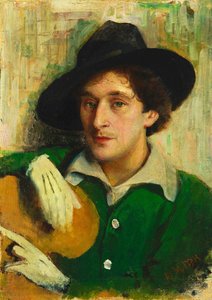
Marc Chagall

Marc Chagall

1887 - 1985, Belarus

Kort om Marc Chagall

  • Artistic Movement Or Style: Modernism, Kubism
  • Artists Or Movements Influenced By This Artist:
    • Surrealism
    • Modern konst
  • Artists Who Influenced This Artist:
    • Bakst
    • Delaunay
    • Borovikovsky
  • Date Of Birth: 7 juli 1887
  • Date Of Death: 28 mars 1985
  • Full Name: Marc Chagall
  • Nationality: Russisk, senare fransk
  • Notable Artworks:
    • I och byen
    • Vitbesk
    • Vitkrifixion
  • Place Of Birth: Liozna, Belarus

Om kunstneren

A Life Painted in Dreams: The World of Marc Chagall

Marc Chagall, born Moishe Shagal in 1887 in the small Belarussian town of Liozna near Vitebsk, wasn’t merely a painter; he was a poet of color, a weaver of dreams, and a chronicler of memory. His life, spanning nearly a century, mirrored the tumultuous currents of the 20th century, yet his art remained steadfastly rooted in a deeply personal vision—one infused with the folklore of his Hasidic Jewish upbringing and an unwavering belief in the power of imagination. Vitebsk itself was more than just a birthplace; it became the emotional core of his artistic universe, a recurring motif populated by flying figures, whimsical animals, and the vibrant hues of remembered landscapes. The town’s unique blend of cultures—Russian Orthodox churches alongside bustling Jewish marketplaces—forged an aesthetic sensibility that would defy easy categorization throughout his long career. Though he sought formal training first with a local sign painter and later in St. Petersburg under Léon Bakst, and then in Paris at the Académie de la Grande Chaumière, Chagall never fully embraced any single artistic movement. He absorbed elements of Cubism, Symbolism, and Fauvism, but always filtered them through his own intensely personal lens, creating a style that was uniquely, unmistakably Chagall.

Early Influences and Artistic Beginnings

Chagall’s formative years were marked by the traditions of Vitebsk’s Jewish community—a world steeped in ritual, storytelling, and vibrant visual culture. These influences would permeate his artistic vision throughout his life. His initial training was modest, focusing on practical skills as a sign painter, but he quickly developed an aptitude for drawing and painting, driven by an innate desire to capture the beauty of the natural world and the complexities of human emotion. St. Petersburg provided him with access to influential teachers like Léon Bakst, who encouraged him to experiment with theatrical design and introduced him to the principles of Cubism—a movement that would profoundly impact his artistic style. However, Chagall resisted rigid stylistic conventions, prioritizing instead a deeply expressive approach rooted in observation and imagination. His early canvases already hinted at the distinctive language he would develop – paintings like *I and the Village* (1911) are not simply depictions of place; they are explorations of identity, memory, and the relationship between the individual and community. The village isn’t rendered realistically but as a fragmented collection of recollections, imbued with symbolic meaning. This ability to transmute personal experience into universal themes became a hallmark of his art.

The Symbolism of Flight and Memory

Chagall's artistic style quickly distinguished itself through its characteristic use of color and imagery—particularly the motif of flight. Figures soar across canvases in fantastical landscapes, defying gravity and logic, creating a dreamlike atmosphere that invites viewers into his inner world. This stylistic choice wasn’t accidental; it stemmed from a desire to move beyond mere imitation of reality and capture the essence of feeling, the weight of memory, and the power of folklore. Recurring symbols—such as apples, birds, and biblical figures—appear throughout his oeuvre, conveying profound emotional resonance and hinting at deeper spiritual concerns. His palette was bold and expressive, often employing vibrant, non-naturalistic colors to convey emotion rather than literal representation. This approach solidified his reputation as a visionary artist who dared to explore the subconscious mind and express ideas beyond conventional boundaries.

From Vitebsk to Paris: Artistic Transformation

The Russian Revolution dramatically altered Chagall’s life trajectory, bringing him back to Vitebsk where he became involved in cultural initiatives, establishing an art school that briefly flourished before succumbing to the restrictions imposed by the new regime. This period was marked by both creative energy and political disillusionment, a tension that would continue to shape his artistic trajectory. He embraced Surrealism, influenced by André Breton and fellow artists, experimenting with dreamlike imagery and irrational juxtapositions—a stylistic shift that reflected the anxieties and uncertainties of the time. The outbreak of World War II forced him to flee occupied France for the United States, where he spent seven years in New York City. This period was marked by profound emotional upheaval and artistic experimentation. He found solace in his art, creating powerful works that reflected the traumas of war and displacement—particularly *White Crucifixion* (1938), a haunting depiction of suffering and persecution.

Legacy and Recognition

After the war, Chagall returned to France, where he continued to paint and create until his death in 1985 at the age of 97. He received numerous prestigious commissions, including the ceiling of the Paris Opera (1964), a breathtaking explosion of color and form that celebrated musical masterpieces, and stunning stained glass windows for the Hadassah Hebrew University Medical Center synagogue in Jerusalem. These large-scale projects allowed him to translate his artistic vision into architectural spaces, creating immersive environments that continue to inspire awe and wonder. Chagall’s influence on subsequent generations of artists is undeniable. His lyrical quality, emotional depth, and imaginative power resonated with Surrealists and other movements that embraced fantasy and symbolism. He bridged the gap between European modernism and Jewish cultural identity, becoming known as “the quintessential Jewish artist of the twentieth century.” His ability to synthesize personal experience, folklore, and universal themes continues to resonate with audiences worldwide. Marc Chagall’s legacy extends beyond his paintings and stained glass; it resides in the enduring power of his vision—a vision that celebrates love, memory, and the boundless possibilities of the human imagination.

§ 5Relaterte verk

§ 6Spørsmål

§ 7Sitér dette oppslaget

AllPaintingsStore.com, “Marc Chagall, Village (1975)”, https://allpaintingsstore.com/no/art/marc-chagall-village-8XYGVH-en/ArtistReproduction/ (hentet 6 October 2026).

§ 8Reproduksjonen

Håndlaget oljereproduksjon

Håndmalt olje på lerret i din valgte størrelse og ramme, laget på bestilling av våre kunstnere. ( Bytt til trykk Bytt til digitalt bilde)

Det er spesifisert i margen på ordreskjemaet; den nåværende statusen for dette skjemaet lyder som følger.

Village

Trykkmetode

Størrelse på reproduksjon

-

Utvalgte mesterkunstnere

Mer detaljrikdom, finesse og ekstra produksjonstid

-

Innramming av reproduksjon

-

-

For kunstverk eller reproduksjoner som er større enn 105 cm (ca. 41 tommer) på noen side, vil rammen bli sendt som et sett som må monteres. Denne metoden sikrer trygg levering og forhindrer skader under transport.

Krever profesjonell montering – dette er ikke et DIY-produkt.
Settet må monteres og lerretet strammes av en erfaren profesjonell rammelegger, ved bruk av trelim (følger ikke med), en lerretstang og klemmer for å holde rammelisten vinkelrett mens limet tørker. Feilaktig montering eller ujevn stramming av lerretet kan påføre kunstverket permanente skader og er ikke dekket av vår garanti.

  • Alle massive trelister er inkludert, presist tilpasset i størrelse.

  • Monteres med de medfølgende skruene, samt trelim til hjørnene, som ikke er inkludert og må anskaffes av din rammehandler.

  • Profesjonelt verktøy er nødvendig og er ikke inkludert: en lerretstang (strammer) og klemmer for å holde rammene vinkelrette mens limet tørker.

Viktig:
Hjørnene krever trelim, listene må holdes på plass med tvinger til limet er helt tørt, og stramming av lerretet på den ferdige rammen krever en lerretstang. Ingen av disse produktene er inkludert i settet. Vennligst sørg for tilgang til en erfaren profesjonell rammehandler før du bestiller denne størrelsen.

Navneskilt

-

-

Beskyttende ferniss

Blank lakk (forsterker farger, beskytter mot lys og fuktighet)

-

Tilpass mitt kunstverk

Eksempler på hva som kan endres: Erstatt ansikt med bilde av kunden; Legg til kjæledyr (f.eks. bytt ut katt med hund); Inkluder en skjult melding i bakgrunnen; Endre bakgrunnslandskap eller elementer.

-

Ekspresslevering

Verdensomspennende levering () på 3–4 uker i stedet for standard 5 uker. (3 November). Ingen kompromisser med kvaliteten.

-

Ekspresslevering

Verdensomspennende levering til innen 5 uker. (10 November).

Inkludert frakt

Totalpris for valgte alternativer

Nkr 2475

Inkludert med hver bestilling

  • Gratis ekspressfrakt over hele verden
  • Lerretsduk av lin av høy kvalitet
  • Full transportforsikring
  • Garanti for refusjon av toll og importavgifter
  • Garantert fargegjengivelse
  • 100 dagers returrett ved fabrikasjonsfeil
  • 100% pengene tilbake-garanti
  • Rabatt ved flere kjøp
Bestillingsskjema