


 Se i rommet
 Del som digitalt kort
 Del
Del
 Detaljer
 Studentguide

 Last ned
 Liknende objekter
 Røntgen
 Lysbildefremvisning
 Besøksstatistikk
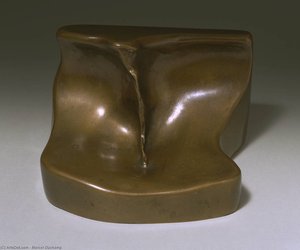
Sculpture-morte


 Les mer
Kunstverket som vises på denne siden er beskyttet av opphavsretten, noe som betyr at vi ikke har juridisk tillatelse til å lage eller selge identiske reproduksjoner. Denne beskyttelsen håndheves i henhold til internasjonale avtaler som for eksempel Bernerkonvensjonen og av nasjonale lover, inkludert de som er fastsatt i Amerikansk opphavsrettslov – Tittel 17.
Som et respektfullt og lovlig alternativ tilbyr vi skreddersydde, håndmalte kunstverk inspirert av originalen. Våre dyktige og profesjonelle kunstnere studerer nøye originalens stil, stemning og kunstneriske essens for å skape et nytt og unikt verk som vekker den samme følelsen – samtidig som det forblir en original skapelse i seg selv.
Denne metoden er i fullt samsvar med opphavsrettslige regler, da den ikke innebærer kopiering eller duplisering av det beskyttede kunstverket. I stedet er det snakk om en kreativ nytolkning – et nytt maleri som er inspirert av originalen, men ikke identisk med den.
Håndlaget oljereproduksjon
Håndmalt olje på lerret i din valgte størrelse og ramme, laget på bestilling av våre kunstnere. ( Bytt til trykkversjon Gå til digitalt bilde)




P118B Nkr10

P118H Nkr10

P118W Nkr10

P438Z Nkr10

P508JH Nkr12

P508YH Nkr12

P805H Nkr10

P805Z Nkr10

P919BZ Nkr10

P919G Nkr10

P919XJ Nkr10

P959ZH Nkr10

P968JZ Nkr12

W106C Nkr8

W218G Nkr10

W218JH Nkr8

W218Y Nkr10

W307PJ Nkr10

W316G Nkr10

W316PJ Nkr8

W316Y Nkr10

W398PJ Nkr8

W4111J Nkr10

W500HY Nkr15

W500JH Nkr15

W692G Nkr12

W849H Nkr8

W940BG Nkr15

W953PJ Nkr8




Velg mellom våre forhåndsdefinerte størrelser som bevarer kunstverkets opprinnelige proporsjoner.

Skriv inn bredden og høyden du trenger, slik at den passer til din ramme eller vegg. Dette er håndmalt, så for en størrelse med en annen form kan kunstneren male litt mer rundt bildet, eller beskjære det noe — du velger selv. Vi sender deg en digital mockup for godkjenning før maleriet påbegynnes. Bildet som vises på denne siden viser ikke det faktiske resultatet — kun mockuppen gjør det.
Etter bestilling vil AllPaintingsStore.com-teamet sende e-post til kunden for instruksjoner og sende et utkast (mockup) som forhåndsvisning.
Verdensomspennende levering () på 3–4 uker i stedet for standard 5 uker. (26 October). Ingen kompromisser med kvaliteten.

Gratis ekspressfrakt over hele verden

Lerretsduk av høykvalitets lin

Full transportforsikring

Garanti for refusjon av toll og importavgifter

Garantert fargeekthet

100 dagers returrett ved fabrikasjonsfeil

100% pengene tilbake-garanti

Mengderabatt
 Glassalternativet er kun tilgjengelig i størrelser under 110 cm

Sculpture-morte
Reproduksjonsmetode
Format på reproduksjon
-


Totalpris
Nkr 2455
A Still Life Reimagined: Marcel Duchamp’s ‘Sculpture-morte’
Sculpture-morte, created by the pioneering French-American artist Marcel Duchamp, is a deceptively playful yet profoundly challenging work that blurs the boundaries between painting, sculpture, and everyday life. Executed sometime before 1968 (the year of Duchamp’s death), this artwork presents not a traditional still life of arranged objects, but rather *a painting of* a constructed assemblage – a “sculpture” made entirely from fruits and vegetables.Subject & Composition
The central focus is immediately arresting: a halved broccoli floret meticulously arranged to resemble a human head. This unexpected anthropomorphism sets the tone for the entire piece. Surrounding this ‘head’ are other produce items – apples, oranges, carrots, and two prominently placed bananas – all rendered with a realistic yet subtly stylized quality. The composition isn't haphazard; it feels deliberately constructed, almost ceremonial in its arrangement. Duchamp doesn’t simply depict food; he transforms it into something else entirely, prompting viewers to question their perceptions of form and representation.Style & Technique
While demonstrating a clear skill in representational painting, Sculpture-morte isn't about showcasing traditional artistic technique. Duchamp’s style here is precise and detailed, yet deliberately understated. He avoids dramatic lighting or expressive brushwork, opting for a more objective rendering of the subject matter. This deliberate lack of stylistic flourish is key to its conceptual impact. The painting itself serves as documentation of an ephemeral sculpture – a fleeting moment captured in paint.Historical Context & Dada Influence
Duchamp was a pivotal figure in the development of 20th-century art, associated with movements like Cubism, Dada, and Conceptual Art. Sculpture-morte embodies the spirit of Dada – an anti-art movement born out of disillusionment with societal norms following World War I. Dadaists rejected traditional aesthetic values and embraced absurdity, irony, and chance. Duchamp’s use of everyday objects (fruits and vegetables) elevated to artistic status is a direct challenge to conventional notions of art and beauty. It foreshadows his infamous “readymades,” like Fountain (1917), where he presented an ordinary urinal as sculpture, further questioning the very definition of art.Symbolism & Interpretation
The symbolism within Sculpture-morte is open to interpretation. The broccoli ‘head’ could be seen as a commentary on mortality – a *memento mori* rendered in organic materials. The fruits and vegetables, symbols of abundance and life, are simultaneously presented as decaying forms, hinting at the transient nature of existence. The act of constructing a sculpture from perishable items also speaks to the ephemeral quality of art itself. Duchamp’s work often invites viewers to actively participate in creating meaning, rather than passively receiving it.Emotional Impact & Legacy
Despite its seemingly whimsical subject matter, Sculpture-morte evokes a sense of quiet contemplation and intellectual curiosity. It's not an artwork designed to elicit immediate emotional response; instead, it encourages viewers to *think* about art, representation, and the world around them. Duchamp’s influence on subsequent generations of artists is immeasurable. He paved the way for Conceptual Art, installation art, and performance art, fundamentally altering our understanding of what constitutes artistic expression. This piece remains a powerful example of his innovative spirit and enduring legacy.Collecting & Reproduction
As an original work by Marcel Duchamp, Sculpture-morte resides in the Staatliches Museum Schwerin, Germany. High-quality reproductions allow art enthusiasts and interior designers to bring this thought-provoking piece into their homes or offices. Its subtle color palette and intriguing subject matter make it a versatile addition to various décor styles – from modern minimalist spaces to eclectic collections. A reproduction of Sculpture-morte is not merely a decorative element; it’s an invitation to engage with one of the most influential artists of the 20th century.- Style: Dada, Conceptual Art, Still Life
- Materials: Oil on canvas (original)
- Themes: Mortality, Ephemerality, Representation, Anti-Art
Spørsmål og svar
Hvilken fargepalett brukes i "Sculpture-morte" av Marcel Duchamp?
Fargepaletten i "Sculpture-morte" av Marcel Duchamp beskrives som Neutrals. Det er en kortfattet beskrivelse av verkets farger.
Hvilket kontrastnivå viser "Sculpture-morte" av Marcel Duchamp?
"Sculpture-morte" av Marcel Duchamp viser en Balanced kontrast mellom de lyse og mørke partiene.
Hvilket medium er "Sculpture-morte" av Marcel Duchamp utført i?
"Sculpture-morte" er utført i Acrylic On Canvas.
Relaterte kunstverk




Kunstnerbiografi
A Revolutionary Spirit: The Life and Art of Marcel Duchamp
Marcel Duchamp, born Henri-Robert-Marcel Duchamp in 1887 in Blainville-Crevon, Normandy, was more than an artist; he was a philosophical provocateur who fundamentally altered the course of modern art. His early life, though seemingly conventional – nurtured within a family that appreciated artistic expression with both brothers pursuing successful careers as artists – hinted at the iconoclasm to come. Duchamp initially pursued formal training, mastering traditional techniques and experimenting with post-impressionist styles. However, this academic foundation served not as an end in itself, but as a springboard for questioning the very nature of art, its purpose, and its definition. He wasn’t content merely to depict the world; he sought to challenge how we perceive it, and what constitutes artistic value. This restless intellectual curiosity would become the defining characteristic of his prolific career.Early Artistic Explorations: Cubism and Impressionism
Duchamp's initial foray into art began with a grounding in traditional techniques—primarily painting—influenced by Impressionist masters like Claude Monet and Pierre-Auguste Renoir. He honed his skills diligently, capturing fleeting moments of light and color with remarkable precision. Yet, even within these aesthetically pleasing compositions, Duchamp harbored doubts about the role of representation itself. Recognizing that art could transcend mere visual imitation, he turned his attention to Cubism, spearheaded by Pablo Picasso and Georges Braque. This movement embraced fragmented forms and multiple perspectives—a radical departure from the single viewpoint demanded by Renaissance painting—and Duchamp skillfully incorporated these principles into works like *Portrait of Chess Players* (1911). The fractured planes and overlapping viewpoints mirrored his own intellectual preoccupation with dismantling established conventions.The Dadaist Rebellion: Challenging Artistic Norms
The horrors of World War I profoundly impacted Duchamp’s worldview, fueling a deep disillusionment with the values of reason and logic that underpinned Western civilization. This discontent propelled him into the embrace of Dadaism—a movement born out of utter rejection of artistic dogma and societal complacency. Dadaists like Tristan Tzara and Hugo Ball sought to dismantle traditional notions of art through absurdity, chance, and anti-rational gestures. Duchamp wholeheartedly embraced this rebellious spirit, producing provocative pieces that defied categorization and challenged viewers’ expectations. His Dadaist output included collages incorporating found objects—such as newspaper clippings and photographs—and performances designed to disrupt artistic rituals. The infamous *Fontaine* (1917)—a porcelain urinal signed “R. Mutt”—became the emblem of Dada’s radical critique of art, sparking controversy and cementing Duchamp's reputation as a revolutionary iconoclast.The Birth of Conceptual Art: Beyond Representation
Duchamp’s most enduring contribution to art history was arguably his pioneering role in establishing Conceptual Art—a movement that prioritized idea over execution. Rejecting the visual arts altogether, Conceptual Artists questioned whether an artwork could exist without tangible form. Duchamp famously declared, “The idea precedes the object,” encapsulating this fundamental shift in artistic thinking. He continued to explore this concept through various mediums, including assemblage and photography. *L.H.O.O.Q.* (1919)—a postcard reproduction of Leonardo da Vinci’s Mona Lisa overlaid with a mustache and goatee—served as a deliberate parody of art history and a commentary on the veneration of artistic genius. Duchamp's intention wasn’t to create a beautiful image; it was to provoke reflection on notions of authorship, originality, and the very definition of art itself.Legacy and Enduring Influence
Marcel Duchamp’s influence extends far beyond his own lifetime, shaping the trajectory of countless artists who followed him. His unwavering commitment to conceptual thought—the primacy of idea over form—established a paradigm that continues to resonate within contemporary artistic practice. Artists across disciplines—from sculpture to performance art to video installation—have drawn inspiration from Duchamp’s challenge to conventional aesthetic standards and his insistence on questioning accepted truths. He remains a central figure in discussions about the role of art in society, prompting us to consider whether beauty is truly paramount or if intellectual engagement—the pursuit of ideas—is equally valuable. His legacy endures as a testament to the transformative power of artistic innovation and the enduring relevance of Duchamp’s revolutionary vision.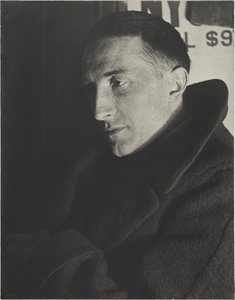
Marcel Duchamp
1887 - 1968 , Frankrike
Kort om kunstneren
- Artistic Movement Or Style:
- Kubisme
- Dadaisme
- Konseptuell kunst
- Artists Or Movements Influenced By This Artist:
- Kubisme
- Popkunst
- Minimalisme
- Date Of Birth: 28 juli 1887
- Date Of Death: 2 oktober 1968
- Full Name: Marcel Duchamp Henri-Robert-Marcel
- Nationality: Fransk-Amerikansk
- Notable Artworks:
- Fontane
- L.H.O.O.Q.
- Det Store Glas
- Boîte-en-valise
- Place Of Birth: Blainville, Frankrike
Relaterte artikler

Bronze Sculpture Guide: Durability, Value, and Selection for Large-Scale Hospitality Projects
A professional procurement guide for hotel designers on selecting large-scale bronze sculptures. Learn about durability, lost-wax casting, and strategic integration of high-value metal art into commercial hospitality projects.

Bronze Sculpture Guide for Large-Scale Projects: Durability, Value, and Selection for Hospitality Designers
A professional guide for hotel designers and procurement managers on selecting large-scale bronze sculptures. Learn about durability, lost-wax casting, material value, and strategic integration for high-traffic hospitality and corporate environments.


