Pengene tilbake-garanti · 100 dager Gratis levering over hele verden
449587kunstverk 30613kunstnere 4660museer 32språk
Valuta
    Språk
      Atelier · Etablert 2015 · Paris, Frankrike
      AllPaintingsStore
      allpaintingsstore.com
      Catalogue entry

      Untitled 134

      Acrylic On Canvas.

      Fig. 1. Mark Rothko, Untitled 134. Shown as the reproduction you are specifying: , .

      § 1Catalogue data

      § 2Abstract

      Beskrivelse av objektet

      Om kunstneren

      Utforsk Mark Rothko (1903-1970) sin ikoniske Color Field kunst og Abstract Expressionisme! Opplev følelsenes dybde og kunstnerens varige arv – en sentral figur i moderne kunst.

      § 3Commentary

      A Symphony of Blue and Yellow: Decoding Mark Rothko’s Untitled 134

      The painting “Untitled 134” by Mark Rothko is more than just a visual arrangement; it's an invitation to contemplate the very essence of emotion. Presented as a deceptively simple square dominated by deep indigo, punctuated by horizontal bands of vibrant yellow, this artwork embodies the core tenets of Color Field Painting and speaks volumes about the artist’s preoccupation with existential concerns. Its understated elegance belies a complex tapestry of ideas woven into its chromatic harmony.

      The Genesis of Calm: Rothko's Early Influences

      Mark Rothko’s artistic journey began amidst turbulent circumstances—the anxieties surrounding Jewish identity in Latvia during his formative years and the profound grief experienced after the untimely death of his father. These experiences instilled within him a sensitivity to human suffering, shaping his worldview and informing his artistic vision. The relocation to Portland, Oregon, marked not merely a geographical change but also a collision with new cultural landscapes, fostering an ongoing dialogue between tradition and modernity. This early exposure to loss fueled a lifelong exploration of themes related to mortality and the quest for meaning—themes that would permeate his oeuvre.

      Color Field Painting: A Radical Departure

      Rothko’s approach to painting represents a dramatic departure from representational art. Rejecting illusionistic techniques, he embraced Color Field Painting, prioritizing pure color as its primary expressive element. Unlike traditional landscapes or portraits, Rothko's canvases eschewed detailed depiction in favor of expansive blocks of pigment—often described as “stained glass windows”—allowing viewers to immerse themselves in the emotional resonance of the hues themselves. This technique sought to bypass intellectual analysis and tap directly into primal feelings, mirroring the artist’s belief that color could communicate ideas beyond language.

      Symbolism Within Simplicity: Interpreting the Blue Square

      The dominant blue square in “Untitled 134” is not merely a pigment choice; it functions as a conduit for conveying profound psychological states. Rothko himself famously stated that he wished to evoke "a sense of calm," and the deep indigo hue achieves precisely this effect. Simultaneously, the yellow stripes serve as counterpoints—horizontal bands of luminosity that disrupt the stillness of the blue, suggesting fleeting moments of joy or remembrance. These contrasting colors symbolize duality – darkness and light, sorrow and hope – reflecting the artist’s contemplation of human experience.

      A Legacy of Emotional Resonance

      “Untitled 134” stands as a testament to Rothko's unwavering commitment to conveying emotion through abstraction. Its enduring appeal lies in its ability to bypass rational thought and engage viewers on an intuitive level, prompting introspection and fostering a connection with the sublime. Like many of his works, it exemplifies Color Field Painting’s ambition to capture the intangible essence of human feeling—a legacy that continues to inspire artists and collectors alike. Reproductions from AllPaintingsStore offer exceptional quality reproductions allowing you to experience this masterpiece's emotional impact firsthand.

      Spørsmål og svar

      Hvor intens er fargebruken i "Untitled 134" av Mark Rothko?

      Fargeintensiteten i "Untitled 134" er Balanced. Intensitet beskriver hvor sterke fargene fremstår.

      Hvem er kunstneren bak "Untitled 134", og hvilken stilretning tilhører verket?

      Mark Rothko skapte "Untitled 134" innenfor Color Field Expressionism-bevegelsen.

      Hvilken teknikk er brukt i "Untitled 134" av Mark Rothko?

      "Untitled 134" er utført i Acrylic On Canvas.
      § 4The artist

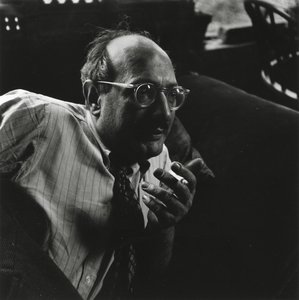
      Mark Rothko

      Mark Rothko

      1903 - 1970, Latvia

      Quick facts about Mark Rothko

      • Artistic Movement Or Style: Color Field Painting
      • Artists Or Movements Influenced By This Artist: ['Minimalism']
      • Date Of Birth: September 25, 1903
      • Date Of Death: February 25, 1970
      • Full Name: Markus Yakovlevich Rothkowitz
      • Nationality: Russisk Empire- Amerikansk (fra 1938)
      • Notable Artworks:
        • No. 10 (1950)
        • Seagram Murals
        • Rothko Chapel
      • Place Of Birth: Dvinsk, Latvia

      Om kunstneren

      Early Life and the Seeds of Artistic Vision

      Mark Rothko, born Markus Yakovlevich Rothkowitz in Dvinsk, Latvia, in 1903, carried within him from the outset a sense of displacement that would profoundly shape his artistic journey. His early years were marked by the anxieties of a Jewish family living within the Pale of Settlement, shadowed by pogroms and political unrest. This atmosphere instilled a deep sensitivity to human suffering, a theme that would resonate throughout his oeuvre. The 1913 immigration to Portland, Oregon, represented not just a geographical shift but a cultural upheaval for the young Rothko. While his father, a pharmacist and intellectual with socialist leanings, fostered a home filled with debate and learning, the loss of Jacob Rothkowitz shortly after their arrival cast a long shadow. This early experience of loss, coupled with the challenges of assimilation, fueled a lifelong exploration of existential themes – mortality, trauma, and the search for meaning in a chaotic world. Though he excelled academically at Yale University, Rothko found himself drawn more to the vibrant energy of New York City, abandoning formal studies to pursue his passion for art at the Art Students League. These formative years laid the groundwork for an artistic vision that would ultimately challenge conventional notions of painting and redefine the emotional power of color.

      From Figurative Beginnings to Abstract Expressionism

      Rothko’s initial artistic explorations were firmly rooted in realism, depicting urban scenes and portraits with a keen eye for detail. However, these early works already hinted at the psychological depth that would become his hallmark. As the 1940s unfolded, and the world grappled with the horrors of World War II, Rothko’s art underwent a dramatic transformation. Influenced by Surrealism and mythology, he began to move away from representational imagery, seeking instead to express universal human emotions through symbolic forms. This period saw the emergence of multi-form paintings – canvases populated by ambiguous, biomorphic shapes that seemed to hover between figuration and abstraction. These works were not merely experiments in form; they were deeply felt responses to the anxieties and uncertainties of a world at war. By the late 1940s, Rothko had arrived at his signature style: large-scale canvases featuring rectangular blocks of color that appeared to float and resonate with one another. He stripped away all vestiges of recognizable imagery, focusing instead on the pure emotional impact of color and form. This marked a pivotal moment in the development of Abstract Expressionism, and established Rothko as a leading figure in this groundbreaking movement.

      The Color Field and the Pursuit of Transcendence

      Rothko’s mature work is defined by what came to be known as “Color Field” painting – vast expanses of luminous color that envelop the viewer in an immersive experience. These paintings are not about *what* they depict, but rather *how* they make you feel. Rothko believed that art should engage the viewer viscerally, bypassing intellectual analysis and speaking directly to the emotions. He meticulously layered thin washes of paint, creating subtle variations in tone and texture that seemed to emanate from within the canvas. The edges of his rectangular forms are often blurred, allowing them to blend and interact with one another, creating a sense of depth and movement. Rothko deliberately avoided titles beyond numbers – “No. 1,” “No. 6” – encouraging viewers to confront the paintings without preconceived notions and allow their own emotional responses to guide their experience. He sought to create a space for contemplation, a sanctuary where viewers could connect with something larger than themselves. His ambition was nothing less than to evoke profound spiritual experiences through the language of color.

      Major Achievements and Lasting Legacy

      Among Rothko’s most significant achievements are “No. 10 (1950),” a pivotal work that exemplifies his evolving style, and the Seagram Murals (1958). Commissioned for the Four Seasons Restaurant in New York City, these murals were ultimately rejected by Rothko, who felt they would be compromised by their intended environment. He instead donated them to the Tate Gallery in London, where they continue to inspire awe and contemplation. Perhaps his most ambitious project was the Rothko Chapel (1971) in Houston, Texas – a non-denominational sanctuary housing fourteen of his paintings. Designed as a space for quiet reflection, the chapel is considered a sacred place by many, embodying Rothko’s belief in the spiritual power of art. Rothko's influence on subsequent generations of artists has been immense. He paved the way for Minimalist art and continues to inspire contemporary painters who explore the emotional possibilities of abstraction. Despite struggling with depression throughout his life, culminating in his tragic suicide in 1970, Mark Rothko remains one of the most important and influential artists of the 20th century – a master of color whose work continues to resonate with audiences around the world. ## The Enduring Power of Emotional Resonance
      • Rothko’s paintings are celebrated for their ability to convey universal human emotions—tragedy, ecstasy, despair, and hope.
      • His exploration of color as a vehicle for emotional expression revolutionized abstract painting.
      • The Rothko Chapel stands as a testament to his belief in the spiritual power of art.
      • He remains a pivotal figure in Abstract Expressionism and a major influence on contemporary artists.

      § 5Comparanda

      § 6Questions

      Kort om verket

      • Title: Untitled 134
      • Movement: Abstract Expressionism
      • Artist: Mark Rothko
      • Subject or theme: Color and Form
      • Notable elements or techniques: Color Field Painting

      § 7Cite this entry

      AllPaintingsStore.com, “Mark Rothko, Untitled 134”, https://allpaintingsstore.com/no/art/mark-rothko-untitled-134-8BWUE3-en/ArtistReproduction/ (accessed 2 October 2026).

      § 8The reproduction

      Håndlaget oljereproduksjon

      Håndmalt olje på lerret i din valgte størrelse og ramme, laget på bestilling av våre kunstnere. ( Bytt til trykk Bytt til digitalt bilde)

      It is specified on the order sheet in the margin; the present state of that sheet reads as follows.

      Untitled 134

      Trykkmetode

      Størrelse på reproduksjon

      -

      Utvalgte mesterkunstnere

      Mer detaljrikdom, finesse og ekstra produksjonstid

      -

      Innramming av reproduksjon

      -

      -

      For kunstverk eller reproduksjoner som er større enn 105 cm (ca. 41 tommer) på noen side, vil rammen bli sendt som et sett som må monteres. Denne metoden sikrer trygg levering og forhindrer skader under transport.

      Krever profesjonell montering – dette er ikke et DIY-produkt.
      Settet må monteres og lerretet strammes av en erfaren profesjonell rammelegger, ved bruk av trelim (følger ikke med), en lerretstang og klemmer for å holde rammelisten vinkelrett mens limet tørker. Feilaktig montering eller ujevn stramming av lerretet kan påføre kunstverket permanente skader og er ikke dekket av vår garanti.

      • Alle massive trelister er inkludert, presist tilpasset i størrelse.

      • Monteres med de medfølgende skruene, samt trelim til hjørnene, som ikke er inkludert og må anskaffes av din rammehandler.

      • Profesjonelt verktøy er nødvendig og er ikke inkludert: en lerretstang (strammer) og klemmer for å holde rammene vinkelrette mens limet tørker.

      Viktig:
      Hjørnene krever trelim, listene må holdes på plass med tvinger til limet er helt tørt, og stramming av lerretet på den ferdige rammen krever en lerretstang. Ingen av disse produktene er inkludert i settet. Vennligst sørg for tilgang til en erfaren profesjonell rammehandler før du bestiller denne størrelsen.

      Navneskilt

      -

      -

      Beskyttende ferniss

      Blank lakk (forsterker farger, beskytter mot lys og fuktighet)

      -

      Tilpass mitt kunstverk

      Eksempler på hva som kan endres: Erstatt ansikt med bilde av kunden; Legg til kjæledyr (f.eks. bytt ut katt med hund); Inkluder en skjult melding i bakgrunnen; Endre bakgrunnslandskap eller elementer.

      -

      Ekspresslevering

      Verdensomspennende levering () på 3–4 uker i stedet for standard 5 uker. (30 October). Ingen kompromisser med kvaliteten.

      -

      Ekspresslevering

      Verdensomspennende levering til innen 5 uker. (6 November).

      Inkludert frakt

      Totalpris for valgte alternativer

      Nkr 2485

      Included with every order

      • Gratis ekspressfrakt over hele verden
      • Lerretsduk av lin av høy kvalitet
      • Full transportforsikring
      • Garanti for refusjon av toll og importavgifter
      • Garantert fargegjengivelse
      • 100 dagers returrett ved fabrikasjonsfeil
      • 100% pengene tilbake-garanti
      • Rabatt ved flere kjøp
      Order sheet