


 Forhåndsvisning
 Send
Send Del med andre
 Vis detaljer
 Veiledning

 Last ned bildet
 Liknende objekter
 Røntgenundersøkelse
 Lysbildefremvisning
 Statistikk
Queen Victoria's Diamond Jubilee, a View of the Processional Route from Borough Road, London
 Historical Painting
 1897
1897 27.0 x 21.0 cm
 Vis hele teksten
Håndlaget oljereproduksjon
Håndmalt olje på lerret i din valgte størrelse og ramme, laget på bestilling av våre kunstnere. ( Bytt til trykk Bytt til digitalt bilde)




































Velg mellom våre forhåndsdefinerte størrelser som bevarer kunstverkets opprinnelige proporsjoner.

Du kan angi egne mål for å tilpasse en spesifikk ramme eller plass. Dersom den valgte størrelsen ikke samsvarer med originalbildets proporsjoner, vil vi enten beskjære kunstverket eller utvide maleriet med ytterligere håndmalte elementer. En digital mockup vil bli sendt til din godkjenning før produksjonen starter.
Vennligst merk at forhåndsvisningen på skjermen ikke gjenspeiler den faktiske beskjæringen eller utvidelsen. Kun mockuppen vil vise den endelige komposisjonen nøyaktig.
Selv om tilpassede størrelser er tilgjengelige, anbefaler vi å velge et mål fra den forhåndsdefinerte listen for å bevare de originale proporsjonene.
Etter bestilling vil AllPaintingsStore.com-teamet sende e-post til kunden for instruksjoner og sende et utkast (mockup) som forhåndsvisning.
Verdensomspennende levering () på 3–4 uker i stedet for standard 5 uker. (21 September). Ingen kompromisser med kvaliteten.

Gratis ekspressfrakt over hele verden

Lerretsduk av høykvalitets lin

Full forsikring under transport

Garanti for refusjon av toll og importavgifter

Garantert korrekt fargegjengivelse

100 dagers returrett (kun ved mangler)

100% pengene tilbake-garanti

Rabatt ved flere kjøp
 Glassalternativet er kun tilgjengelig i størrelser under 110 cm

Queen Victoria's Diamond Jubilee, a View of the Processional Route from Borough Road, London
Teknikk for reproduksjon
Størrelse på reproduksjon
-


Endelig pris
$ 308
Lignende kunstverk





Om kunstneren
A Life Immersed in the Balkans: The World of Mary Edith Durham
Born in London in 1863, Mary Edith Durham was a woman whose life defied easy categorization. She wasn’t simply an artist, nor solely an anthropologist, but a compelling blend of both – a traveler, writer, and fervent advocate for a region that captured her imagination: the Balkans. The eldest of nine children born to Arthur Edward Durham, a respected surgeon, she received a solid early education at Bedford College beginning in 1878, demonstrating aptitude in both academic pursuits and artistic expression. This foundation led her to formal training at the Royal Academy of Arts, where she honed considerable talent as a draughtswoman and painter. Her early work found practical application in illustrating scientific publications, notably contributing detailed drawings to the *Cambridge Natural History*’s volume on amphibians and reptiles – a testament to her keen observational skills and meticulous technique. However, it was a journey undertaken for health reasons that would irrevocably alter the course of her life, leading her towards an enduring fascination with the rugged landscapes and complex cultures of the Balkan Peninsula.From Artistic Observation to Anthropological Engagement
Following years spent caring for her ailing mother, Durham’s physician recommended travel as a restorative measure. A voyage along the Dalmatian coast in 1900 sparked an immediate and profound connection with the region. This wasn't merely tourism; it was the beginning of a deep immersion into a world largely unexplored by Western eyes. From 1900 onwards, Durham embarked on extensive travels throughout the Balkans, focusing particularly on Albania – then a politically volatile and culturally isolated territory. Unlike many travelers of her time, she didn’t remain an aloof observer. She actively engaged with local communities, participating in relief efforts, meticulously documenting folklore and folk art, and earning their trust through genuine respect and empathy. This commitment led to her election as a Fellow of the Royal Anthropological Institute and frequent contributions to the journal *Man*, establishing her as a respected voice within anthropological circles. Her approach was groundbreaking for its time, prioritizing firsthand experience and cultural sensitivity over detached academic analysis. She wasn’t simply studying these cultures; she was living amongst them, learning from them, and advocating for their well-being.Championing Albania: Writings and Advocacy
Durham is perhaps best known today for her literary contributions, most notably *High Albania* (1909). This seminal work remains an invaluable resource for understanding Albanian customs, societal structures, and the dramatic landscape of northern Albania. It’s a book imbued with both scholarly rigor and passionate observation, offering a nuanced portrait of a people struggling to maintain their identity amidst political turmoil. Beyond *High Albania*, she authored seven books on Balkan affairs, each contributing to a greater understanding of the region's intricate history and diverse cultures. However, her work extended beyond mere documentation; Durham became an unwavering advocate for Albanian unity and independence. She passionately championed their cause, tirelessly lobbying British officials to support their aspirations during a period of intense political maneuvering and foreign intervention. This dedication earned her the affectionate title “Mbretëresha e Malësoreve” – "Queen of the Highlanders" – from the Albanian people themselves, a testament to the deep respect and gratitude they held for her efforts.Controversies and Lasting Legacy
Durham’s journey wasn't without its complexities and controversies. Her views evolved over time, initially expressing admiration for Serbia before becoming a staunch supporter of Albanian independence. This shift inevitably led to clashes with those who favored a unified Yugoslav state, resulting in criticism from pro-Serb and pro-Yugoslav intellectuals who questioned her objectivity and accused her of bias. The renowned author Rebecca West famously described Durham as championing a “pet Balkan people,” a critique that underscored the perceived partiality of her advocacy. Despite these criticisms, Durham’s work remains historically significant for its detailed ethnographic observations and its contribution to understanding Albanian culture in the early 20th century. Her collections – textiles, photographs, sketches – are preserved in institutions like the Pitt Rivers Museum (Oxford) and the British Museum, providing invaluable resources for researchers today. She died in 1944, but her legacy endures; Albanians continue to recognize her as a national heroine, acknowledging her unwavering support during a period of profound political instability and foreign interference. Her life stands as a powerful example of how artistic talent, anthropological curiosity, and passionate advocacy can converge to create a lasting impact on the world.
Mary Edith Durham
1863 - 1944 , United Kingdom
Kort om kunstneren
- Artistic Movement Or Style: Anthropological art
- Date Of Birth: 1863
- Date Of Death: 1944
- Full Name: Mary Edith Durham
- Nationality: British
- Notable Artworks:
- Queen Victoria's Jubilee
- Funeral Procession Victoria
- Newgate Prison
- Place Of Birth: London, UK
Relaterte artikler
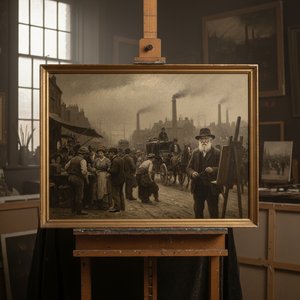
Walter Greaves: A Study in Victorian Realism & the Social Landscape of British Art
Explore the life & work of Walter Greaves, a key Victorian realist painter influenced by Whistler. Discover his London streetscapes, portraits, and enduring legacy. Learn about art appraisal & reproduction options at AllPaintingsStore.
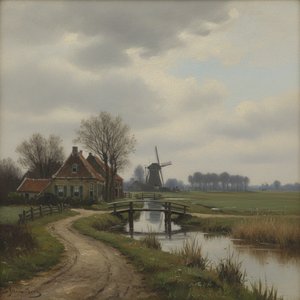
Jacob Henricus Maris: A Master of Dutch Atmospheric Realism & the Intimate Landscape
Explore the captivating world of Jacob Henricus Maris, a leading figure of the Dutch Hague School. Discover his atmospheric landscapes, signature brushstrokes & lasting influence on 19th-century art. Learn more at AllPaintingsStore.

Thomas H. Shepherd: Capturing Victorian London's Essence Through Topographical Precision
Explore the exquisite topographical paintings of Thomas H. Shepherd, renowned for his detailed depictions of Victorian London and beyond. Discover his legacy & artistic techniques.

The Refined Aesthetic of Victorian Illustration: A Study in Narrative & Technique
Explore the captivating world of Victorian illustration! Discover Pre-Raphaelite influences, key artists like Rossetti & Stephens, and the era's rich narrative detail. A deep dive for art enthusiasts.

National Gallery Londons 25 Mesterverk: Kunsthistorie for Ditt Hjem | AllPaintingsStore.no
Oppdag National Gallery Londons 25 mest ikoniske kunstverk! Lær historien bak mesterverk fra Van Gogh, Monet & Rembrandt. Finn inspirasjon til interiøret og kjøp museumskvalitets reproduksjoner på AllPaintingsStore.com – din kilde for klassisk kunst.

