Pengene tilbake-garanti · 100 dager Gratis levering over hele verden
449587kunstverk 30613kunstnere 4660museer 32språk
Valuta
    Språk
      Atelier · Etablert 2015 · Paris, Frankrike
      AllPaintingsStore
      allpaintingsstore.com
      Catalogue entry

      Aquis submersus

      1919. Oil On Canvas, 54.0 x 43.0 cm.

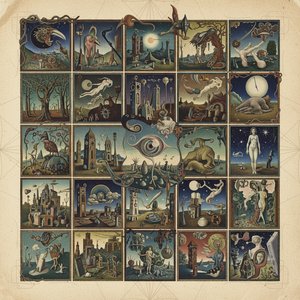
      Fig. 1. Max Ernst, Aquis submersus, 1919. Shown as the reproduction you are specifying: , .

      § 1Catalogue data

      § 2Abstract

      Beskrivelse av objektet

      Explore Max Ernst’s surreal masterpiece ‘Aquis submersus,’ capturing a dreamlike pool scene with enigmatic figures and symbolic sports balls—a captivating glimpse into the artist's philosophical exploration of the subconscious during the Surrealist era. Discover this stunning reproduction.

      Om kunstneren

      Utforsk Max Ernsts surrealistiske verden! Oppdag frottage, collager og drømmende malerier med fugler, landskap & psykologisk dybde. #MaxErnst #Surrealisme #Dada

      § 3Commentary

      A Dreamscape Suspended in Time

      To gaze upon Max Ernst’s 1919 masterpiece, Aquis submersus, is to step through a portal into the unsettlingly beautiful logic of the subconscious. The title itself, Latin for "Drowned in the Waters," serves as a haunting prelude to a visual journey that transcends the boundaries of the rational world. At first glance, the painting presents a scene of deceptive tranquility: a swimming pool nestled among architectural forms, where figures linger in a state of suspended animation. Yet, beneath this serene surface lies the restless energy of the early 20th century, a period defined by profound societal upheaval and the intellectual ferment following the Great War. Ernst does not merely depict a scene; he engineers a psychological labyrinth, inviting the viewer to navigate a landscape where the lines between reality and dream begin to dissolve.

      The composition is an arresting study in juxtaposition. A man stands at the edge of the pool, his gaze fixed intently upon a woman reclining within the azure depths. This intimate, almost voyeuristic encounter is punctuated by the presence of two sports balls, strategically positioned to disrupt the water's surface. These elements of incongruity introduce an unsettling humor and a sense of chance that are hallmarks of the Dadaist and Surrealist spirit. As one explores the periphery of the pool, other figures appear scattered throughout the tableau—some sitting, some lying down—creating a sense of a shared, yet deeply isolated, dreamscape. The architecture itself feels strangely weightless, with buildings that cast shadows against the sky like solid walls, and a clock hanging in the heavens, its reflection on the water masquerading as a pale moon.

      Technique and the Language of Surrealism

      Ernst’s approach to Aquis subsubmersus is deeply rooted in his desire to liberate art from the constraints of logic. While this early work shows the profound influence of Italian Metaphysical art, it also hints at the experimental techniques that would later define his career. The painting employs bold colors and simplified forms, prioritizing emotional resonance over photographic realism. There is a tactile quality to the work, a precursor to his famous use of frottage, where textures are transferred to create organic, unpredictable patterns. This method mirrors the Surrealist obsession with accessing the hidden layers of the mind, using texture and shape to evoke the raw, unrefined imagery of dreams.

      For the discerning collector or interior designer, this piece offers a profound emotional impact that shifts depending on the light and the viewer's perspective. It is a work of deep symbolism: the submerged woman may represent femininity, vulnerability, or even repressed desire, while the disruptive placement of the sports balls symbolizes the destabilization of the established order. Bringing a high-quality reproduction of this masterpiece into a space provides more than just decoration; it introduces a conversation piece that challenges the intellect and stirs the imagination. It is an ideal selection for those seeking to infuse their environment with mystery, depth, and the timeless allure of the human unconscious.

      Spørsmål og svar

      Hvilken fase i Max Ernst sin karriere tilsvarer datoen 1919 for "Aquis submersus"?

      Med sin datering fra 1919, tilhører "Aquis submersus" Max Ernst sin Mature Surreal.

      Hvilken orientering har "Aquis submersus" av Max Ernst?

      "Aquis submersus" av Max Ernst har et Portrait-format. Formatet beskriver komposisjonens proporsjoner.

      Hvilken teknikk og hvilket årstall er "Aquis submersus" av Max Ernst fra?

      "Aquis submersus" av Max Ernst er utført i Oil On Canvas og er datert 1919.

      § 4The artist

      Max Ernst

      Max Ernst

      1891 - 1976, Tyskland

      Quick facts about Max Ernst

      • Artistic Movement Or Style: Dada, Surrealisme
      • Artists Or Movements Influenced By This Artist:
        • Surrealisme
        • Dada
      • Artists Who Influenced This Artist:
        • Picasso
        • Van Gogh
        • Gauguin
      • Date Of Birth: 1. april 1891
      • Date Of Death: 1. april 1976
      • Full Name: Max Ernst
      • Nationality: Tysk-Amerikansk, Fransk
      • Notable Artworks:
        • Byen helhetlig
        • Euclides
        • Av denne skal ingen vite
      • Place Of Birth: Brühl, Tyskland

      Om kunstneren

      A Life Immersed in the Surreal

      Max Ernst, born Maximilian Maria Ernst on April 1st, 1891, in Brühl, Germany, was a restless spirit destined to become one of the most pivotal figures in 20th-century art. His journey wasn’t one of conventional artistic training; rather, it was a self-directed exploration fueled by philosophical inquiry, psychological fascination, and a profound disillusionment with societal norms. Ernst's father, a teacher of the deaf and an amateur painter, instilled in him both a sensitivity to the world and a rebellious streak against established authority. This early duality would become a defining characteristic of his artistic vision.

      Ernst’s academic pursuits at the University of Bonn – encompassing philosophy, art history, literature, psychology, and psychiatry – were not merely diversions but foundational elements that deeply informed his later work. He wasn’t simply interested in *how* to paint; he was grappling with *why*. This intellectual curiosity led him to encounter the groundbreaking works of Picasso, Van Gogh, and Gauguin at the Sonderbund exhibition in Cologne in 1912, a moment that irrevocably altered his artistic trajectory. The seeds of modernism had been sown.

      Dada’s Disruption and the Birth of Surrealist Visions

      The cataclysm of World War I proved to be a watershed moment for Ernst. His experiences as a soldier on both the Eastern and Western fronts left him profoundly shaken, fostering a deep skepticism towards established order and a yearning for new modes of expression. This disillusionment found fertile ground in the burgeoning Dada movement, which he embraced wholeheartedly after returning to Cologne in 1918. Alongside Hans Arp – a lifelong friend and collaborator – Ernst became a central figure in the Cologne Dada group, rejecting traditional artistic conventions and embracing absurdity, chance, and anti-rationality.

      The Dadaists sought to dismantle bourgeois values and challenge accepted notions of beauty and logic. They employed techniques like collage, photomontage, and assemblage—often incorporating found objects—to create jarring juxtapositions that mocked the seriousness of the era. Ernst’s Dada output was marked by a preoccupation with disturbing imagery and a deliberate disregard for conventional artistic standards.

      Pioneering Techniques: Frottage, Grattage, and Collage

      Ernst's artistic innovation extended beyond subject matter; he was a relentless experimenter with technique. He didn’t simply adopt existing methods—he invented new ones. Perhaps his most famous contribution is frottage, a process of rubbing pencil or charcoal over textured surfaces to create unexpected and evocative images. This technique, born from a moment of boredom while observing wood grain, allowed Ernst to tap into the subconscious and generate forms that defied conscious control. It was a method he famously described as “a way of letting the unconscious speak.”

      Closely related was grattage, where paint is scraped across canvas revealing underlying layers—often incorporating textures and patterns created by previous paintings. Ernst’s meticulous layering of colors and surfaces contributed to the dreamlike atmosphere characteristic of his work.

      Surrealist Exploration: Dreams, Symbolism, and Psychological Depth

      Ernst's engagement with Surrealism solidified his commitment to exploring the realm of dreams, the unconscious mind, and the irrational. Influenced by Sigmund Freud’s psychoanalytic theories—particularly his concept of “the Oedipus complex”—Ernst sought to unlock hidden desires and anxieties through his art. He wasn’t interested in depicting reality as it appeared but rather in revealing the underlying psychological forces that shaped perception.

      His paintings frequently incorporate symbolic imagery: birds (often representing freedom and aspiration), desolate landscapes reflecting inner turmoil, unsettling juxtapositions designed to provoke thought and emotion—and recurring motifs like Loplop, Ernst’s alter ego, which embodies a blend of masculine and feminine energies. His artistic vision was driven by a profound desire to confront the darker aspects of human experience.

      Major Achievements and Legacy

      Throughout his prolific career, Ernst produced an astonishing array of paintings, sculptures, prints, and drawings—spanning genres from figurative landscapes to abstract compositions. Notable works include “Ofrenda funeraria,” “The Equivocal Woman,” and “L’Ange du foyer”—each demonstrating Ernst's mastery of technique and his ability to convey complex psychological states.

      Max Ernst’s influence on subsequent generations of artists is undeniable. He championed innovative methods, challenged artistic conventions, and established himself as a cornerstone of Surrealist art—a movement that continues to resonate with audiences worldwide. His legacy resides not only in his stunning visual creations but also in his unwavering belief in the transformative power of imagination and the importance of confronting uncomfortable truths.

      § 5Comparanda

      § 6Questions

      Kort om verket

      • Artistic style: Dreamlike
      • Location: Private Collection
      • Subject or theme: Psychological landscape
      • Title: Aquis submersus
      • Influences:
        • Dada
        • Cubism
      • Movement: Surrealism

      § 7Cite this entry

      AllPaintingsStore.com, “Max Ernst, Aquis submersus (1919)”, https://allpaintingsstore.com/no/art/max-ernst-aquis-submersus-8XYK6E-en/ArtistReproduction/ (accessed 2 October 2026).

      § 8The reproduction

      Håndlaget oljereproduksjon

      Håndmalt olje på lerret i din valgte størrelse og ramme, laget på bestilling av våre kunstnere. ( Bytt til trykk Bytt til digitalt bilde)

      It is specified on the order sheet in the margin; the present state of that sheet reads as follows.

      Aquis submersus

      Trykkmetode

      Størrelse på reproduksjon

      -

      Utvalgte mesterkunstnere

      Mer detaljrikdom, finesse og ekstra produksjonstid

      -

      Innramming av reproduksjon

      -

      -

      For kunstverk eller reproduksjoner som er større enn 105 cm (ca. 41 tommer) på noen side, vil rammen bli sendt som et sett som må monteres. Denne metoden sikrer trygg levering og forhindrer skader under transport.

      Krever profesjonell montering – dette er ikke et DIY-produkt.
      Settet må monteres og lerretet strammes av en erfaren profesjonell rammelegger, ved bruk av trelim (følger ikke med), en lerretstang og klemmer for å holde rammelisten vinkelrett mens limet tørker. Feilaktig montering eller ujevn stramming av lerretet kan påføre kunstverket permanente skader og er ikke dekket av vår garanti.

      • Alle massive trelister er inkludert, presist tilpasset i størrelse.

      • Monteres med de medfølgende skruene, samt trelim til hjørnene, som ikke er inkludert og må anskaffes av din rammehandler.

      • Profesjonelt verktøy er nødvendig og er ikke inkludert: en lerretstang (strammer) og klemmer for å holde rammene vinkelrette mens limet tørker.

      Viktig:
      Hjørnene krever trelim, listene må holdes på plass med tvinger til limet er helt tørt, og stramming av lerretet på den ferdige rammen krever en lerretstang. Ingen av disse produktene er inkludert i settet. Vennligst sørg for tilgang til en erfaren profesjonell rammehandler før du bestiller denne størrelsen.

      Navneskilt

      -

      -

      Beskyttende ferniss

      Blank lakk (forsterker farger, beskytter mot lys og fuktighet)

      -

      Tilpass mitt kunstverk

      Eksempler på hva som kan endres: Erstatt ansikt med bilde av kunden; Legg til kjæledyr (f.eks. bytt ut katt med hund); Inkluder en skjult melding i bakgrunnen; Endre bakgrunnslandskap eller elementer.

      -

      Ekspresslevering

      Verdensomspennende levering () på 3–4 uker i stedet for standard 5 uker. (30 October). Ingen kompromisser med kvaliteten.

      -

      Ekspresslevering

      Verdensomspennende levering til innen 5 uker. (6 November).

      Inkludert frakt

      Totalpris for valgte alternativer

      Nkr 2480

      Included with every order

      • Gratis ekspressfrakt over hele verden
      • Lerretsduk av lin av høy kvalitet
      • Full transportforsikring
      • Garanti for refusjon av toll og importavgifter
      • Garantert fargegjengivelse
      • 100 dagers returrett ved fabrikasjonsfeil
      • 100% pengene tilbake-garanti
      • Rabatt ved flere kjøp
      Order sheet