

1927. Oil On Canvas.

§ 1Katalogdata


Dette kunstverket er beskyttet av opphavsrett
Kunstverket som vises på denne siden er beskyttet av opphavsretten, noe som betyr at vi ikke har juridisk tillatelse til å lage eller selge identiske reproduksjoner. Denne beskyttelsen håndheves i henhold til internasjonale avtaler som for eksempel Bernerkonvensjonen og av nasjonale lover, inkludert de som er fastsatt i Amerikansk lov om opphavsrett – Tittel 17.
Som et respektfullt og lovlig alternativ tilbyr vi skreddersydde, håndmalte kunstverk inspirert av originalen. Våre dyktige og profesjonelle kunstnere studerer nøye originalens stil, stemning og kunstneriske essens for å skape et nytt og unikt verk som vekker den samme følelsen – samtidig som det forblir en original skapelse i seg selv.
Denne metoden er i fullt samsvar med opphavsrettslige regler, da den ikke innebærer kopiering eller duplisering av det beskyttede kunstverket. I stedet er det snakk om en kreativ nytolkning – et nytt maleri som er inspirert av originalen, men ikke identisk med den.
 Les mer om dette
§ 2Abstrakt
Beskrivelse av objektet
Explore Max Ernst’s "Forest & Dove" (1927) – a surrealist masterpiece! Discover its dense composition, symbolic elements & unique grattage technique. A captivating work of art.
Om kunstneren
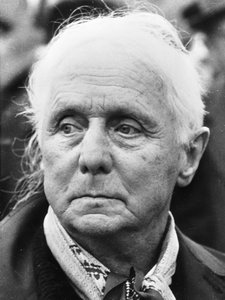
Utforsk Max Ernsts surrealistiske verden! Oppdag frottage, collager og drømmende malerier med fugler, landskap & psykologisk dybde. #MaxErnst #Surrealisme #Dada
§ 3Kommentarer
A Dreamscape of Disquiet: Exploring Max Ernst’s *Forest and Dove*
Max Ernst's 1927 painting, *Forest and Dove*, is a quintessential example of Surrealism – a movement dedicated to unlocking the creative potential of the unconscious mind. This evocative oil on canvas transports viewers into a world that feels both familiar and profoundly unsettling, embodying the anxieties and psychological explorations central to the interwar period.Composition and Visual Language
The painting presents a dense, vertical composition dominated by dark, earthy tones – browns, ochres, and hints of red. Towering, skeletal trees define a claustrophobic forest scene, their branches reaching like grasping claws against an ambiguous sky. A small, almost childlike depiction of a dove perches within this forbidding landscape, while a solitary figure stands nearby, seemingly observing the scene with quiet contemplation. Ernst masterfully employs jagged lines and fragmented shapes to create a sense of unease and movement, disrupting any expectation of traditional pictorial harmony. The texture is remarkably rich, achieved through thick impasto application – lending a tactile quality that draws the viewer into the painting’s surface.Technique and Innovation: Grattage
Ernst was a relentless innovator in artistic technique. *Forest and Dove* showcases his pioneering use of *grattage*, a method he co-developed with Joan Miró. This involved scraping paint across the canvas to reveal the textures beneath, creating an almost three-dimensional effect and imbuing the surface with a unique visual energy. The resulting texture mimics bark, wood grain, and other natural forms, enhancing the painting’s dreamlike quality and blurring the lines between representation and abstraction.Symbolism and Interpretation
The symbolism within *Forest and Dove* is deliberately ambiguous, inviting multiple interpretations.- The Dead Tree: Often interpreted as a symbol of decay, transformation, or the passage of time, it anchors the composition and evokes a sense of melancholy.
- The Forest: Represents isolation, confinement, or the subconscious mind – a labyrinthine space where hidden fears and desires reside.
- The Dove: Traditionally a symbol of peace and hope, its presence within this somber landscape is particularly poignant. It may represent Ernst himself, seeking solace or freedom amidst inner turmoil.
- The Figure: Acts as the viewer’s surrogate, an observer caught between reality and the dreamlike world unfolding before them.
Historical Context and Artistic Influence
Created in 1927, *Forest and Dove* reflects the psychological anxieties prevalent in Europe following World War I. The trauma of war had shattered traditional beliefs and spurred artists to explore new ways of representing the human condition. Ernst’s work, deeply influenced by Dadaism and Surrealism, sought to challenge conventional notions of reality and tap into the power of the unconscious. His innovative techniques and evocative imagery profoundly impacted subsequent generations of artists, solidifying his place as a pivotal figure in 20th-century art.Emotional Resonance and Lasting Appeal
*Forest and Dove* is not merely a visual experience; it’s an *emotional* one. The painting evokes feelings of mystery, melancholy, and perhaps even foreboding. Its unsettling beauty lies in its ability to tap into our deepest fears and desires, prompting introspection and challenging us to confront the complexities of the human psyche. The work continues to resonate with audiences today, offering a timeless exploration of the subconscious mind and the enduring power of artistic imagination. It’s a piece that invites contemplation and rewards repeated viewing, making it a compelling addition to any art collection or interior space.Spørsmål og svar
Hvilken plass har "Forest and Dove" av Max Ernst i kunsthistorien?
"Forest and Dove" av Max Ernst tilhører Surrealism-retningen, innenfor Modern-perioden. Sammen gir de verket dets plass i kunsthistorien.
Hvor kommer de besøkende til "Forest and Dove" av Max Ernst fra?
En Besøksstatistikk-side eksisterer for "Forest and Dove". Den viser månedlige besøkstall for kunstverket og kunstnerens øvrige verk, fordelt på land og språk.
Hvem er kunstneren bak "Forest and Dove"?
Kunstneren bak "Forest and Dove" er Max Ernst. Verket er katalogisert under Max Ernst sitt navn.


 Bytt til trykk


 For kunstverk eller reproduksjoner som er større enn 105 cm (ca. 41 tommer) på noen side, vil rammen bli sendt som et sett som må monteres. Denne metoden sikrer trygg levering og forhindrer skader under transport.


