

Bronze.

§ 1Catalogue data


Dette kunstverket er beskyttet av opphavsrett
Kunstverket som vises på denne siden er beskyttet av opphavsretten, noe som betyr at vi ikke har juridisk tillatelse til å lage eller selge identiske reproduksjoner. Denne beskyttelsen håndheves i henhold til internasjonale avtaler som for eksempel Bernerkonvensjonen og av nasjonale lover, inkludert de som er fastsatt i Amerikansk lov om opphavsrett – Tittel 17.
Som et respektfullt og lovlig alternativ tilbyr vi skreddersydde, håndmalte kunstverk inspirert av originalen. Våre dyktige og profesjonelle kunstnere studerer nøye originalens stil, stemning og kunstneriske essens for å skape et nytt og unikt verk som vekker den samme følelsen – samtidig som det forblir en original skapelse i seg selv.
Denne metoden er i fullt samsvar med opphavsrettslige regler, da den ikke innebærer kopiering eller duplisering av det beskyttede kunstverket. I stedet er det snakk om en kreativ nytolkning – et nytt maleri som er inspirert av originalen, men ikke identisk med den.
 Les mer om dette
§ 2Abstract
Beskrivelse av objektet
Explore 'Sirène ailée' by Max Ernst – a surreal bronze sculpture depicting a winged siren. A captivating blend of mythology, abstraction & Dadaism, embodying Ernst’s innovative artistic vision.
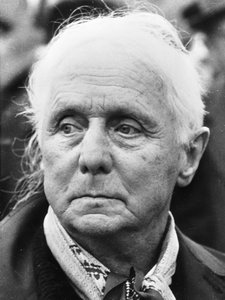
Om kunstneren
Utforsk Max Ernsts surrealistiske verden! Oppdag frottage, collager og drømmende malerier med fugler, landskap & psykologisk dybde. #MaxErnst #Surrealisme #Dada
§ 3Commentary
A Surrealist Echo: Sirène Ailée by Max Ernst
The bronze sculpture, “Sirène Ailée” (Winged Siren), isn’t merely a depiction of myth; it's an immersion into the fractured dreamscape of Max Ernst. Cast in the mid-1930s during a period of intense creative exploration and personal upheaval, this piece embodies the core tenets of Surrealism – a deliberate rejection of rational thought in favor of the subconscious mind’s unpredictable revelations. The siren, a figure traditionally associated with alluring danger and irresistible temptation, is here stripped of her seductive power, rendered instead as an enigmatic presence perched atop a starkly geometric pedestal. This isn't a celebration of beauty; it’s an interrogation of form, a meditation on the unsettling juxtapositions that define Ernst’s artistic vision.
- The Foundation: The sculpture rests upon a cylindrical base and a larger rectangular one, creating a layered effect that speaks to the complexities of perception. These rigid forms contrast dramatically with the fluid curves of the siren's body, immediately establishing a tension between stability and movement.
- Color & Texture: Dominated by shades of bronze and grey, the sculpture’s palette is deliberately muted, evoking the earthy tones of the landscapes Ernst frequently depicted in his paintings. The surface exhibits subtle variations in texture – a slight roughness indicative of the casting process, juxtaposed with the smoother finish of the base – adding to the tactile experience and hinting at the layers of meaning embedded within the work.
- Wings as Vessels: The outstretched wings aren’t simply decorative; they function almost as vessels, suggesting an upward trajectory, a yearning for escape or transcendence. Their simplified forms—a deliberate departure from realistic representation—emphasize their symbolic weight rather than their literal appearance.
The Alchemy of Creation: Ernst's Techniques
Ernst’s approach to sculpture was as innovative as his painting and collage work. “Sirène Ailée” exemplifies his mastery of bronze casting, a technique he honed over decades. However, it also showcases his pioneering use of *frottage*, a method he developed by rubbing pencil across textured surfaces – wood grain, fabric, even the pages of books – to create intricate patterns and forms. These textures are then translated into three-dimensional space, imbuing the sculpture with an organic quality that belies its rigid construction. The deliberate imperfections and subtle variations in surface reflect Ernst’s commitment to embracing chance and spontaneity within his artistic process.
- Lost-Wax Casting: The bronze was likely cast using the traditional lost-wax method, a painstaking process involving creating a wax model, encasing it in plaster, melting out the wax, and then pouring molten bronze into the mold. This technique ensures exceptional detail and durability.
- The Influence of Ernst’s Process: The subtle irregularities and textural nuances visible on the surface are not accidental; they are integral to Ernst's artistic philosophy, reflecting his belief that art should be a direct expression of the subconscious mind.
Symbolism & Context: A Fragmented Myth
The siren’s presence within “Sirène Ailée” transcends simple mythological representation. Ernst, deeply influenced by Freudian psychology and Dadaist principles, deliberately deconstructed traditional narratives, presenting familiar figures in unfamiliar contexts. The siren isn't a temptress luring sailors to their doom; she is an isolated figure, seemingly adrift, her gaze fixed on some distant horizon. This ambiguity invites viewers to project their own anxieties and desires onto the sculpture, transforming it into a mirror reflecting the complexities of the human psyche.
Historical Context: The work was created during a period of immense political and social upheaval in Europe – the rise of fascism, the looming threat of war. Ernst’s art reflects this atmosphere of uncertainty and anxiety, capturing a sense of disorientation and alienation. The sculpture can be interpreted as a metaphor for humanity's struggle to find meaning and stability amidst chaos.A Legacy of Surrealism: Reproduction & Inspiration
“Sirène Ailée” remains one of Max Ernst’s most iconic works, a testament to his groundbreaking approach to artmaking. Reproductions offer a remarkable opportunity to experience the sculpture's captivating blend of form and symbolism. When selecting a reproduction, consider the level of detail and the quality of materials used – a faithful rendering will capture the essence of Ernst’s original vision. Beyond its aesthetic appeal, “Sirène Ailée” serves as a powerful reminder of the enduring relevance of Surrealism—a movement that continues to inspire artists and challenge viewers to embrace the power of imagination.
Spørsmål og svar
Hvilken teknikk er "Sirène ailée" laget med?
"Sirène ailée" av Max Ernst er utført i Bronze. Reproduksjonene har som mål å gjengi utseendet til denne teknikken.
Hvilken fargepalett og hvilken stemning forener "Sirène ailée"?
"Sirène ailée" av Max Ernst kombinerer en Neutrals fargepalett med en Mysterious stemning.
Hva slags verk er "Sirène ailée"?
I katalogen er "Sirène ailée" av Max Ernst klassifisert som Sculpture. Kategorien bidrar til å finne lignende verk.


 Bytt til trykk


 For kunstverk eller reproduksjoner som er større enn 105 cm (ca. 41 tommer) på noen side, vil rammen bli sendt som et sett som må monteres. Denne metoden sikrer trygg levering og forhindrer skader under transport.


