


 Se i rommet
 Del som digitalt kort
 Del
Del
 Detaljer
 Studentguide

 Last ned
 Liknende objekter
 Røntgen
 Lysbildefremvisning
 Besøksstatistikk
untitled (3407)

 Les mer
Få en utskriftsklar fil som går langt utover forhåndsvisningen på nett. Hvert digitale bilde vi selger er hentet fra en høyoppløselig master i vår database – vanligvis mellom 5 000 og 15 000 piksler bred – slik at du kan trykke stort, beskjære tett eller gjenskape fine detaljer med full trygghet.
Ingen filer forlater studioet vårt uten å bli bearbeidet. En digital ekspert kontrollerer fargene mot det originale maleriet og korrigerer dem ved behov, for deretter å forbedre klarhet og detaljrikdom med profesjonelle retusjeringsverktøy — alltid tro mot kunstnerens penselstrøk og stil. Resultatet er et bilde som ser ut som maleriet, ikke som en skann med filter.
Du godkjenner før ferdigstilling: vår ekspert sender bildet på e-post innen 72 timer til din vurdering. Ikke fornøyd? Be om forbedringer eller korrigeringer, eller be om refusjon dersom kvaliteten ikke svarer til forventningene.
Dette er kvaliteten som forlag, designstudioer, gallerier og trykkerier stoler på.
Digitalt bilde
Last ned en høyoppløselig fil til personlig bruk, utskrift og kreative prosjekter. ( Bytt til trykkversjon Bestill håndmalt reproduksjon)
Inkludert i alle bestillinger av digitale bilder
Profesjonell digital levering, garantert
Når du velger AllPaintingsStore.com, får du ikke bare et bilde – du mottar et profesjonelt etterbehandlet digitalt kunstverk, skapt med presisjon og med en garantert tilfredshetsgaranti. Her er alt som automatisk følger med din bestilling:

Rask levering på e-post
Din høyoppløselige digitale bildefil sendes til din e-post innen 72 timer etter bestilling – klar til umiddelbar bruk.

KI-forbedret digital fil
Ditt kunstverk blir profesjonelt optimalisert ved hjelp av avanserte AI-verktøy og manuell redigering, noe som sikrer maksimal detaljrikdom, klarhet og fargegjengivelse.

Gratis livslang nybestilling
Har du ved et uhell slettet eller mistet filen din? Ingen bekymring – vi sender den på nytt når som helst, helt gratis.

Ingen importavgifter – noen gang
Nyt ditt kunstverk umiddelbart uten toll, avgifter eller leveringskostnader – digitale nedlastinger er alltid avgiftsfrie.

Garantert fargenøyaktighet
Vi sikrer at det digitale bildet gjenspeiler de originale fargene så nøyaktig som mulig ved hjelp av profesjonelle verktøy og fargehåndtering.

100 dagers tilfredshetsgaranti
Hvis du ikke er fornøyd med ditt digitale bilde, vil vi revidere det eller refundere 100% innen 100 dager – uten spørsmål.

100% Penggaranti
Ikke fornøyd? Få full refusjon innen 100 dager etter at du har mottatt din digitale fil – uten spørsmål.

Rabatt ved storkjøp
Kjøp 3 bilder, spar 10% - Kjøp 5, spar 15% - Kjøp 10+, spar 20%. Ideelt for kreative prosjekter, gallerier og byråer.
The Haunting Geometry of Absence: Unpacking Max Ernst’s ‘Untitled (3407)’
Max Ernst's “Untitled (3407)” isn’t merely a depiction of a damaged boat; it’s a meticulously constructed tableau of psychological unease and fractured reality. The image, rendered in a style deeply rooted in Surrealism, immediately arrests the viewer with its stark simplicity and unsettling core: a solitary wooden vessel riddled with a gaping hole in its center. This isn't a scene of dramatic action or immediate danger; instead, it’s imbued with a profound sense of isolation, decay, and the inherent instability of perception. The muted palette – primarily reds and browns – contributes to this atmosphere of melancholic stillness, while the background hints at other vessels, suggesting a wider, equally desolate landscape.
Ernst, born in Brühl, Germany, in 1891, was a restless intellectual and artist who deliberately rejected traditional artistic training. His journey began with philosophical inquiry, fueled by a fascination with psychology and psychiatry – disciplines he studied rigorously at the University of Bonn. This academic grounding profoundly shaped his approach to art, moving beyond mere representation towards an exploration of the subconscious mind and the illogical structures of dreams. His early experiences during World War I, marked by trauma and disillusionment, undoubtedly informed this preoccupation with fractured realities and the unsettling nature of existence – themes that resonate powerfully within “Untitled (3407).”
Technique and Innovation: The Language of Frottage
The painting’s distinctive quality stems largely from Ernst's innovative techniques, most notably *frottage*. This method, developed by Ernst himself, involved rubbing a pencil over textured surfaces – wood grain, fabric, or even the pages of books – to create seemingly random patterns. These patterns were then incorporated into his compositions, adding layers of hidden imagery and suggestive symbolism. In “Untitled (3407),” traces of this technique are subtly present, contributing to the painting’s dreamlike quality and hinting at a deeper, unseen narrative.
Furthermore, Ernst frequently employed *grattage*, scraping paint across the canvas to reveal the textures beneath – often creating layered images that defy easy interpretation. This process mirrors the disruption of the boat's structure, visually representing the breakdown of order and the emergence of unexpected forms. The deliberate roughness and unevenness of the surface further enhance the painting’s unsettling effect, inviting viewers to contemplate the fragility of form and the inherent ambiguity of visual experience.
Symbolism and Psychological Depth
The central image of the damaged boat is rich in symbolic potential. It can be interpreted as a representation of vulnerability, loss, or perhaps even the human condition itself – susceptible to damage, adrift without direction, and bearing the scars of past experiences. The hole within the vessel isn’t simply a structural flaw; it's a portal, an opening into the unknown, suggesting a descent into the subconscious or a confrontation with repressed memories. The surrounding boats in the background could represent other journeys, other lives, all equally vulnerable to the forces of time and circumstance.
Ernst’s frequent use of birds – often depicted as enigmatic figures within his work – adds another layer of complexity. In “Untitled (3407),” the absence of a bird suggests a loss of guidance or a disruption in the natural order. The overall composition evokes a sense of disorientation and uncertainty, mirroring the psychological landscape explored by Ernst throughout his career.
A Legacy of Surrealist Innovation
“Untitled (3407)” stands as a testament to Max Ernst’s pioneering spirit and his profound impact on 20th-century art. His exploration of subconscious imagery, innovative techniques like *frottage* and *grattage*, and willingness to challenge conventional artistic norms cemented his place as a central figure in the Surrealist movement. Reproductions of this evocative work offer a unique opportunity to experience the unsettling beauty and psychological depth of Ernst’s vision – a journey into the heart of the surreal.
Spørsmål og svar
Hvor i Max Ernst sin karriere befinner "untitled (3407)" seg?
I Max Ernst sin karriere tilhører "untitled (3407)" Surrealist Exploration. Denne perioden gjør det mulig å sammenligne verket med kunstnerens øvrige arbeider.
Hvilken fargeharmoni utviser "untitled (3407)" av Max Ernst?
"untitled (3407)" av Max Ernst viser en Balanced Harmony fargeharmoni.
Hvor kan jeg kjøpe et trykk av "untitled (3407)" av Max Ernst?
"untitled (3407)" er tilgjengelig som et kunsttrykk på bomullslerret eller arkivbestandig lerretspapir. Bestillinger legges inn på siden for Kunsttrykk i høy kvalitet, i den størrelsen du selv velger.
Relaterte kunstverk


Kunstnerbiografi
A Life Immersed in the Surreal
Max Ernst, born Maximilian Maria Ernst on April 1st, 1891, in Brühl, Germany, was a restless spirit destined to become one of the most pivotal figures in 20th-century art. His journey wasn’t one of conventional artistic training; rather, it was a self-directed exploration fueled by philosophical inquiry, psychological fascination, and a profound disillusionment with societal norms. Ernst's father, a teacher of the deaf and an amateur painter, instilled in him both a sensitivity to the world and a rebellious streak against established authority. This early duality would become a defining characteristic of his artistic vision.
Ernst’s academic pursuits at the University of Bonn – encompassing philosophy, art history, literature, psychology, and psychiatry – were not merely diversions but foundational elements that deeply informed his later work. He wasn’t simply interested in *how* to paint; he was grappling with *why*. This intellectual curiosity led him to encounter the groundbreaking works of Picasso, Van Gogh, and Gauguin at the Sonderbund exhibition in Cologne in 1912, a moment that irrevocably altered his artistic trajectory. The seeds of modernism had been sown.
Dada’s Disruption and the Birth of Surrealist Visions
The cataclysm of World War I proved to be a watershed moment for Ernst. His experiences as a soldier on both the Eastern and Western fronts left him profoundly shaken, fostering a deep skepticism towards established order and a yearning for new modes of expression. This disillusionment found fertile ground in the burgeoning Dada movement, which he embraced wholeheartedly after returning to Cologne in 1918. Alongside Hans Arp – a lifelong friend and collaborator – Ernst became a central figure in the Cologne Dada group, rejecting traditional artistic conventions and embracing absurdity, chance, and anti-rationality.
The Dadaists sought to dismantle bourgeois values and challenge accepted notions of beauty and logic. They employed techniques like collage, photomontage, and assemblage—often incorporating found objects—to create jarring juxtapositions that mocked the seriousness of the era. Ernst’s Dada output was marked by a preoccupation with disturbing imagery and a deliberate disregard for conventional artistic standards.
Pioneering Techniques: Frottage, Grattage, and Collage
Ernst's artistic innovation extended beyond subject matter; he was a relentless experimenter with technique. He didn’t simply adopt existing methods—he invented new ones. Perhaps his most famous contribution is frottage, a process of rubbing pencil or charcoal over textured surfaces to create unexpected and evocative images. This technique, born from a moment of boredom while observing wood grain, allowed Ernst to tap into the subconscious and generate forms that defied conscious control. It was a method he famously described as “a way of letting the unconscious speak.”
Closely related was grattage, where paint is scraped across canvas revealing underlying layers—often incorporating textures and patterns created by previous paintings. Ernst’s meticulous layering of colors and surfaces contributed to the dreamlike atmosphere characteristic of his work.
Surrealist Exploration: Dreams, Symbolism, and Psychological Depth
Ernst's engagement with Surrealism solidified his commitment to exploring the realm of dreams, the unconscious mind, and the irrational. Influenced by Sigmund Freud’s psychoanalytic theories—particularly his concept of “the Oedipus complex”—Ernst sought to unlock hidden desires and anxieties through his art. He wasn’t interested in depicting reality as it appeared but rather in revealing the underlying psychological forces that shaped perception.
His paintings frequently incorporate symbolic imagery: birds (often representing freedom and aspiration), desolate landscapes reflecting inner turmoil, unsettling juxtapositions designed to provoke thought and emotion—and recurring motifs like Loplop, Ernst’s alter ego, which embodies a blend of masculine and feminine energies. His artistic vision was driven by a profound desire to confront the darker aspects of human experience.
Major Achievements and Legacy
Throughout his prolific career, Ernst produced an astonishing array of paintings, sculptures, prints, and drawings—spanning genres from figurative landscapes to abstract compositions. Notable works include “Ofrenda funeraria,” “The Equivocal Woman,” and “L’Ange du foyer”—each demonstrating Ernst's mastery of technique and his ability to convey complex psychological states.
Max Ernst’s influence on subsequent generations of artists is undeniable. He championed innovative methods, challenged artistic conventions, and established himself as a cornerstone of Surrealist art—a movement that continues to resonate with audiences worldwide. His legacy resides not only in his stunning visual creations but also in his unwavering belief in the transformative power of imagination and the importance of confronting uncomfortable truths.
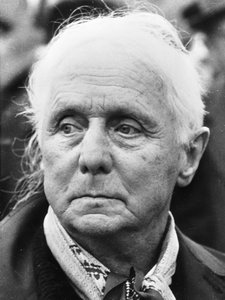
Max Ernst
1891 - 1976 , Tyskland
Kort om kunstneren
- Artistic Movement Or Style: Dada, Surrealisme
- Artists Or Movements Influenced By This Artist:
- Surrealisme
- Dada
- Artists Who Influenced This Artist:
- Picasso
- Van Gogh
- Gauguin
- Date Of Birth: 1. april 1891
- Date Of Death: 1. april 1976
- Full Name: Max Ernst
- Nationality: Tysk-Amerikansk, Fransk
- Notable Artworks:
- Byen helhetlig
- Euclides
- Av denne skal ingen vite
- Place Of Birth: Brühl, Tyskland

