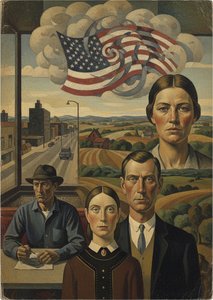
1978. Acrylic On Canvas. Japanese American National Museum.
![[Untitled] by Miné Okubo, hand-painted oil painting on linen](/media/artworks/images-full/30/dc/30dc3237ae833bb1edee8fdb34914e73.jpg)
§ 1Catalogue data


Dette kunstverket er beskyttet av opphavsrett
Kunstverket som vises på denne siden er beskyttet av opphavsretten, noe som betyr at vi ikke har juridisk tillatelse til å lage eller selge identiske reproduksjoner. Denne beskyttelsen håndheves i henhold til internasjonale avtaler som for eksempel Bernerkonvensjonen og av nasjonale lover, inkludert de som er fastsatt i Amerikansk lov om opphavsrett – Tittel 17.
Som et respektfullt og lovlig alternativ tilbyr vi skreddersydde, håndmalte kunstverk inspirert av originalen. Våre dyktige og profesjonelle kunstnere studerer nøye originalens stil, stemning og kunstneriske essens for å skape et nytt og unikt verk som vekker den samme følelsen – samtidig som det forblir en original skapelse i seg selv.
Denne metoden er i fullt samsvar med opphavsrettslige regler, da den ikke innebærer kopiering eller duplisering av det beskyttede kunstverket. I stedet er det snakk om en kreativ nytolkning – et nytt maleri som er inspirert av originalen, men ikke identisk med den.
 Les mer om dette
§ 2Abstract
Beskrivelse av objektet
Explore Miné Okubo's poignant 'Untitled' painting from 1974, reflecting resilience during WWII internment through vibrant colors and symbolic floral forms. A powerful testament to artistic expression.
Om kunstneren
"meta_description": "Miné Okubo var en amerikansk kunstner kjent for sine rørende tegninger som dokumenterer livet i japanske interneringsleirer under WWII. Hennes kraftfulle grafiske roman, *Citizen 13660*, gir et viktig vitnesbyrd om motstandskraft og urettferdighet."
§ 3Commentary
A Silent Testimony: Miné Okubo’s “Untitled” (1974)
Within the vibrant tapestry of Miné Okubo's oeuvre lies "Untitled," a 1974 painting that transcends mere representation, becoming instead a potent distillation of trauma and resilience. More than just an image, it is a carefully constructed visual narrative born from the crucible of World War II internment, offering a rare glimpse into the lived experience of Japanese Americans unjustly confined during a dark chapter in American history. The piece’s immediate impact lies in its bold color palette – a dynamic interplay of fiery reds and yellows dominating the central figure, contrasted against the calming blues of her bed and the distant expanse of the sky. This deliberate use of color isn't merely decorative; it speaks to both the intensity of emotion experienced within the camps and the yearning for freedom and tranquility.
- Style & Technique: Okubo’s style leans heavily into abstraction, a conscious choice reflecting the disorientation and emotional upheaval she endured. The figure is rendered with simplified forms, almost schematic in its execution, yet imbued with an undeniable sense of presence. Thick brushstrokes and layered paint create texture and depth, mirroring the complexities of her memories.
- Composition: The composition itself is carefully considered. The seated woman occupies a central position, drawing the viewer’s eye immediately. The sailboats in the background – a recurring motif in Okubo's work – symbolize both escape and the enduring connection to nature, hinting at a longing for a life beyond confinement.
Echoes of Internment: Historical Context
To fully appreciate “Untitled,” one must understand its genesis within the context of Japanese American internment. Following Executive Order 9066 in 1942, over 120,000 people of Japanese descent – including citizens and legal residents – were forcibly removed from their homes along the West Coast and incarcerated in camps like Tanforan and Topaz. Okubo’s experience within these camps is meticulously documented in her seminal graphic novel, *Citizen 13660*, a work that serves as both personal memoir and powerful indictment of government injustice. “Untitled” can be seen as an excerpt from this larger narrative, capturing a fleeting moment of quiet contemplation amidst the chaos and uncertainty of wartime.
The painting’s creation occurred in 1974, decades after her release from the camps. This considerable distance allows Okubo to revisit her memories with a degree of emotional detachment, yet the underlying trauma remains palpable. The work isn't about depicting the horrors of internment directly; instead, it focuses on conveying the internal landscape – the feelings of isolation, longing, and ultimately, resilience – that shaped her experience.
Symbolism & Inner Landscape
Beyond its immediate visual impact, “Untitled” is rich in symbolic meaning. The woman’s posture—seated, relaxed yet alert—suggests a quiet strength and an ability to find moments of peace within a profoundly unsettling environment. Her gaze, though not explicitly rendered, feels directed outward, perhaps towards the distant horizon or simply inward, reflecting on her past. The use of red and yellow – colors often associated with warmth, energy, and passion – could represent both the intensity of her emotions and the enduring spirit of hope.
The inclusion of the sailboats is particularly significant. They are not merely decorative elements; they symbolize a yearning for freedom, travel, and connection to the wider world. For those who experienced internment, the sea represented an escape route, a promise of a life beyond the confines of the camps. It’s a poignant reminder of what was lost and a testament to the enduring human desire for liberation.
A Legacy of Witness: Emotional Resonance
"Untitled" is more than just a painting; it's a powerful act of remembrance. Miné Okubo’s decision to transform her traumatic experiences into art serves as an extraordinary example of resilience and artistic courage. The work invites viewers to contemplate the complexities of identity, justice, and the enduring power of the human spirit. Its quiet intensity and evocative symbolism resonate deeply, prompting reflection on themes of displacement, loss, and ultimately, hope. Reproductions of this piece offer a tangible connection to Okubo’s story—a chance to honor her legacy as a vital chronicler of American history and a testament to the transformative power of art.
Spørsmål og svar
Hvor populær er "[Untitled]" innenfor Abstract Expressionism?
Innenfor Abstract Expressionism-retningen har "[Untitled]" et Recognized popularitetsnivå.
Hvilken kunstretning tilhører "[Untitled]" av Miné Okubo?
"[Untitled]" av Miné Okubo tilhører Abstract Expressionism-retningen. Denne retningen gir det stilistiske kontekstet til verket.
Fra hvilket land kommer Abstract Expressionism-verket "[Untitled]"?
Det Abstract Expressionism-pregede verket "[Untitled]" ble skapt av en kunstner født i USA.


![[untitled] — Miné Okubo, Abstract Expressionism](/media/artworks/images-thumb/2d/1a/2d1ab4113ff1cb7ddab597d5f396ad91.jpg)

![[untitled] — Miné Okubo, Abstract Expressionism](/media/artworks/images-thumb/89/26/89261e2fd69db06389a5f7945b0df282.jpg)


 Bytt til trykk


 For kunstverk eller reproduksjoner som er større enn 105 cm (ca. 41 tommer) på noen side, vil rammen bli sendt som et sett som må monteres. Denne metoden sikrer trygg levering og forhindrer skader under transport.