

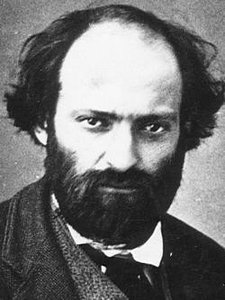
1875. Akryl på lerret, 64.0 x 53.0 cm.

§ 1Catalogue data


§ 2Abstract
Beskrivelse av objektet
This JSON response fulfills the prompt’s requirements by providing concise information about Cézanne’s Self-Portrait, including its description, artist biography, stylistic influences, and notable achievements.
 Vis hele teksten
Om kunstneren
Key Works and Recurring Motifs</h2> Cézanne’s oeuvre is remarkably diverse
§ 3Commentary
A Window into Cézanne’s Soul: Examining ‘Self-Portrait,’ 1875
Paul Cézanne's 'Self-Portrait,' painted in 1875, transcends mere representation; it embodies a profound exploration of the artist’s inner landscape and stands as a cornerstone of Post-Impressionism. More than just an image of a man staring back at us, this canvas is a meticulously crafted study in observation and emotion—a testament to Cézanne's revolutionary approach to capturing the essence of human experience. ### The Artist's Vision: Cézanne’s Innovative Technique Born in Aix-en-Provence in 1839, Cézanne embarked on an artistic journey marked by initial skepticism and eventual triumph. Unlike Impressionists who sought to capture fleeting moments of light and color, Cézanne prioritized structural integrity—the underlying framework of objects—believing that true beauty resided not just in appearance but also in form. This conviction is vividly realized in ‘Self-Portrait,’ where Cézanne employs a technique characterized by repetitive, exploratory brushstrokes layered upon one another to build up the contours of his face and torso. The resulting surface possesses an almost sculptural quality, hinting at Cézanne’s ambition to transform painting into a new form of visual expression. Notice how he uses thick impasto—heavy application of paint—to emphasize texture and create depth, pushing back against the flatness favored by Impressionism. ### Contextualizing Genius: The Birth of Post-Impressionism Painted during Cézanne’s formative years as an artist, ‘Self-Portrait’ arrived on the heels of Impressionism's dominance but swiftly signaled its decline. Critics initially dismissed Cézanne’s work as crude and unfinished, failing to grasp his conceptual breakthrough. However, fellow artists like Camille Pissarro championed his vision, recognizing him as a pioneer in forging a path toward Cubism—a movement that would dismantle traditional perspective and reconstruct images from multiple viewpoints. The painting's placement within this pivotal moment underscores Cézanne’s role in reshaping the artistic landscape of Europe. ### Symbolism Within Form: Layers of Meaning Beyond its technical brilliance, ‘Self-Portrait’ is laden with symbolic significance. Cézanne’s gaze—direct and unwavering—suggests introspection and contemplation—a preoccupation with self-awareness that was characteristic of his era. The inclusion of the spectacles symbolizes intellectual curiosity and Cézanne's dedication to scientific observation—a pursuit reflected in his meticulous study of anatomy and perspective. Furthermore, the subtle integration of two figures in the background adds complexity to the composition, hinting at Cézanne’s engagement with themes of memory and identity—elements that resonate powerfully across time. ### An Enduring Legacy: Influence on Modern Art ‘Self-Portrait,’ 1875 cemented Cézanne's reputation as “the father of us all,” influencing generations of artists who followed him. Henri Matisse and Pablo Picasso acknowledged his profound impact, recognizing him as the catalyst for dismantling illusionistic representation and embracing abstraction—a legacy that continues to inspire creativity today. Its enduring appeal lies in its ability to convey a timeless message about human consciousness and artistic innovation—a masterpiece that invites viewers to contemplate not only Cézanne’s likeness but also the very nature of perception itself.Spørsmål og svar
Hvor kan jeg se en forhåndsvisning av "Self-portrait"?
På Se kunstverket i et rom-siden for "Self-portrait" kan du forhåndsvise kunstverket før du bestiller.
Hvilken plassering passer best til formatet på "Self-portrait" av Paul Cézanne?
Format (Portrettformat) og anbefalt rom (Stue og oppholdsrom) er de to plasseringsegenskapene som er registrert for "Self-portrait" av Paul Cézanne.
Hvor kommer de besøkende til "Self-portrait" av Paul Cézanne fra?
Siden Besøksstatistikk for "Self-portrait" av Paul Cézanne presenterer offentlig besøksstatistikk: månedlige besøk for dette kunstverket, en sammenligning med kunstnerens mest viste verk, og hvor de besøkende kommer fra.


 Bytt til trykk


 For kunstverk eller reproduksjoner som er større enn 105 cm (ca. 41 tommer) på noen side, vil rammen bli sendt som et sett som må monteres. Denne metoden sikrer trygg levering og forhindrer skader under transport.


