Pengene tilbake-garanti · 100 dager Gratis levering over hele verden
449564kunstverk 30613kunstnere 4658museer 32språk
Katalogoppføring

Mural

1943. Acrylic On Canvas, 247.0 x 605.0 cm.

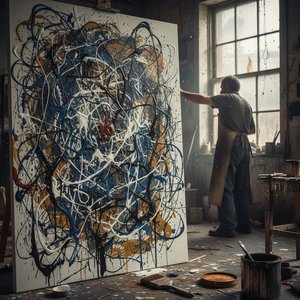
Fig. 1. Jackson Pollock, Mural, 1943. Vist som den reproduksjonen du har spesifisert: , .

§ 1Katalogdata

Dimensjoner
247.0 x 605.0 cm

§ 2Abstrakt

Beskrivelse av objektet

Experience Jackson Pollock's iconic 1943 'Mural,' a monumental drip painting from the abstract expressionist movement. This dynamic canvas, filled with vibrant colors and energetic brushstrokes, captures a stampede of wildlife – explore this masterpiece and own a piece of art history.

Om kunstneren

Jackson Pollock (1912–1956) var en amerikansk maler og pioner innen abstrakt ekspresjonisme kjent for sin «drip»-teknikk. Hans ikoniske malerier fanger energi og følelser gjennom spontane, dynamiske komposisjoner – en revolusjonerende innflytelse på moderne kunst.

§ 3Kommentarer

A Symphony of Movement: Unveiling Jackson Pollock’s “Mural”

Jackson Pollock's "Mural," completed in 1943, isn't merely a painting; it’s an immersive experience, a visceral embodiment of the burgeoning abstract expressionist movement. Commissioned by Peggy Guggenheim as a centerpiece for her Manhattan townhouse, this monumental work – measuring a commanding 247 x 605 cm – immediately announces Pollock’s arrival as a revolutionary force in the art world. The sheer scale invites contemplation, drawing the viewer into a swirling vortex of color and energy that speaks to the primal forces of nature and the human condition.

  • The Technique: Drip Painting Redefined – Pollock's signature “drip painting” technique is on full display here. Abandoning traditional brushwork, he laid the canvas directly on the floor and, with a frenetic dance around it, poured, flung, and dripped paint from cans, utilizing a whip-like brush to manipulate the cascading pigments. This process, born of spontaneity and intuitive gesture, created an unprecedented level of textural complexity and visual dynamism.
  • Historical Context: A Pivotal Moment – “Mural” arrived during a period of intense artistic experimentation following World War II. The rise of abstract expressionism reflected a desire to move beyond representational art and explore the depths of human emotion and subconscious thought. Pollock’s work, alongside that of artists like Willem de Kooning and Mark Rothko, helped establish New York as the global center of modern art.

Echoes of the Wild West: Symbolism and Narrative

At first glance, “Mural” appears to be a chaotic explosion of color, yet closer inspection reveals a carefully constructed narrative rooted in Pollock’s personal experiences and cultural influences. The artist himself described the work as an evocation of a "stampede," conjuring images of American cowboys and the vast landscapes of the Wild West – cows, horses, antelopes, and buffaloes surging across the canvas. This imagery isn't simply decorative; it represents freedom, movement, and the untamed spirit of the frontier.

Interestingly, Pollock’s childhood memories of the American West, shaped by his father’s surveying work and encounters with Native American art, subtly informed this symbolic landscape. The raw energy and spiritual resonance he absorbed from these early experiences are palpable in the painting's forceful composition and bold use of color. The vertical lines, acting as a visual counterpoint to the chaotic splashes, provide a structural framework that prevents the piece from dissolving into pure abstraction.

A Masterpiece of Abstract Expressionism

"Mural" stands as a testament to Pollock’s artistic evolution, bridging the gap between surrealist abstraction and the action painting movement. The work's abstract nature, with its deliberate hints of figuration – the implied forms of animals in motion – showcases his unique ability to balance spontaneity and control. The interplay of blues, blacks, yellows, reds, and whites creates a powerful visual rhythm, drawing the eye across the canvas and inviting endless interpretation.

Originally housed at the University of Iowa Museum of Art, “Mural” continues to captivate audiences with its raw energy and profound emotional impact. It’s a work that demands attention, challenging viewers to confront their own perceptions of art and beauty.

Recreating Pollock's Vision: A Hand-Painted Reproduction

At AllPaintingsStore, we are proud to offer exquisite, hand-painted oil painting reproductions of Jackson Pollock’s “Mural.” Each reproduction is meticulously crafted by our team of skilled artisans, ensuring an unparalleled level of detail and authenticity. We utilize the same techniques and materials as Pollock himself, capturing not just the visual appearance but also the very spirit and energy of this iconic masterpiece.

Whether you’re a seasoned collector, an interior designer seeking to add a touch of artistic drama to your space, or simply someone who appreciates the power of great art, a hand-painted reproduction of “Mural” is a timeless investment that will bring years of enjoyment.

Spørsmål og svar

Er "Mural" av Jackson Pollock et maleri, en tegning eller et trykk?

"Mural" er et WallArt-verk.

Hva er årsaken til opphavsrettssituasjonen for "Mural" av Jackson Pollock?

"Mural" av Jackson Pollock er fritt tilgjengelig – opphavsretten har utløpt. Opphavsretten beregnes fra kunstnerens dødsår, og Jackson Pollock døde i 1956.

Hvordan forenes kunstretning og epoke i "Mural" av Jackson Pollock?

"Mural" tilhører Abstract Expressionism-retningen, og kunstneren virket i Moderne tid-epoken.

§ 4Kunstneren

Jackson Pollock

Jackson Pollock

1912 - 1956, USA

Kort om Jackson Pollock

  • Artistic Movement Or Style: Abstrakt ekspresjonisme
  • Artists Or Movements Influenced By This Artist:
    • Color Field
    • Abstrakt ekspresjonisme
  • Artists Who Influenced This Artist:
    • Thomas Hart Benton
    • Diego Rivera
  • Date Of Birth: 28. januar 1912
  • Date Of Death: 11. august 1956
  • Full Name: Paul Jackson Pollock
  • Nationality: Amerikansk
  • Notable Artworks:
    • Nummer 1, 1949
    • Høstrytme, nr. 30
    • Konvergens
  • Place Of Birth: Cody, Wyoming

Om kunstneren

Early Life and the Seeds of Innovation

Paul Jackson Pollock, born in Cody, Wyoming, in 1912, was a restless spirit from the outset. His early life was marked by frequent relocation as his father, LeRoy Pollock, pursued work as a land surveyor across the vast landscapes of the American West. This itinerant existence instilled in young Pollock a deep connection to the natural world and an exposure to diverse cultures, particularly through encounters with Native American art during those surveying trips – impressions that would subtly permeate his artistic vision later in life. Though he never explicitly imitated Indigenous styles, the raw energy and spiritual resonance of these early experiences undoubtedly left their mark. He was the youngest of five children, born into a family struggling financially but filled with a strong work ethic and a love for art. His mother, Stella May McClure Pollock, recognized his artistic potential and fostered it through encouragement and support. Pollock’s formal artistic training began at the Manual Arts High School in Los Angeles, followed by studies at the Art Students League of New York under the tutelage of Thomas Hart Benton. Benton, a prominent figure in the Regionalist movement, emphasized rhythmic composition and narrative themes rooted in American life. While Pollock initially absorbed these lessons, his inherent inclination leaned toward more abstract explorations. He was also profoundly impacted by Mexican muralists like José Clemente Orozco, whose powerful depictions of social struggle resonated deeply with him. These early influences—the rugged beauty of the West, the traditions of Native American art, and the dramatic narratives of Benton and the murals of Mexico – laid a foundation, but it was the burgeoning world of Surrealism that truly unlocked Pollock’s artistic potential.

The Birth of Action Painting and a Revolutionary Technique

The 1930s saw Pollock experimenting with various techniques, seeking alternatives to traditional brushwork. He began pouring paint, exploring its fluidity and unpredictable nature. However, it was around 1947 that his artistic trajectory underwent a radical transformation. Abandoning the easel altogether, Pollock laid canvases directly on the floor, initiating what would become known as his “drip technique.” He then proceeded to drip, splash, and fling paint onto the canvas from above, orchestrating a dynamic dance between artist, medium, and surface. This wasn’t merely about applying paint; it was about embodying the act of creation itself. Pollock's canvases became arenas for physical expression, capturing the immediacy of his gestures and emotions. The resulting paintings are characterized by their “all-over” composition – a lack of central focus that invites the viewer to explore the entire surface as a unified field of energy. Intricate networks of lines and colors intertwine, creating a visual complexity that is both captivating and challenging. He employed unconventional tools—sticks, knives, even syringes—to manipulate the paint in unpredictable ways, further emphasizing the spontaneous nature of his process. The technique was revolutionary, rejecting traditional notions of brushstrokes and composition.
  • He used a variety of materials: oil paints, house paints, inks, and even tar.
  • His movements were often described as dance-like or ecstatic.

Iconic Works and Lasting Legacy

Pollock’s most celebrated works—such as Number 1, 1950 (Lavender Mist), One: Number 31, 1950, Blue Poles: Number 11, 1952, and Convergence—are testaments to his revolutionary technique. These paintings are not simply images; they are records of a performance, imbued with the artist’s physical presence and emotional intensity. The dynamic energy that emanates from these canvases is palpable, drawing viewers into a world of pure abstraction. Critics initially struggled to understand or appreciate this new approach, but over time, Pollock's work gained recognition as a groundbreaking contribution to modern art. His style transcends mere aesthetics; it’s an exploration of process over product. Pollock sought to capture the immediacy of his actions and emotions on canvas, rejecting traditional notions of composition and representation. He delved into Jungian psychology, exploring archetypes and the subconscious in his art, seeking to tap into universal symbols and primal energies. The paintings are often interpreted as reflections of the artist’s inner turmoil and spiritual quest.

Influence and Historical Significance

Pollock's impact on the history of art is immeasurable. He fundamentally altered the way artists approached painting, breaking free from easel-based methods and embracing a more performative approach. His work helped solidify New York City's position as a global center for modern art, shifting the focus away from European dominance. He was a key figure in the rise of Abstract Expressionism, alongside artists like Mark Rothko and Willem de Kooning. His influence can be seen in the work of countless artists who followed, including those associated with Color Field painting and later forms of abstract expressionism. Despite facing initial criticism and skepticism, Pollock’s legacy has solidified over time. He is now considered one of the most important and influential artists of the 20th century, a visionary who dared to challenge conventions and redefine the boundaries of artistic expression. His innovative techniques and expressive style continue to inspire and provoke, ensuring his enduring presence in the art world for generations to come.

Further Exploration

Key Resources:
  • Jackson Pollock - Wikipedia:
  • Smithsonian American Art Museum:
  • National Gallery of Art:

§ 5Relaterte verk

§ 6Spørsmål

Kort om verket

  • Year: 1943
  • Dimensions: 247 x 605 cm
  • Influences: Marcel Duchamp
  • Movement: Abstract Expressionism
  • Artist: Paul Jackson Pollock
  • Title: Mural

§ 7Sitér dette oppslaget

AllPaintingsStore.com, “Jackson Pollock, Mural (1943)”, https://allpaintingsstore.com/no/art/paul-jackson-pollock-mural-8XYAG4-en/ (hentet 12 October 2026).

§ 8Reproduksjonen

Håndlaget oljereproduksjon

Håndmalt olje på lerret i din valgte størrelse og ramme, laget på bestilling av våre kunstnere. ( Bytt til trykk Bytt til digitalt bilde)

Det er spesifisert i margen på ordreskjemaet; den nåværende statusen for dette skjemaet lyder som følger.

Mural

Trykkmetode

Størrelse på reproduksjon

-

Utvalgte mesterkunstnere

Mer detaljrikdom, finesse og ekstra produksjonstid

-

Innramming av reproduksjon

-

-

For kunstverk eller reproduksjoner som er større enn 105 cm (ca. 41 tommer) på noen side, vil rammen bli sendt som et sett som må monteres. Denne metoden sikrer trygg levering og forhindrer skader under transport.

Krever profesjonell montering – dette er ikke et DIY-produkt.
Settet må monteres og lerretet strammes av en erfaren profesjonell rammelegger, ved bruk av trelim (følger ikke med), en lerretstang og klemmer for å holde rammelisten vinkelrett mens limet tørker. Feilaktig montering eller ujevn stramming av lerretet kan påføre kunstverket permanente skader og er ikke dekket av vår garanti.

  • Alle massive trelister er inkludert, presist tilpasset i størrelse.

  • Monteres med de medfølgende skruene, samt trelim til hjørnene, som ikke er inkludert og må anskaffes av din rammehandler.

  • Profesjonelt verktøy er nødvendig og er ikke inkludert: en lerretstang (strammer) og klemmer for å holde rammene vinkelrette mens limet tørker.

Viktig:
Hjørnene krever trelim, listene må holdes på plass med tvinger til limet er helt tørt, og stramming av lerretet på den ferdige rammen krever en lerretstang. Ingen av disse produktene er inkludert i settet. Vennligst sørg for tilgang til en erfaren profesjonell rammehandler før du bestiller denne størrelsen.

Navneskilt

-

-

Beskyttende ferniss

Blank lakk (forsterker farger, beskytter mot lys og fuktighet)

-

Tilpass mitt kunstverk

Eksempler på hva som kan endres: Erstatt ansikt med bilde av kunden; Legg til kjæledyr (f.eks. bytt ut katt med hund); Inkluder en skjult melding i bakgrunnen; Endre bakgrunnslandskap eller elementer.

-

Ekspresslevering

Verdensomspennende levering () på 3–4 uker i stedet for standard 5 uker. (9 November). Ingen kompromisser med kvaliteten.

-

Ekspresslevering

Verdensomspennende levering til innen 5 uker. (16 November).

Inkludert frakt

Totalpris for valgte alternativer

Nkr 2466

Inkludert med hver bestilling

  • Gratis ekspressfrakt over hele verden
  • Lerretsduk av lin av høy kvalitet
  • Full transportforsikring
  • Garanti for refusjon av toll og importavgifter
  • Garantert fargegjengivelse
  • 100 dagers returrett ved fabrikasjonsfeil
  • 100% pengene tilbake-garanti
  • Rabatt ved flere kjøp
Bestillingsskjema